
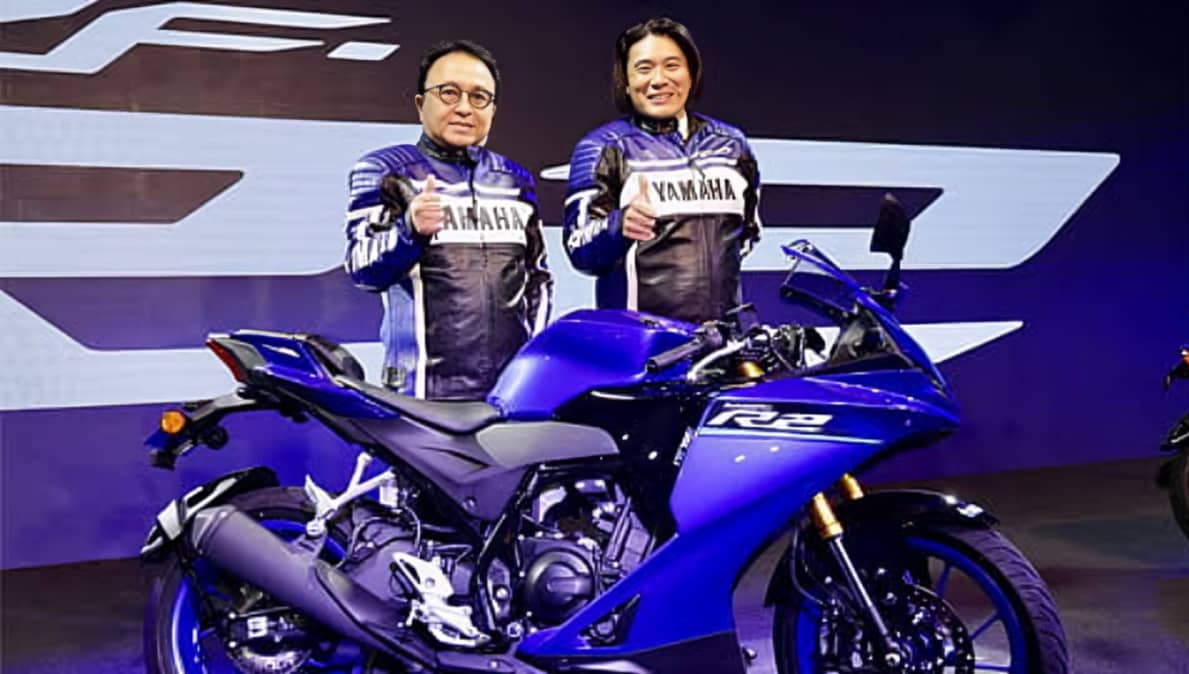
Yamaha Motor India is evaluating the possibility of expanding its motorcycle portfolio into the 250cc to 1000cc segment as the Japanese manufacturer looks to strengthen its position in India’s growing premium two wheeler market. Yamaha Motor India Chairman Hajime Aota discussed the company’s plans and priorities during an interaction with ETAuto at the 66th SIAM Annual Convention.
The company has not announced a confirmed launch schedule for a new range of motorcycles covering the 250cc to 1000cc category. Instead, Aota said Yamaha is studying the segment and assessing how it could develop products that offer a clear reason for customers to choose them.
The potential move would represent a broader approach to Yamaha’s premium motorcycle strategy in India. The company has increasingly focused on higher value products rather than competing primarily in the entry level commuter motorcycle segment. Aota has previously said that Yamaha is concentrating on premium motorcycles and profitability rather than pursuing volume through the 100cc to 110cc commuter category.
Aota indicated that Yamaha needs to understand what Indian customers want before committing significant resources to a new product category. The company is particularly examining how it can differentiate its motorcycles through technology, design and riding characteristics. The objective is to develop products that have a clear customer proposition rather than simply entering a segment because of its size.
The possible expansion also raises the question of manufacturing. Yamaha is evaluating whether motorcycles in the higher displacement category could be produced locally in India. Local manufacturing could potentially support pricing, exports and supply chain development, although Yamaha has not confirmed a specific production programme for these motorcycles.
India already plays an important role in Yamaha’s global manufacturing strategy. The company operates manufacturing facilities in Surajpur, Uttar Pradesh, and Kanchipuram, Tamil Nadu. Together, the facilities have an annual production capacity of around 1.5 million two wheelers. Yamaha has also been evaluating additional manufacturing capacity as it expects existing capacity to become fully utilised over the next few years.
The company is considering whether to expand its existing plants or eventually establish another manufacturing location. According to Aota, Yamaha currently has some available space within its existing facilities, which could allow additional capacity to be created without immediately requiring a completely new plant.
The potential introduction of higher displacement motorcycles could therefore become part of Yamaha’s broader manufacturing and export strategy. The company wants India to play a larger role in its global operations and is working to improve manufacturing quality, technical capabilities and productivity.
Yamaha currently considers India and Indonesia to be two important manufacturing and business bases in Asia. Indonesia remains ahead of India in Yamaha’s export capability, but Aota has said the company wants India to eventually surpass Indonesia in this area.
The ambition is linked to India’s large domestic motorcycle market and its growing supplier ecosystem. India is one of the world’s largest two wheeler markets, providing Yamaha with both a substantial customer base and an opportunity to develop products that can later be exported to international markets.
Yamaha has already been working to increase the capabilities of its Indian R&D operations. The company’s Indian R&D division has grown to around 280 employees, while an engineering exchange programme sends Indian engineers to Yamaha’s headquarters in Japan for extended periods. The objective is to strengthen technical expertise and improve coordination between product development, manufacturing and global operations.
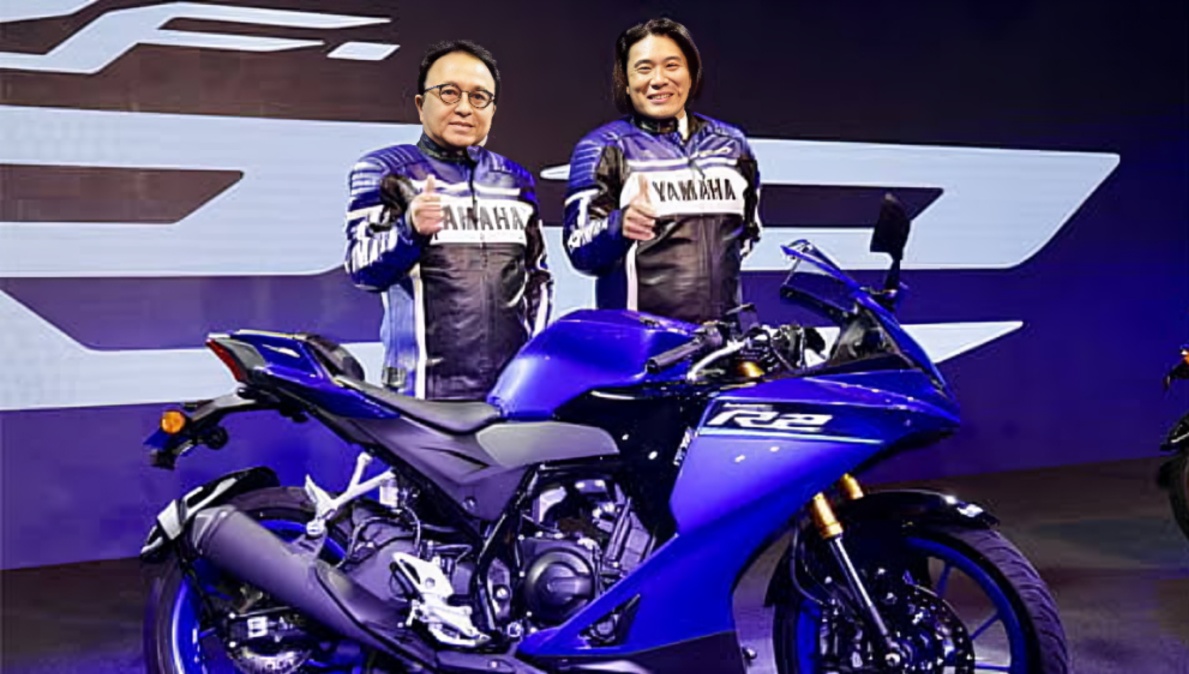
The company has also been using its Indian operations as a base for global products. Yamaha launched the YZF R2 as a Made in India model in 2026, highlighting its intention to use India for products aimed at both domestic and international markets.
Yamaha’s focus on premium motorcycles has developed over several years. The company shifted its strategy toward higher value products after reassessing its position in the Indian market. According to Aota, the company is now seeking to strengthen this premium positioning by understanding the preferences of younger Indian buyers and developing products that offer greater value and differentiation.
The possible 250cc to 1000cc expansion would fit into this strategy because higher displacement motorcycles generally occupy more premium positions in the motorcycle market. However, Yamaha will need to assess customer demand, pricing, production costs and competition before deciding whether to proceed.
Another major area under review is electrification. Yamaha is studying how to differentiate its electric motorcycles while remaining cautious about entering the market without a strong customer proposition. The company has already planned electric products for India, including the EC 06 and Aerox E, with the initial strategy focused on selected cities and dealerships.
Aota has also highlighted challenges surrounding electric motorcycle economics and battery supply chains. Yamaha has been cautious about aggressive expansion in the electric two wheeler market because battery cells remain heavily dependent on imports and can put pressure on costs and margins. The company is studying different powertrain technologies and approaches to electric mobility.
This cautious approach is similar to Yamaha’s thinking about higher displacement motorcycles. Instead of entering a segment simply to increase its product count, the company wants to identify products that can create a distinctive position in the market.
For Yamaha, strengthening research and development in India could help achieve that objective. A stronger local engineering team can help the company understand Indian riding conditions, customer preferences and regulatory requirements while also developing motorcycles that could be exported to other markets.
The supplier ecosystem is another important factor. India has a large network of two wheeler component manufacturers, and greater localisation could help Yamaha reduce costs and increase the competitiveness of products manufactured in the country. Yamaha has already been working to reduce imported component content and increase domestic sourcing where practical.
The company is also benchmarking its Indian manufacturing operations against Indonesia. Yamaha wants to improve quality and technical optimisation in India while retaining the country’s cost advantages. The long term objective is to make India a stronger global manufacturing and export base.
Yamaha’s plans come at a time when India’s premium motorcycle segment is attracting increasing attention from manufacturers. Several companies are expanding their offerings in the mid capacity and premium motorcycle categories, creating a more competitive environment for brands seeking higher value customers.
However, Yamaha has not yet confirmed that it will launch a full 250cc to 1000cc motorcycle range in India. The current position is that the company is evaluating the opportunity and studying the right product strategy.
The timing of any potential launch would depend on several factors, including customer demand, product development, manufacturing feasibility, pricing and Yamaha’s wider global strategy. Local production could also require additional investment and manufacturing changes depending on the specifications and technologies of the motorcycles.
For now, Yamaha’s focus remains on strengthening its premium portfolio, expanding its Indian R&D capabilities, improving manufacturing competitiveness and increasing exports. If the company determines that higher displacement motorcycles can offer a clear proposition to Indian customers, the segment could become an important part of its future product strategy.
Aota’s comments indicate that Yamaha sees India as more than a major sales market. The company is increasingly looking at India as a potential global development, manufacturing and export hub. Its ambition to eventually surpass Indonesia’s export capability underlines the scale of that long term objective.