
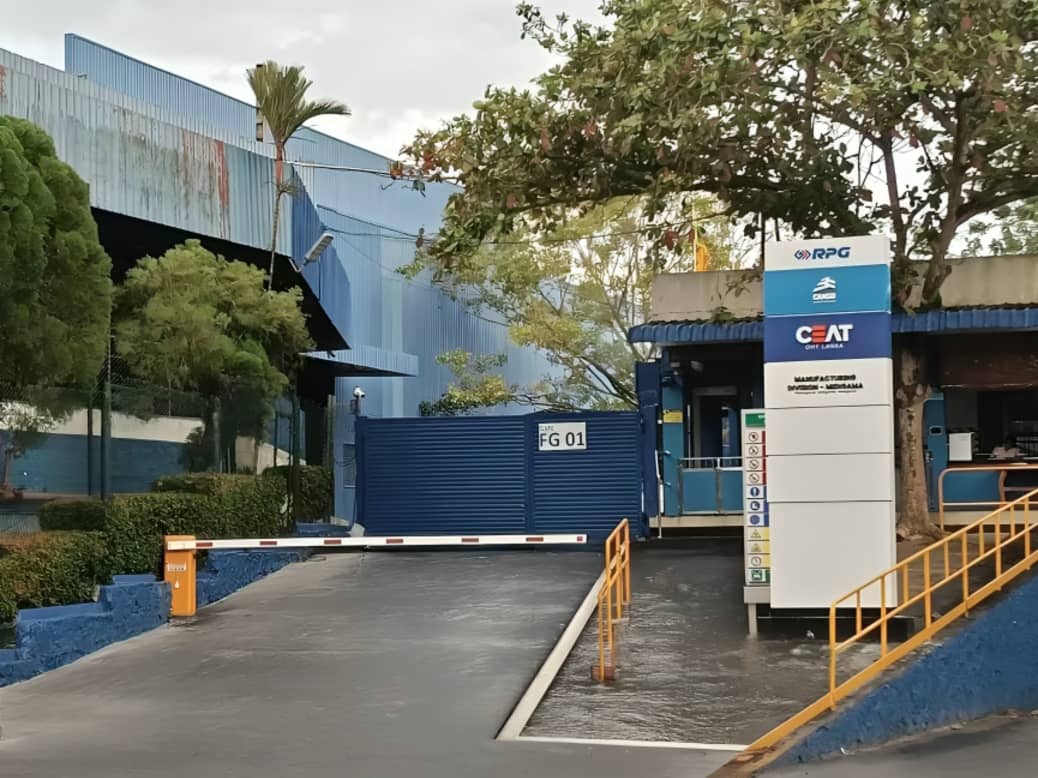
CEAT Specialty is expecting continued double digit growth in its specialty tyre business in 2026 as the company expands beyond its traditional agricultural tyre portfolio and increases its presence in construction and material handling applications. The expansion is being supported by the integration of Camso products and a planned increase in manufacturing capacity at CEAT Specialty’s Ambernath facility in Maharashtra.
According to Amit Tolani, CEO of CEAT Specialty, the company expects to maintain double digit growth in its specialty business during the year. The Ambernath plant is currently operating at approximately 90 to 95 percent utilisation, while its existing installed capacity of 105 metric tonnes per day is expected to increase to 160 tonnes per day within the next 45 to 60 days.
The capacity expansion comes as CEAT Specialty sees additional opportunities in overseas markets. The Ambernath facility is primarily focused on exports, with approximately 90 percent of its production going to international markets. Europe and North America are among the company's largest markets, while Brazil is its largest market in South America.
The expansion is also connected to the changing composition of CEAT Specialty’s off highway tyre business. Before the Camso integration, the company's business was heavily concentrated on agricultural applications. Tolani said agriculture accounted for about 85 percent of the business, while construction represented around 15 percent.
The addition of Camso is expected to significantly broaden that portfolio. Camso has an established presence in construction and material handling applications, including solid tyres and tracks. CEAT has said that the integration gives the company access to categories and customers that were previously outside its core specialty tyre business.
With Camso included, CEAT Specialty expects its agriculture and non agricultural business mix to move towards an approximately 50:50 balance. This represents a substantial change from the company's earlier dependence on agricultural applications and could give its specialty business greater exposure to construction, industrial and material handling markets.
The Camso agreement was established after CEAT acquired Michelin's compact construction tracks and tyres business. The integration is expected to provide CEAT with additional products, customers, original equipment manufacturer relationships and international market opportunities.
For the initial three years of the agreement, CEAT is allowed to sell Camso branded compact construction tyres and tracks. The company is expected to gain access to additional Camso categories over time, allowing it to expand its product portfolio further.
Business Standard previously reported that CEAT expects the Camso business to become increasingly important to its off highway operations. The company has said that access to additional Camso categories will expand over the coming years, with a broader range of agricultural tracks, material handling products and other applications expected to become available later in the integration process.
The company is also seeing opportunities through new original equipment manufacturers and distribution channels. CEAT Specialty already supplies agricultural tyres to global OEMs such as Massey Ferguson and John Deere. Camso adds relationships with customers in construction and other industrial applications, giving CEAT a broader customer base.
The utilisation of the Camso business also provides room for additional growth. According to the latest company information reported by ETAuto, Camso's current utilisation is around 50 percent. This leaves additional capacity available as CEAT expands its customer relationships and product offerings.
The Ambernath plant's expansion is therefore aimed at supporting demand rather than simply creating unused manufacturing capacity. The existing 105 tonnes per day capacity has reportedly been sold out, prompting the company to move ahead with the increase to 160 tonnes per day.
CEAT Specialty is focusing largely on markets where it already has a presence instead of relying entirely on expansion into new countries. The company has established business across Europe, the United States and South America and sees further potential within these markets.
Another feature of the Ambernath manufacturing operation is its ability to handle smaller production requirements. The facility supports a minimum order quantity of one for certain products, allowing it to manufacture niche tyre sizes and customised requirements without requiring large production batches. This capability can be useful in the specialised off highway tyre market, where customer requirements can vary significantly.
Digital technology and artificial intelligence are also becoming part of CEAT Specialty's manufacturing operations. The company uses AI for predictive analysis, plant monitoring, inspection and optimisation of tyre mixing processes. It is also working on the use of high resolution cameras and AI based systems to improve tyre inspection processes.
CEAT Specialty's research and development operations are also using AI assisted testing. According to the company's presentation cited in the latest report, these systems have helped reduce the time required to move products from the concept stage to the market by approximately one third.
The manufacturing facility also uses digital systems to monitor production. The system tracks manpower, materials, machinery and production time for individual batches. This provides greater visibility across the manufacturing process and allows traceability from raw materials through to finished tyres.
Sustainability is another area of focus for the export oriented plant. CEAT's Sustainmax VF product currently uses 90.3 percent sustainable and recycled material, according to company presentation details reported by ETAuto. The product is also ISCC Plus certified.
The company is also preparing its operations for environmental regulations in major export markets. CEAT Specialty has said that the Ambernath facility is compliant with the European Union Deforestation Regulation, with raw materials supplied for European markets meeting the required standards.
The growing importance of the off highway tyre business is reflected in CEAT's overall revenue mix. Company inputs indicate that the OHT business contributes around 20 percent of CEAT Tyres' overall revenue. Business Standard has also reported that off highway products represented 15 percent of standalone revenue in FY26.
The company's broader strategy is to use Camso to strengthen its position in premium and specialised tyre categories. Rather than positioning the brand as a low cost manufacturing proposition, CEAT has indicated that it intends to retain Camso's established positioning in developed markets.
The integration also provides CEAT with an opportunity to build a more diversified off highway portfolio. Agricultural tyres will continue to remain important, but construction, material handling and track products are expected to become increasingly significant as additional Camso categories become available.
Business Standard previously reported that CEAT expects tracks to be one of the key growth drivers over the next five years. The company also identified agricultural, material handling and compact construction applications as important areas for future expansion.
The company's international strategy is particularly important because a significant share of Ambernath production is exported. Europe and North America provide major opportunities, while South America remains another important region for CEAT Specialty.
At the same time, the company will need to manage challenges including raw material costs, freight expenses and geopolitical disruptions. CEAT's FY27 outlook has highlighted input cost inflation and other external pressures even as premium products, exports and the Camso integration are expected to support growth.
For 2026, CEAT Specialty's focus is therefore centred on increasing capacity, expanding the product portfolio and making greater use of Camso's international presence. The planned Ambernath capacity increase from 105 to 160 tonnes per day is expected to provide additional production capability as demand grows.
The changing business mix is another significant development. With Camso's construction and material handling products being integrated into the portfolio, CEAT Specialty expects agriculture and non agricultural applications to move towards a more balanced contribution.
The company is also using manufacturing technology, AI based systems and sustainability initiatives to improve productivity and meet requirements in export markets. These initiatives are being developed alongside the physical expansion of the Ambernath facility.
CEAT Specialty's 2026 growth expectations therefore reflect a combination of increased production capacity, international demand, product diversification and the gradual integration of Camso. While the company expects double digit growth, actual performance will continue to depend on market demand, production utilisation, raw material costs and conditions in key export markets.