Jeep and Citroen to Introduce 12 New Products in India by 2030 Under FaSTLAne 2030 Plan
Stellantis has announced an ambitious product expansion plan for the Indian automotive market, with 12 new and upgraded products planned across its Jeep and Citroen brands by 2030. The programme is part of the company's FaSTLAne 2030 roadmap and will be supported by an additional investment of approximately Rs 4,000 crore over the next three years.
The announcement marks a renewed effort by the automaker to strengthen its presence in India through new models, increased localisation, improved customer experience and a broader range of powertrain options. According to company executives, the planned portfolio will include seven all-new models and five major upgrades to existing products.
First Product Expected in 2027
The first vehicle under the new product programme is scheduled to launch in India in the second quarter of 2027. Stellantis has not yet disclosed the complete list of upcoming models or their individual launch dates.
The company plans to introduce products across several vehicle categories, with a particular focus on sport utility vehicles. The portfolio is also expected to include a multi-purpose vehicle and a premium pickup truck.
The strategy is intended to help Jeep and Citroen appeal to a wider range of Indian customers. While Jeep is known for its SUV-focused lineup, Citroen is expected to broaden its offerings with additional body styles and models designed for different customer requirements.
Jeep and Citroen Product Plans
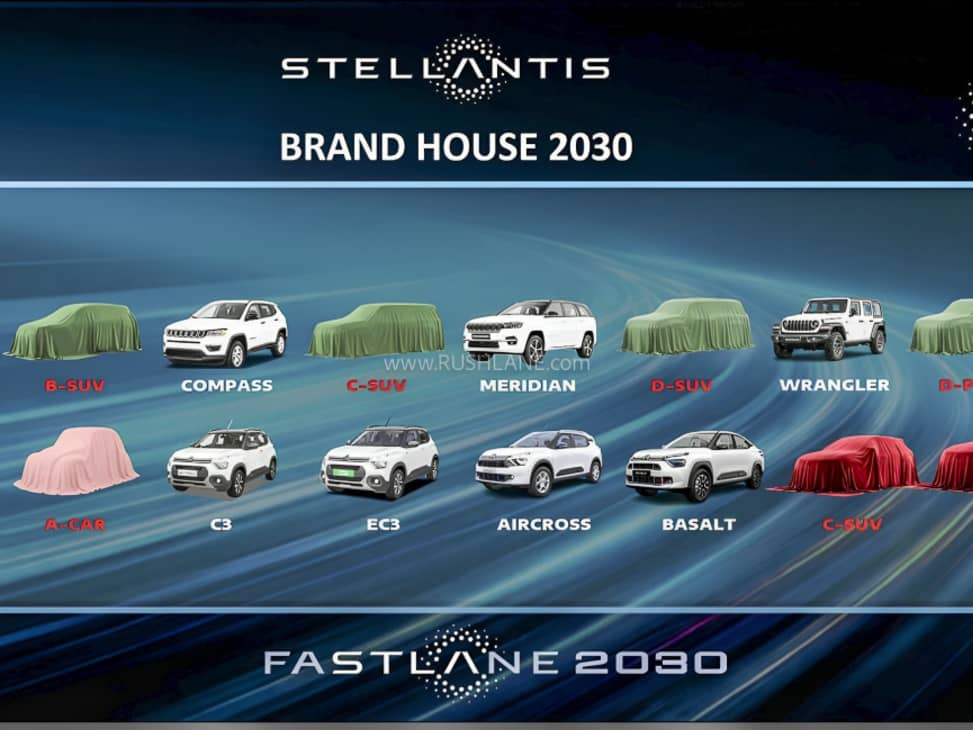
Jeep is expected to account for five of the 12 planned launches, including four new models and one major update, according to an Autocar India report. The proposed expansion is expected to strengthen the brand's presence in multiple SUV segments, including the B, C and D categories, as well as the premium pickup segment.
A new midsize SUV is among the potential additions to Jeep's Indian lineup. An electric Jeep is also under development for the Indian market, although the company has not announced its specifications, production location or launch timeline. Details of the remaining models are yet to be confirmed.
Citroen is expected to contribute seven launches, comprising three new models and four updates. The upcoming range is expected to include an MPV, a small A-segment car and a C-segment SUV. The company is also looking to develop its offerings in alternative fuel technologies, including compressed natural gas.
Stellantis has not confirmed the final names, specifications, prices or launch dates of all 12 products. The information currently available outlines the broader strategy rather than a complete model-by-model launch schedule.
Rs 4,000 Crore Investment to Support Expansion
The company plans to invest approximately Rs 4,000 crore in India over the next three years. This investment is intended to support product development, manufacturing, localisation and improvements to the customer experience.
The new investment is additional to the roughly Rs 11,000 crore that Stellantis had previously announced for its Indian operations. With the additional commitment, the company's cumulative announced investment in India is expected to reach approximately Rs 15,000 crore.
A major focus of the programme will be increasing the use of locally sourced components. Stellantis India has indicated that it aims to raise localisation in its Jeep vehicles from the current 70 to 75 per cent range to around 90 per cent. Citroen already has a localisation level of more than 90 per cent, according to company statements reported by Business Standard.
Greater localisation can help automakers reduce their exposure to imported components, manage production costs and adapt vehicles to local market requirements. However, the final impact on vehicle prices will depend on individual product specifications, manufacturing costs and market conditions.
Multiple Powertrain Options Under Consideration
Stellantis is planning a broader powertrain strategy for India. Depending on the model and customer demand, its future lineup could include conventional internal combustion engines, hybrid systems, plug-in hybrids and battery-electric vehicles. The company is also considering CNG options for relevant products.
The automaker has not confirmed which powertrain will be offered with each upcoming vehicle. Availability is likely to vary according to the segment, development costs and business case for each model.
The strategy reflects the diverse nature of the Indian car market, where customers have different requirements regarding purchase prices, running costs, fuel availability and driving range. Offering multiple technologies could allow the company to serve a wider audience rather than relying on a single powertrain type.
India to Play a Larger Manufacturing and Export Role
Alongside its domestic launch plans, Stellantis intends to expand India's role as a manufacturing and export base. The company already exports vehicles and powertrain components from its Indian operations to several international markets.
The company is also looking at developing left-hand-drive versions of vehicles launched in India, potentially enabling exports to more than 50 countries. Export volumes will depend on demand, production planning and the suitability of individual models for international markets.
The additional investment is therefore intended to support more than new domestic launches. It is also part of a broader plan to strengthen manufacturing capabilities and improve the competitiveness of vehicles produced in India.
Sales and Customer Experience Goals
Stellantis has indicated that it aims to increase annual sales in India to approximately 45,000 units within the next three years, around three times its current level as described in the company's recent announcements. The planned product launches are expected to play a central role in achieving this target.
The company is also focusing on customer experience, marketing and service accessibility. It is considering ways to improve its sales and service network, including expanding its presence in smaller cities and evaluating alternative service formats.
The success of the roadmap will depend on the competitiveness of the new models, pricing, product features, after-sales support and the company's ability to deliver launches on schedule.
For now, Stellantis has confirmed the overall plan, the investment commitment and the broad division between new models and upgrades. More details about individual vehicles, powertrain specifications, prices and booking timelines are expected to emerge closer to their respective launches.