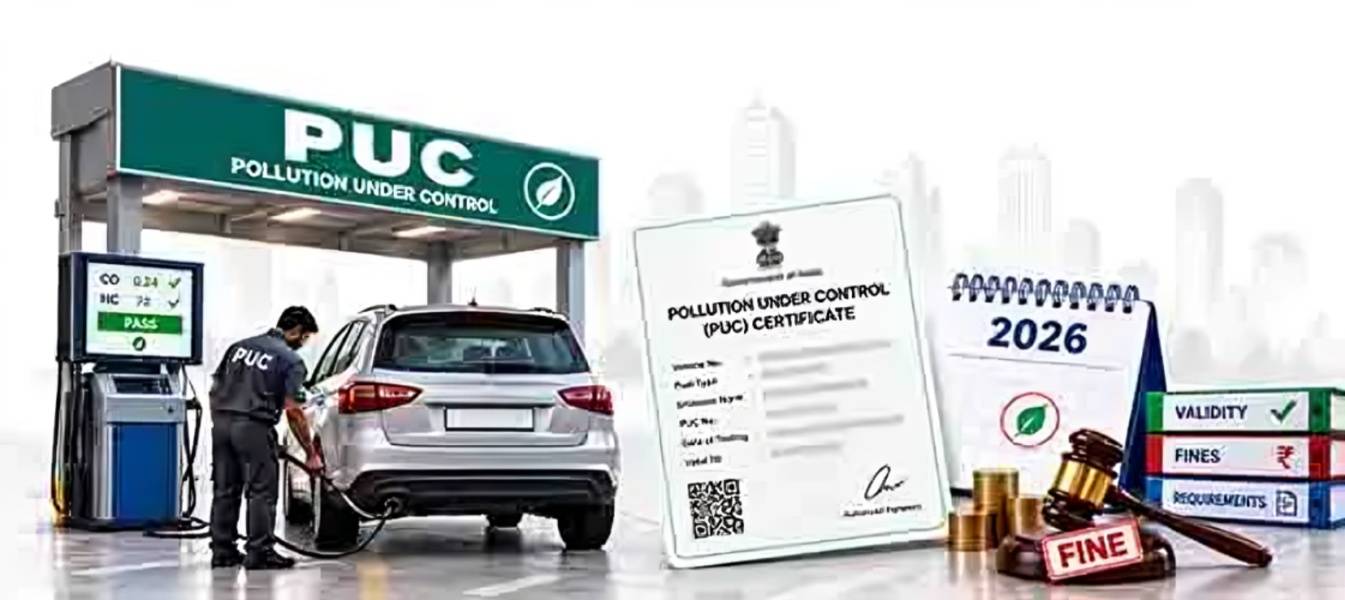
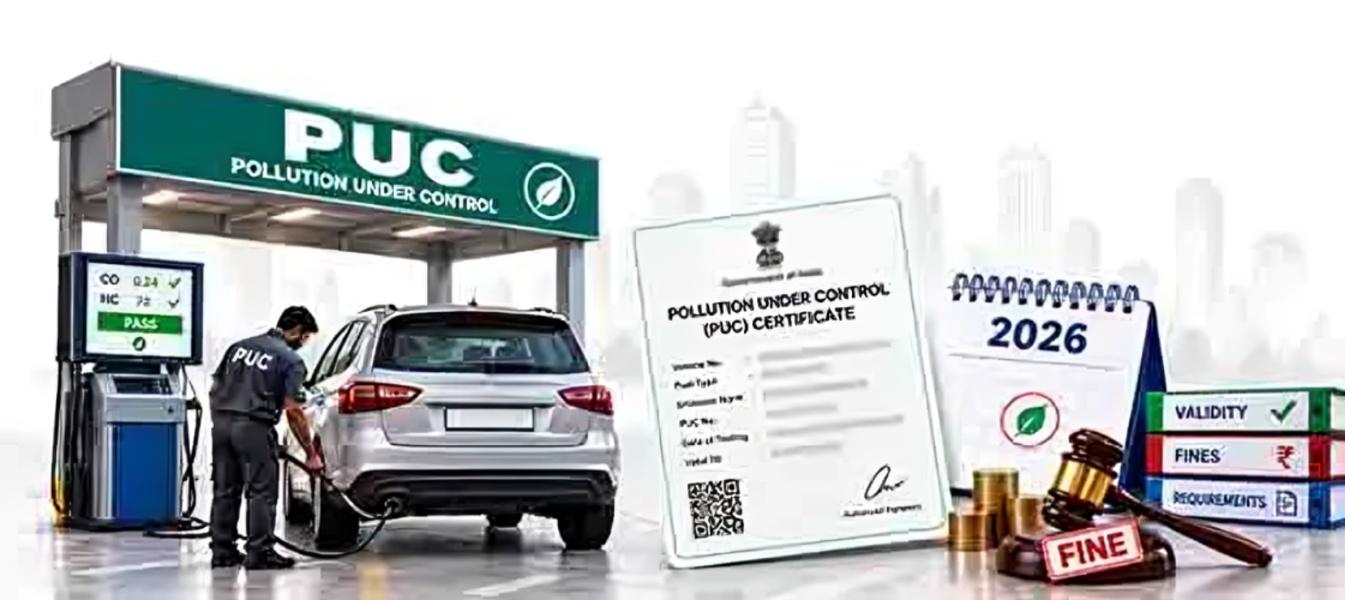
The Ministry of Road Transport and Highways has revised the validity periods of Pollution Under Control certificates for vehicles in India. The updated rules introduce a vehicle-age-based renewal system for BS-VI vehicles, allowing newer models to receive longer certificate validity periods while requiring older vehicles to undergo emission tests more frequently.
The changes have been notified through the Central Motor Vehicles (Sixteenth Amendment) Rules, 2026, which amend Rule 115(7) of the Central Motor Vehicles Rules, 1989. The notification was issued on November 13, 2026, through Gazette notification G.S.R. 991(E). The amendment came into force on the date of its publication in the Official Gazette.
Under the revised framework, PUC certificate validity will depend on the vehicle's Bharat Stage emission category, age and whether it is registered as a transport or non-transport vehicle. The age of a vehicle will be calculated from its date of first registration.
The changes are particularly important for owners of BS-VI cars and commercial vehicles, as the validity period for newer models has been extended. At the same time, vehicles complying with older emission standards will have shorter certificate validity periods.
New PUC Validity Periods for BS-VI Private Vehicles
One of the major changes concerns BS-VI non-transport vehicles, which include privately registered cars and motorcycles. Under the new rules, the validity period of their PUC certificates will be linked to the vehicle's age.
BS-VI private vehicles up to six years old from the date of first registration will receive PUC certificates valid for three years. This means owners of eligible newer vehicles will not need to undergo emission testing every year.
For vehicles that are more than six years old but not more than 10 years old, the certificate will be valid for one year. Owners of BS-VI private vehicles older than 10 years will have to renew their certificates every six months.
The revised schedule is intended to distinguish between newer vehicles and older ones based on their age. While newer BS-VI vehicles receive longer renewal intervals, older vehicles will continue to undergo emission checks more frequently.
New PUC Rules for BS-VI Commercial Vehicles
The amended rules also prescribe separate validity periods for BS-VI transport vehicles. These include vehicles registered for commercial and transport purposes.
BS-VI transport vehicles up to six years old will receive PUC certificates valid for two years. Vehicles that are more than six years old but not more than 10 years old will require annual renewal.
For BS-VI transport vehicles older than 10 years, the certificate will be valid for six months. Owners will therefore need to undergo emission testing twice a year.
The validity period for transport vehicles is shorter than that for private vehicles in the youngest age category. For example, a private BS-VI vehicle up to six years old can receive a three-year certificate, while a transport vehicle of the same age will receive a two-year certificate.
This distinction means vehicle owners must check their registration category before calculating their next PUC renewal date.
PUC Certificate Validity for BS-I, BS-II, BS-III and BS-IV Vehicles
The revised rules also standardise certificate validity periods for vehicles complying with older emission standards.
All vehicles meeting BS-I, BS-II and BS-III emission norms will receive PUC certificates valid for three months. This applies regardless of whether the vehicle is used for private or transport purposes.
Vehicles complying with BS-IV emission norms will receive certificates valid for six months.
The shorter validity periods mean owners of older vehicles will need to undergo emission testing more frequently than many owners of newer BS-VI vehicles.
The updated schedule is also intended to provide a common framework for PUC certificate validity across the country, reducing differences in renewal requirements between states.
Complete Table of New PUC Certificate Validity Periods
The revised validity schedule under the Central Motor Vehicles (Sixteenth Amendment) Rules, 2026, is as follows.
| Vehicle categoryVehicle agePUC validity | ||
| BS-I, BS-II and BS-III vehicles | All ages | 3 months |
| BS-IV vehicles | All ages | 6 months |
| BS-VI private vehicles | Up to 6 years | 3 years |
| BS-VI private vehicles | More than 6 years up to 10 years | 1 year |
| BS-VI private vehicles | More than 10 years | 6 months |
| BS-VI transport vehicles | Up to 6 years | 2 years |
| BS-VI transport vehicles | More than 6 years up to 10 years | 1 year |
| BS-VI transport vehicles | More than 10 years | 6 months |
The age of the vehicle is calculated from the date of first registration. Vehicle owners should check their registration certificate and emission category to identify the applicable validity period.
What Happens to Existing PUC Certificates?
The new rules do not automatically extend the validity of PUC certificates that were issued before the amendment came into force.
According to the notification, the revised validity schedule will apply to existing certificates only when they are renewed for the first time after the commencement of the amended rules.
For example, if a private BS-VI car currently has a PUC certificate that is valid for one year, the existing certificate will remain valid until its stated expiry date. If the vehicle is eligible for the new three-year validity period, that longer period will apply when the certificate is renewed for the first time under the revised rules.
Therefore, vehicle owners do not need to obtain a fresh certificate immediately just because the validity schedule has changed. They should continue to follow the expiry date mentioned on their current certificate and apply for renewal as required.
Important Rule for PUC Certificate Renewal
The amended rules also clarify how the validity of a renewed certificate will be calculated.
If a vehicle owner applies for PUC renewal within the 10 days preceding the expiry of the existing certificate, the renewed certificate will take effect from the expiry date of the current certificate.
In other cases where the renewal application is made after the existing certificate has expired, the new certificate will take effect from the date of renewal.
This provision is important because the effective date of a renewed certificate will depend on when the owner applies for renewal. Vehicle owners should therefore avoid allowing their certificates to expire before arranging the next emission test.
How Vehicle Owners Can Check Their PUC Status
Vehicle owners should first identify their vehicle's emission category and date of first registration. These details will help determine the applicable certificate validity period under the new rules.
They should also check the expiry date printed on their existing PUC certificate. The revised schedule will apply when the current certificate is renewed for the first time after the new rules take effect.
PUC certificates must be issued or renewed by an agency authorised by the respective state government. Vehicle owners are required to carry a valid certificate and produce it when requested by authorised officials.
Owners can also use the government's Parivahan services to check relevant vehicle and PUC certificate information, where the records are available.
Why the New PUC Rules Matter
A valid Pollution Under Control certificate is an important requirement for vehicles operating on Indian roads. It confirms that the vehicle has undergone an emission test and meets the applicable pollution standards at the time of testing.
The revised framework introduces longer validity periods for newer BS-VI vehicles while retaining shorter intervals for older emission categories and ageing vehicles. It also differentiates between private and transport vehicles.
For owners of newer private BS-VI vehicles, the three-year validity period could reduce the frequency of emission-testing visits. Commercial vehicle owners will have a separate renewal schedule, while older vehicles will continue to require more frequent testing.
The changes make it important for every vehicle owner to check the emission category, registration date and vehicle usage classification before deciding when the next PUC test is due.
The Ministry's amendment updates the certificate validity framework under the Central Motor Vehicles Rules, 1989. Vehicle owners should follow the revised schedule at their first renewal after the rules come into force and ensure that their vehicles continue to carry valid PUC certificates.