
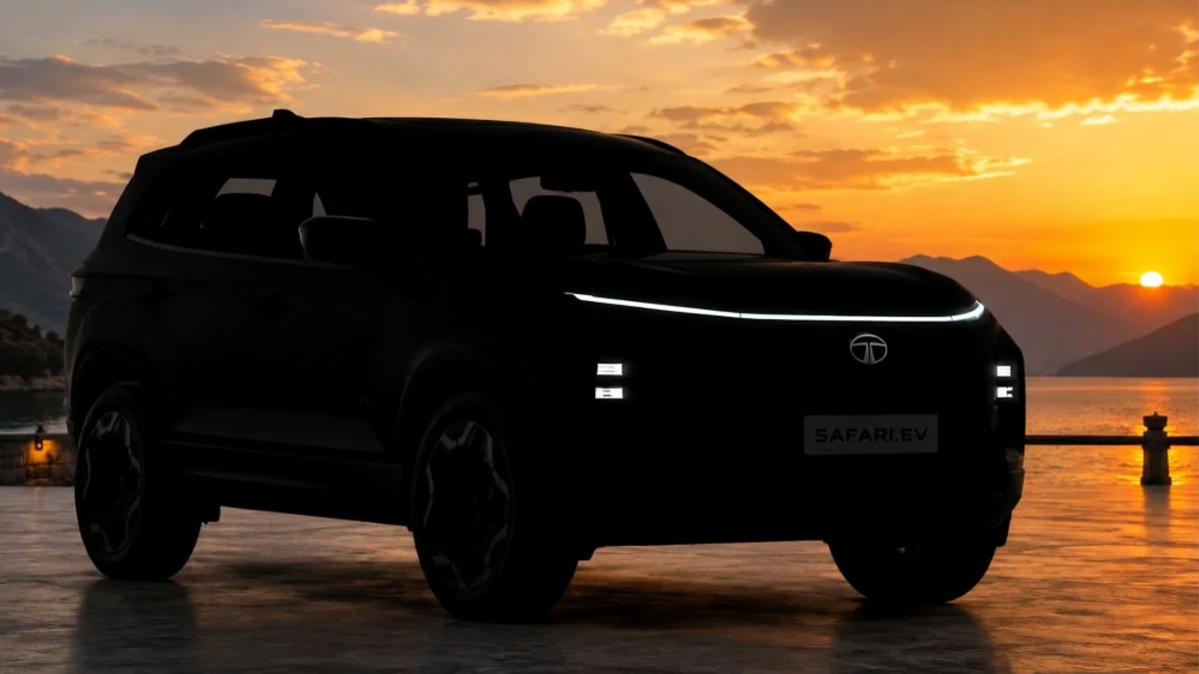
Tata Motors is preparing to expand its electric vehicle portfolio with the upcoming Safari EV, a three-row electric SUV expected to arrive in India during the festive season of 2026. The model will bring the familiar Safari nameplate into the electric vehicle segment and is expected to compete with premium electric SUVs, including the Mahindra XEV 9S.
While Tata Motors has not yet officially announced the complete specifications, launch price or final variant details, recent reports and test vehicles have provided several indications about what buyers can expect from the upcoming electric SUV. The Safari EV has already been spotted testing on Indian roads, indicating that development is progressing ahead of its expected market introduction.
The Safari EV is expected to become Tata Motors’ first three-row electric SUV. The company already offers electric SUVs in other segments, while the Harrier EV has established Tata’s presence in the larger electric SUV category. The Safari EV is expected to build on the technology used by the Harrier EV, with modifications to accommodate its larger three-row body and family-oriented positioning.
Battery options are expected to be one of the major highlights of the upcoming SUV. Reports indicate that the Safari EV could be offered with 65kWh and 75kWh battery packs. These are the same battery capacities associated with the Harrier EV, although the final specifications for the Safari EV may differ because of its larger size and additional seating capacity.
The larger battery option is expected to provide the longest driving range. However, the Safari EV is likely to deliver slightly lower range figures than the Harrier EV because of its larger dimensions and higher weight. The Harrier EV currently has claimed MIDC range figures of up to 627km depending on the battery and drivetrain configuration. The Safari EV’s final certified range will be confirmed closer to its launch.
Another expected highlight is the availability of all-wheel drive. Reports suggest that the Safari EV could be offered with rear-wheel drive as standard on certain variants, while a dual-motor all-wheel-drive configuration could be available on higher variants. The AWD system would provide power to both axles and could offer improved traction and stronger performance compared with a single-motor configuration.
The electric SUV is also expected to receive several exterior changes that distinguish it from the petrol and diesel-powered Safari. These could include a redesigned front section with a closed-off grille treatment, revised bumpers, EV-specific badging and aerodynamic alloy wheels. The overall design is expected to retain the familiar proportions of the existing Safari while introducing electric-specific styling elements.
Inside the cabin, the Safari EV could receive a significant technology upgrade. Recent spy images reportedly show a triple-screen dashboard layout. This setup is expected to include a digital instrument display for the driver, a large central infotainment touchscreen and a separate screen for the front passenger. The configuration would give the electric SUV a more technology-focused cabin and bring it closer to other premium electric vehicles in the segment.
The expected three-screen arrangement could include a 10.25-inch digital instrument display and two 12.3-inch screens, although Tata Motors has not officially confirmed the final screen sizes. The passenger display could be used for entertainment and other functions, while the central screen would handle infotainment, navigation and vehicle-related controls.
The Safari EV is also expected to receive advanced driver assistance technology. Reports suggest that Level 2 ADAS could be offered, along with improvements to the existing safety and driver-assistance systems. Features such as automatic parking assistance, a summon function and a 540-degree camera have also been reported as possible additions. These features could make the SUV easier to operate in crowded urban environments and during parking manoeuvres.
Connected-car technology is also expected to form part of the Safari EV package. Tata Motors could introduce over-the-air software updates, allowing certain vehicle functions and software systems to receive updates without requiring a visit to a service centre. The final list of connected features will depend on the variants offered at launch.
The electric SUV is expected to continue offering a three-row seating configuration, making it particularly relevant for customers looking for a larger family EV. The additional seating capacity could differentiate the Safari EV from several five-seater electric SUVs currently available in India.
Another area of interest is charging and energy-management technology. Reports have indicated that Tata could offer vehicle-to-load and vehicle-to-vehicle charging capabilities on the Safari EV. Vehicle-to-load technology can allow an electric vehicle to supply power to compatible external equipment, while vehicle-to-vehicle charging can potentially allow energy to be transferred between compatible electric vehicles. These capabilities, if introduced, would add another practical dimension to the SUV’s electric powertrain.
The Safari EV is also expected to benefit from the electric vehicle architecture used across Tata Motors’ newer EV products. The company has been expanding its electric portfolio as competition in India’s EV market increases. The arrival of a larger three-row electric SUV would give Tata an opportunity to target buyers looking for a premium family vehicle with an electric powertrain.
The expected launch of the Safari EV comes at a time when competition in India’s premium electric SUV market is becoming more intense. Mahindra has introduced the XEV 9S as a major three-row electric SUV rival, while other manufacturers are also preparing new electric models. As a result, Tata Motors is expected to position the Safari EV with a combination of range, cabin technology, seating capacity and premium features.
Pricing is another important factor that remains officially unconfirmed. Automotive reports currently place the expected starting price around Rs 22.5 lakh, with higher variants potentially reaching around Rs 30 lakh, ex-showroom. However, these figures are estimates and should not be treated as official pricing until Tata Motors announces the final price list.
The company is expected to reveal more information about the SUV closer to its launch. Details such as exact battery capacity by variant, certified range, motor output, charging time, dimensions, safety equipment and pricing will be important for buyers comparing the Safari EV with other premium electric SUVs.
For Tata Motors, the Safari EV represents an important expansion of its electric vehicle strategy. The model combines the established Safari nameplate with an electric powertrain and three-row practicality. Its expected technology package, including advanced driver assistance, connected features and a high-tech cabin, is aimed at meeting the changing expectations of premium SUV buyers.
The final product could differ from the features currently reported because several specifications remain unconfirmed. Tata Motors is yet to officially disclose the complete variant lineup and technical specifications. Therefore, prospective buyers should wait for the company's official announcement before making decisions based on expected range, equipment or pricing.
If launched as currently expected, the Tata Safari EV will add another three-row electric SUV to the rapidly expanding Indian EV market. Its combination of family-focused seating, multiple battery options, possible all-wheel drive and advanced cabin technology could make it an important model for Tata Motors as the company continues to expand its electric vehicle range.