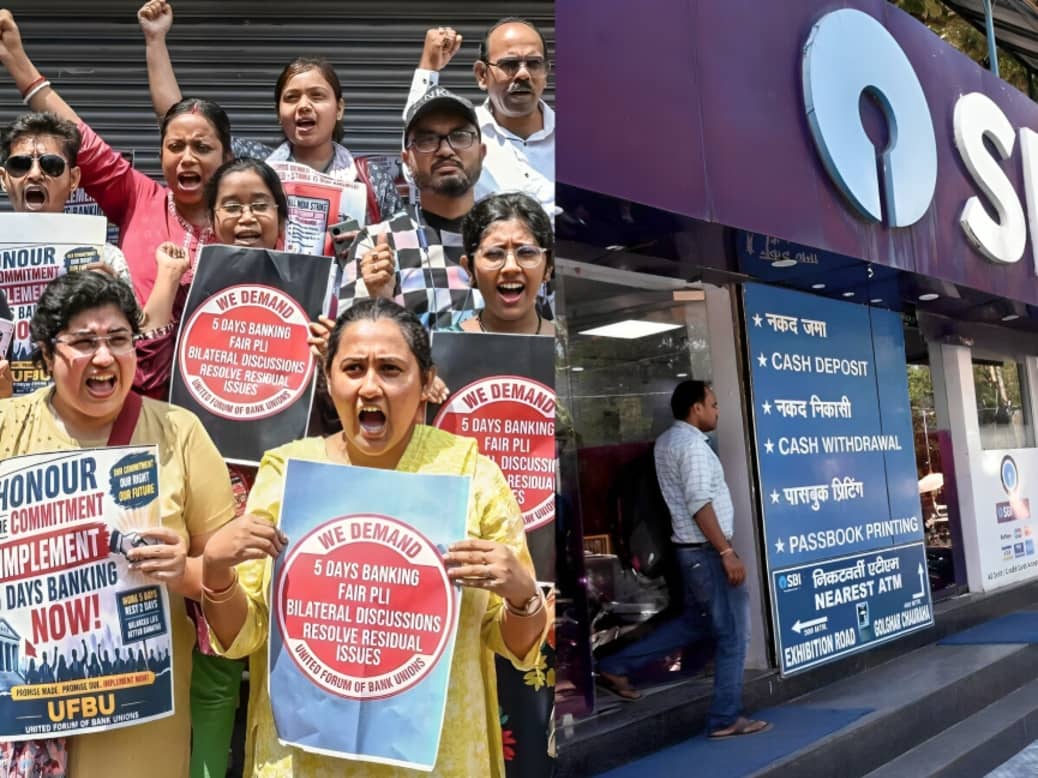
Bank customers across India may face disruption in branch-based banking services from September 28 to September 30, 2026, as the United Forum of Bank Unions has called for a three-day nationwide strike. The proposed industrial action comes at a sensitive time because it follows the weekend holidays of September 26 and 27 and coincides with the half-yearly closing of banks on September 30.
The timing has raised concerns that customers could experience limited access to physical bank branches for several consecutive days. However, the disruption is not expected to mean a complete shutdown of banking services. Banks have advised customers to make use of ATMs, digital banking platforms and other alternative channels wherever possible.
The United Forum of Bank Unions, or UFBU, has called the strike over several demands. The main demand is the implementation of a five-day banking week, under which all Saturdays would become holidays. At present, bank branches generally remain closed on the second and fourth Saturdays, while other Saturdays are working days. The unions have also raised demands related to pension benefits, dearness allowance and other employee-related issues.
The unions had earlier observed a nationwide strike on September 11. Following discussions between the unions, the Indian Banks Association and the Department of Financial Services, the UFBU decided to proceed with the proposed three-day strike unless there was concrete progress on its demands.
For customers, the biggest impact is expected at physical bank branches. Services that require direct interaction with bank employees, including certain account-related requests, cash transactions, cheque-related work and other branch-level activities, could face delays or interruption if employees participate in the strike.
State Bank of India and other public sector banks have already advised customers to complete important transactions before the strike begins. SBI has asked customers to use ATMs, Automated Deposit and Withdrawal Machines, Customer Service Points, internet banking, mobile banking, UPI and other digital channels for routine banking requirements during the disruption.
The availability of ATMs is another important concern for customers. The strike does not mean that ATMs will automatically stop working. The government has asked banks to take steps to maintain essential services and ensure adequate availability of cash through ATMs. Public sector banks have also announced measures to reduce the impact of the strike on customers.
The Finance Ministry has taken a special step to reduce the possible impact of the strike. Public sector banks and regional rural banks have been instructed to remain open on Sunday, September 27, 2026. The Reserve Bank of India has approved the operation of bank branches, offices, ATM-linked branches and currency chests on that day. The move is intended to give customers an additional opportunity to complete banking work before the strike starts.
The Sunday opening is particularly significant because September 26 and 27 are the weekend immediately before the proposed strike. Without the additional working day on September 27, customers could potentially have faced a longer period with limited access to physical banking services. The government has said the decision was taken to safeguard the banking needs of the public.
The timing of September 30 is also important because it is the half-yearly closing date for banks. Financial institutions generally have additional accounting, settlement and reporting activities around such closing periods. The Finance Ministry has therefore asked banks to take advance measures to minimise disruption to important transactions.
Central government employees and pensioners are also among those for whom advance arrangements have been made. The Department of Expenditure issued a memorandum allowing September 2026 salaries, wages and pensions of Central Government employees and pensioners to be disbursed on September 25 instead of waiting until the end of the month. The decision was taken in view of the proposed strike and the possibility of disruption in banking transactions.
Customers who have important banking work should therefore avoid waiting until the strike dates. Those who need services that require a branch visit may consider completing them before September 28 or using the additional Sunday banking opportunity announced for September 27.
For routine transactions, customers are expected to have several digital alternatives. UPI, internet banking, mobile banking and many ATM services are expected to continue operating. However, customers should keep in mind that some transactions involving physical documents, employee verification, cheque processing or other branch-level intervention may not be completed immediately during the strike.
The impact may also differ between banks. The proposed action is primarily associated with the unions participating in the strike, with public sector banking operations expected to experience greater disruption. Private sector banks may be less affected, although individual bank operations can vary depending on employee participation and the services involved.
Customers should also distinguish between the availability of a digital banking platform and the completion of a transaction that requires back-office or branch processing. A customer may be able to initiate a transaction online while certain settlement or verification-related activities could still be affected by employee availability.
Overall, the proposed September 28 to 30 bank strike could create difficulties mainly for customers who depend on physical branches. The government, RBI and banks have announced contingency measures, including Sunday banking on September 27, ATM preparedness and the continued use of digital channels. Customers with urgent banking requirements should therefore plan ahead and complete time-sensitive branch transactions before the strike period wherever possible.