
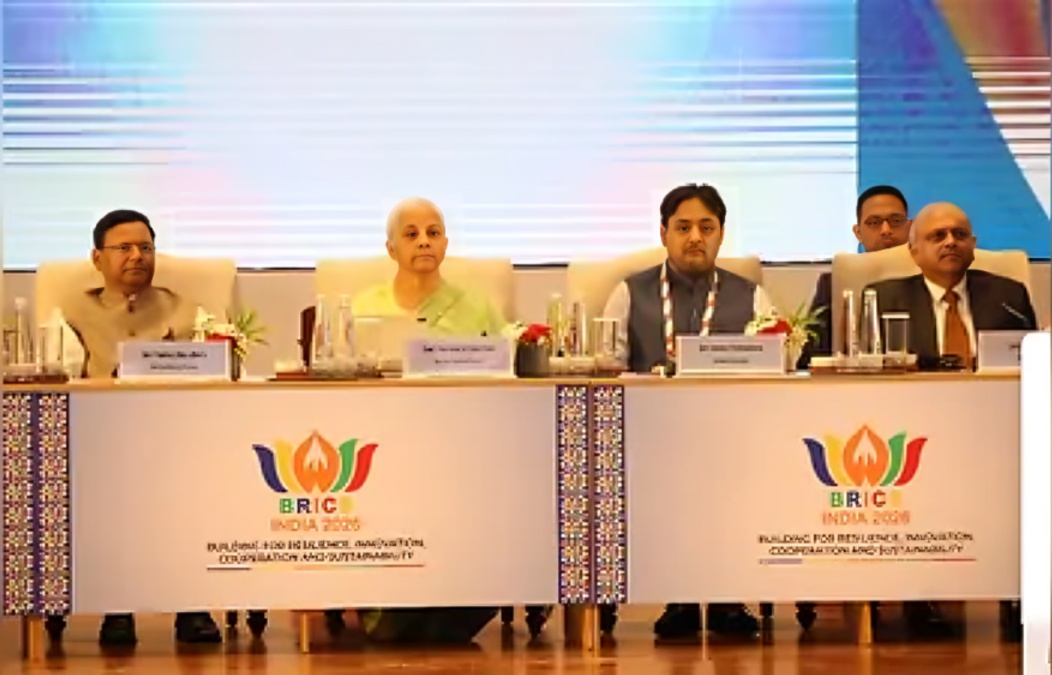
India has called for stronger cooperation among BRICS tax administrations as international tax rules undergo a major phase of renegotiation. Finance Minister Nirmala Sitharaman said BRICS countries need to strengthen their collective voice in discussions that are expected to influence the future framework for cross border taxation.
Sitharaman made the remarks on September 23, 2026, while addressing a meeting of the heads of tax authorities from BRICS member countries in New Delhi. She highlighted the importance of participation by BRICS economies in international discussions, particularly because many of these countries are large developing economies and important source jurisdictions.
According to the minister, international tax rules are currently being renegotiated through several multilateral processes. One of the key discussions involves the proposed United Nations Framework Convention on International Tax Cooperation. She said decisions taken during the coming years could influence cross border taxation for a long period.
India has proposed the creation of two new working groups as part of efforts to strengthen cooperation among BRICS tax administrations. The first working group will focus on international taxation and transfer pricing, while the second will concentrate on revenue statistics.
The proposed International Taxation and Transfer Pricing Working Group is expected to provide a platform for BRICS tax authorities to exchange experience on several technical areas. These include treaty interpretation, transfer pricing audits, advance pricing agreements, mutual agreement procedures and participation in multilateral tax negotiations.
Transfer pricing is particularly important in international taxation because it deals with the pricing of transactions between related companies or entities operating across different jurisdictions. Differences in tax rules and interpretations can result in disputes between taxpayers and tax administrations.
Sitharaman highlighted the concerns faced by developing countries in this area. She said transfer pricing disputes can place a disproportionate burden on developing-country tax administrations. The proposed working group is intended to create a mechanism through which member countries can exchange experiences and discuss common challenges.
The second proposed working group will focus on revenue statistics. The group is expected to work on developing a framework for assessing tax system performance while taking into account the economic and institutional realities of BRICS countries.
Revenue statistics can provide governments with information about tax collection, revenue performance and the functioning of tax systems. India has argued that frameworks developed for different economic systems may not always adequately reflect the circumstances of developing economies.
The two working groups are also intended to create institutional mechanisms that continue beyond India's current BRICS chairship. China is scheduled to take over the BRICS chairship in 2027. The proposal therefore seeks to establish structures that can continue operating under future BRICS presidencies.
The initiative is part of broader efforts to deepen tax cooperation among BRICS countries. The BRICS New Delhi Declaration, adopted after the 2026 summit, reaffirmed the members' commitment to a fair, inclusive, stable and efficient international tax system. It also welcomed initiatives undertaken during India's chairship, including the working groups on international taxation and transfer pricing and revenue statistics.
The declaration also referred to knowledge sharing and capacity building among BRICS tax authorities. Other initiatives include a Young Tax Professionals programme, the BRICS Women in Tax Network, the BRICS Tax Support Network and the BRICS Tax Cross Learning Lab.
Technology has also emerged as an important part of BRICS tax cooperation. During the meeting, Sitharaman highlighted the role of digital infrastructure in improving tax administration. Digital systems can help tax authorities process information, improve compliance and reduce dependence on manual processes.
India's experience with digital tax administration has attracted interest from other BRICS members. The Economic Times reported that India's digital tax systems have drawn attention from partner countries participating in the BRICS tax cooperation process.
Sitharaman identified three broad themes emerging from India's BRICS tax track: technology, administration and people. These areas cover the use of digital tools, development of effective tax administration systems and investment in professional capacity among tax officials.
The proposed working groups are expected to support practical cooperation rather than limit discussions to high-level meetings. Tax officials from participating countries can use such platforms to exchange information, discuss technical issues and share administrative experience.
The developments are also taking place against the backdrop of wider international discussions on taxation. Governments and international organisations are working on rules covering cross border taxation, multinational businesses and the allocation of taxing rights between jurisdictions.
For developing economies, participation in these negotiations is significant because the outcome can affect how taxes are collected from international economic activity. BRICS countries have argued that their experiences and economic circumstances should be reflected in the development of future international tax rules.
India's position, as outlined by Sitharaman, is that BRICS economies should have a meaningful role in shaping these rules. Rather than operating separately, the proposed working groups would allow member tax administrations to coordinate their positions and exchange technical expertise.
The initiative also reflects India's efforts to strengthen institutional cooperation during its 2026 BRICS chairship. The proposed mechanisms are designed to continue after the current chairship ends, allowing cooperation on international taxation and revenue statistics to develop over the longer term.
The next phase will involve discussions on the scope and functioning of the proposed working groups. Their effectiveness will depend on participation by member tax administrations and the extent to which they can translate information sharing and technical cooperation into practical outcomes.
For India, the BRICS tax discussions provide an additional platform to present the perspective of a large developing economy in international tax negotiations. For other BRICS members, the proposed working groups could provide opportunities to exchange experiences on transfer pricing, tax administration and revenue measurement.
The BRICS tax meeting therefore represents one part of the wider effort to develop greater cooperation among member countries on international taxation. As global tax rules continue to be negotiated, India has called for BRICS countries to work together and ensure that their perspectives are reflected in the emerging international tax framework.