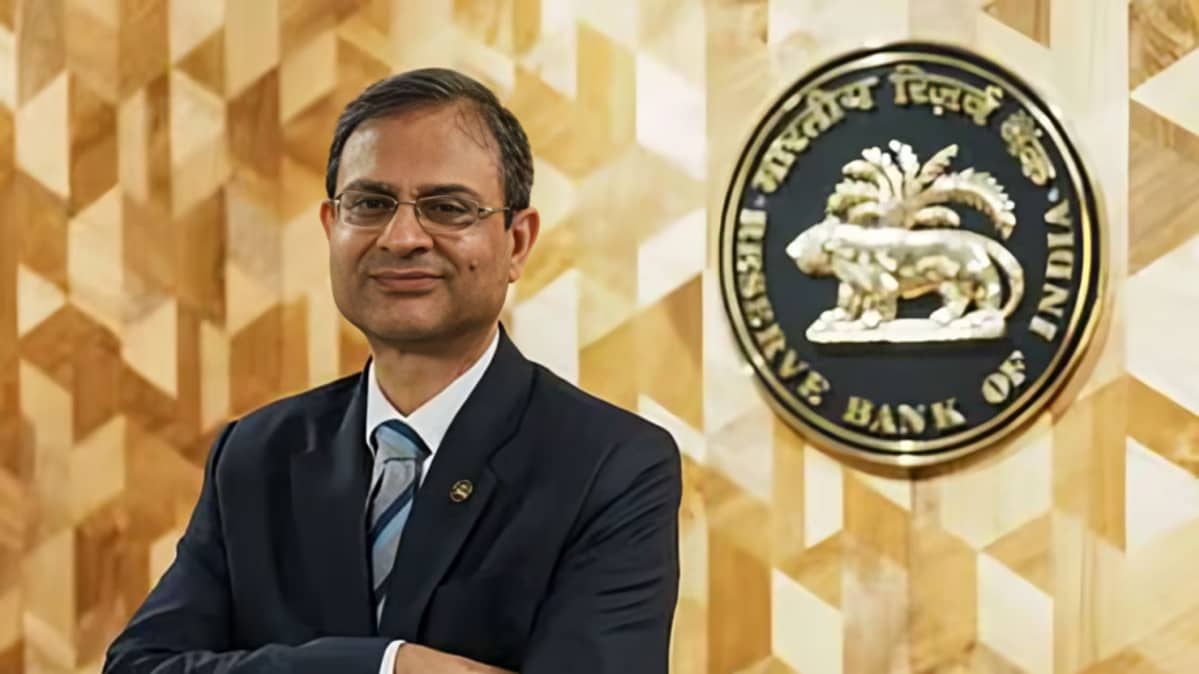
Reserve Bank of India Deputy Governor Shirish Chandra Murmu has highlighted the continuing importance of cash in India's economy, even as digital payment systems have expanded rapidly across the country.
Speaking at a global cash management discussion organised by Bank Indonesia in Jakarta, Murmu said cash remains a significant payment method in India. He emphasised that maintaining public confidence in physical currency is essential for the country's monetary system.
The comments come at a time when India has experienced a major transformation in the way consumers and businesses make payments. Digital payment platforms have become increasingly common for everyday transactions, including retail purchases, bill payments, money transfers and business payments.
Despite this digital growth, the demand for physical currency has not disappeared.
Cash remains important
According to Murmu, cash continues to have an important role in the Indian economy, particularly among sections of the population that continue to depend heavily on physical currency.
Rural and semi urban communities, low income groups, elderly people and small businesses continue to use cash extensively. This means that the growth of digital payments has not resulted in a corresponding disappearance of physical currency.
The continuing demand for cash has created a situation that the Reserve Bank of India describes as a cash paradox.
Currency in circulation continues to grow at double digit rates even though cash represents a declining share of individual transactions because of the rapid expansion of digital payments.
This combination makes it more difficult for the central bank to accurately forecast future demand for banknotes.
The cash paradox
The growth of digital payments might normally suggest that fewer physical notes would be required.
However, India's experience has been different.
While consumers increasingly use digital payment systems, the total amount of currency circulating in the economy continues to increase. This creates a challenge for the RBI because it has to plan the production, storage, transportation and distribution of banknotes while also responding to changing payment habits.
Murmu said this changing pattern makes future currency demand harder to predict and complicates planning for production and distribution capacity.
The RBI therefore needs to balance two parallel developments.
On one side, digital payments are growing rapidly. On the other, physical cash remains an important part of India's economic system.
Trust in physical currency
One of the key points raised by Murmu was the importance of maintaining trust in cash.
For people to continue accepting banknotes, they must have confidence that the notes are genuine, usable and easily accepted for transactions.
This makes the quality of currency notes and the efficiency of the cash distribution system important components of the monetary system.
Murmu emphasised the importance of clean notes, secure logistics and a reliable currency ecosystem. According to him, maintaining confidence in cash is closely connected with maintaining monetary sovereignty.
Banknote quality
The RBI has also been examining ways to improve the durability of banknotes.
Banknotes are regularly exposed to physical handling, environmental conditions and repeated circulation. Notes that become damaged or unfit for circulation eventually have to be withdrawn and replaced.
Extending the useful life of banknotes could help reduce the cost and environmental impact associated with producing and disposing of currency.
Murmu said the central bank is examining measures such as surface coatings and polymer notes for lower denominations.
Polymer banknote trials
The RBI is also exploring polymer banknotes for lower denominations.
Governor Sanjay Malhotra had earlier said that the central bank was conducting a pilot project to assess polymer banknotes under Indian conditions.
The proposed trials are intended to examine how polymer notes perform in India's climate and existing currency infrastructure before any decision is taken on wider implementation.
The move could potentially improve the durability of lower denomination notes, although the final decision on wider circulation will depend on the outcome of the trials and operational assessment.
Large number of banknotes in circulation
The scale of India's cash ecosystem is significant.
Murmu said around 176 billion banknotes are currently in circulation in India. The RBI and the government have been producing approximately 28 billion to 30 billion banknotes annually across six denominations, while around 21 billion notes are disposed of each year.
These figures demonstrate the enormous logistical operation required to maintain India's currency supply.
Banknotes need to be produced, transported, stored, distributed to banks and eventually removed from circulation when they become unfit.
The entire process requires substantial infrastructure and planning.
Digital payments have changed the landscape
India has experienced a rapid increase in digital payments over the past several years.
Consumers now have access to multiple electronic payment methods, making it possible to transfer money instantly without using physical currency.
This has changed consumer behaviour and reduced the dependence on cash for many types of transactions.
However, digital payment growth has not eliminated the need for physical currency.
Instead, India is operating with both systems at the same time.
This creates a payment environment in which digital transactions and cash coexist.
Small businesses and cash
Cash remains particularly relevant to many small businesses.
While larger companies and organised businesses increasingly rely on electronic payments and banking systems, smaller establishments may continue to accept cash because of customer preferences and operational considerations.
Cash can also be important in locations where digital connectivity or access to banking infrastructure is limited.
This explains why the demand for physical currency can remain strong even as digital payment volumes increase.
Rural and semi urban demand
The role of cash is also significant in rural and semi urban areas.
Although digital financial services have expanded considerably, access to reliable internet connectivity, smartphones, banking facilities and digital payment infrastructure can vary between regions.
For some consumers, physical currency remains a familiar and convenient payment option.
The RBI therefore has to consider the needs of different sections of the population when planning India's currency supply.
Currency forecasting challenge
One of the major challenges for the central bank is forecasting how much cash the economy will need in the future.
Currency demand is influenced by several factors, including economic growth, inflation, interest rates, changes in payment behaviour and seasonal demand.
The growing use of digital payments adds another layer of uncertainty.
If digital payments continue to expand while currency in circulation also increases, traditional forecasting models may become more difficult to apply.
The RBI therefore needs to continuously monitor changes in consumer behaviour.
Clean Note Policy
The RBI has maintained a Clean Note Policy aimed at ensuring that people have access to good quality banknotes.
The policy focuses on keeping currency notes in usable condition and removing unfit notes from circulation.
Murmu highlighted the importance of maintaining the quality of notes available to the public. The objective is to ensure that people can continue to use physical currency confidently for everyday transactions.
Clean and usable banknotes also make it easier for members of the public to distinguish genuine currency from damaged or suspicious notes.
Security and logistics
Maintaining confidence in cash is not limited to the physical appearance of banknotes.
The security of the currency distribution system is equally important.
Banknotes need to move through a secure network involving printing facilities, currency chests, banks and other parts of the financial system.
The RBI therefore has to ensure that currency reaches the areas where it is required while maintaining security throughout the process.
This is particularly important given the enormous volume of notes circulating in the country.
Environmental considerations
The RBI is also examining ways to reduce the environmental impact of the cash cycle.
Producing banknotes requires raw materials, energy and transportation. Damaged notes also have to be withdrawn and disposed of.
Increasing the durability of currency could potentially reduce the number of notes that need to be produced and replaced.
Murmu said the central bank is working to reduce the carbon footprint of the cash cycle through measures including improved distribution networks and more efficient disposal processes.
Cash and monetary sovereignty
The continued importance of cash also has a broader monetary significance.
Physical currency issued by the central bank represents a direct form of sovereign money.
Maintaining public confidence in that currency is therefore important to the functioning of the monetary system.
Murmu's remarks underline that digital payment growth does not necessarily mean the end of physical currency.
Instead, both forms of payment can continue to operate alongside each other.
What this means for consumers
For consumers, the RBI's comments indicate that cash will remain an important part of India's payment ecosystem.
People may increasingly use digital payment methods for convenience, but physical currency will continue to be available for those who prefer it or require it.
The central bank's focus on clean notes, secure distribution and improved durability is intended to ensure that cash remains reliable.
What lies ahead
India's payment ecosystem is likely to continue evolving.
Digital payments are expected to grow as more consumers and businesses adopt electronic transactions.
At the same time, the continued increase in currency in circulation suggests that physical cash will remain relevant for the foreseeable future.
The RBI will therefore need to manage both systems simultaneously.
Its challenge will be to ensure adequate currency availability while also responding to changing digital payment trends.
The central bank will also have to improve forecasting methods because the relationship between digital payment growth and cash demand is becoming increasingly complex.
Conclusion
The latest comments from RBI Deputy Governor Shirish Chandra Murmu highlight an important reality in India's changing payment landscape.
Digital payments may be growing rapidly, but cash continues to play a significant role in the economy.
The continued increase in currency circulation despite the declining share of cash transactions has created what the RBI describes as a cash paradox.
For the central bank, the priority is not simply producing enough notes. It also involves maintaining their quality, ensuring secure distribution, extending their durability and preserving public confidence.
With polymer banknote trials and other measures being explored, India's cash management system could see further changes in the coming years.
For now, the message from the RBI is clear. Digital payments and physical currency are not necessarily competing systems. Both continue to serve different needs across India's diverse economy.