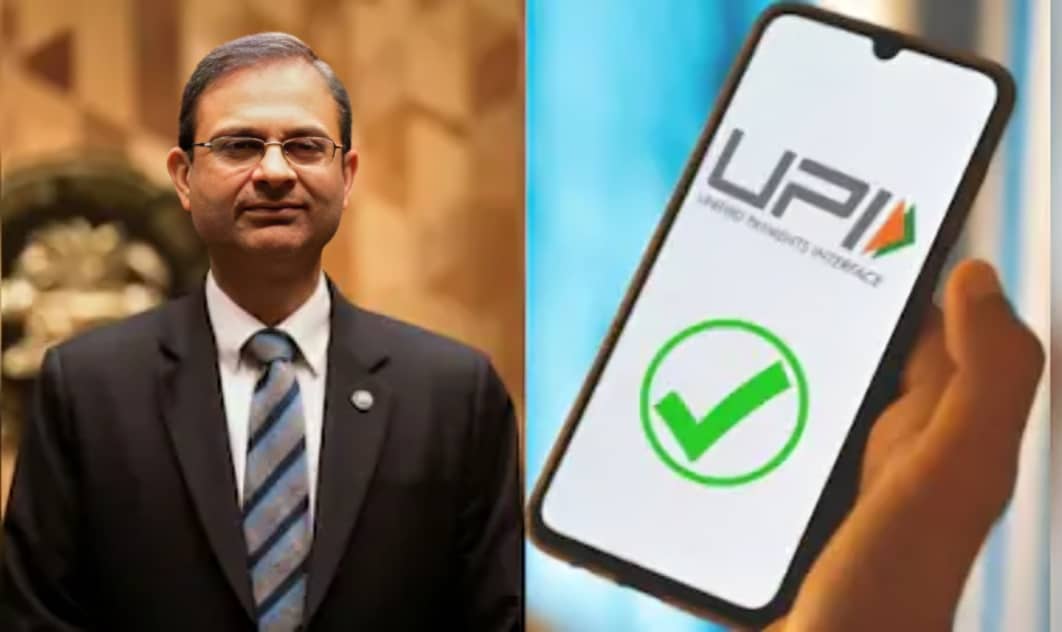

Reserve Bank of India Governor Sanjay Malhotra has stated that the cost of processing Unified Payments Interface transactions cannot be ignored, saying that someone has to bear the operational expenses associated with maintaining the country's rapidly expanding digital payments infrastructure. His remarks come amid ongoing discussions about the possible introduction of a Merchant Discount Rate for UPI transactions above Rs 2,000.
Speaking on the issue, the Governor emphasized that operating a large scale digital payments ecosystem involves infrastructure, technology, cybersecurity, settlement, and maintenance costs. While UPI has become one of the world's most successful digital payment systems, ensuring its long term sustainability requires a practical approach to meeting these operational expenses.
The Merchant Discount Rate is a fee that merchants typically pay to banks or payment service providers for processing digital payment transactions. At present, person to merchant UPI payments are generally processed without an MDR for users and merchants under the existing framework, following government policy aimed at encouraging digital transactions.
Recent discussions have focused on whether an MDR could be introduced for higher value UPI transactions, particularly those exceeding Rs 2,000. However, no official proposal has been approved, and neither the Reserve Bank of India nor the Central Government has announced any final decision regarding changes to the existing fee structure.
Governor Malhotra clarified that while the issue of operational costs deserves attention, any policy decision would require careful consideration of the interests of consumers, merchants, banks, fintech companies, and the broader digital payments ecosystem.
Since its launch by the National Payments Corporation of India, UPI has transformed the way Indians make payments. The platform allows instant money transfers between bank accounts through mobile applications and has become the preferred mode of payment for millions of consumers and businesses across the country.
The rapid growth of UPI has significantly reduced dependence on cash while promoting financial inclusion and digital commerce. Small businesses, street vendors, retailers, and service providers have increasingly adopted UPI because of its convenience, speed, and ease of use.
Industry experts note that maintaining such a large payment network requires continuous investment in technology infrastructure, fraud prevention systems, cybersecurity, server capacity, and customer support. These operational requirements have led to discussions on sustainable funding mechanisms for the ecosystem.
Banks and payment service providers have previously highlighted the financial cost of processing millions of transactions every day. Some industry stakeholders have argued that an appropriate compensation mechanism may help ensure continued investment in digital payment infrastructure without affecting service quality.
At the same time, consumer groups have emphasized the importance of preserving affordable and accessible digital payments that have contributed significantly to India's digital economy. Any future policy changes are therefore expected to balance financial sustainability with the objective of encouraging widespread adoption of digital transactions.
The Reserve Bank of India has reiterated its commitment to strengthening India's digital payment ecosystem while ensuring that policy decisions support innovation, financial stability, consumer protection, and long term growth. Further announcements regarding any changes to the UPI fee structure are expected only after consultations with stakeholders and official policy approval.