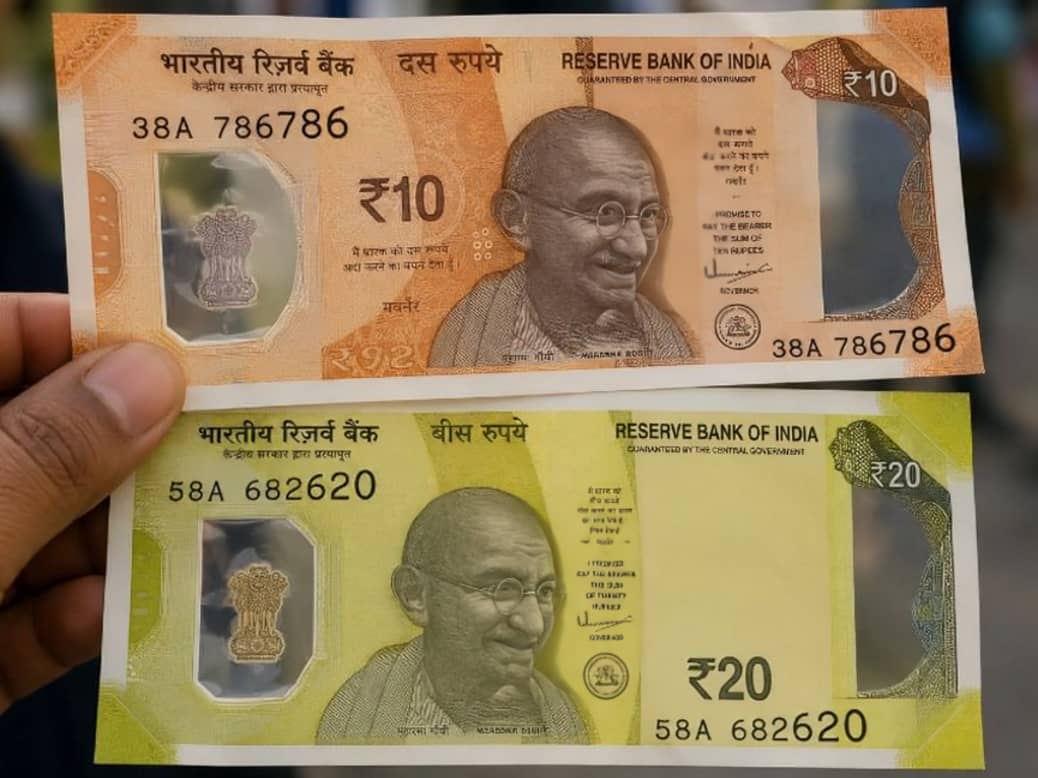
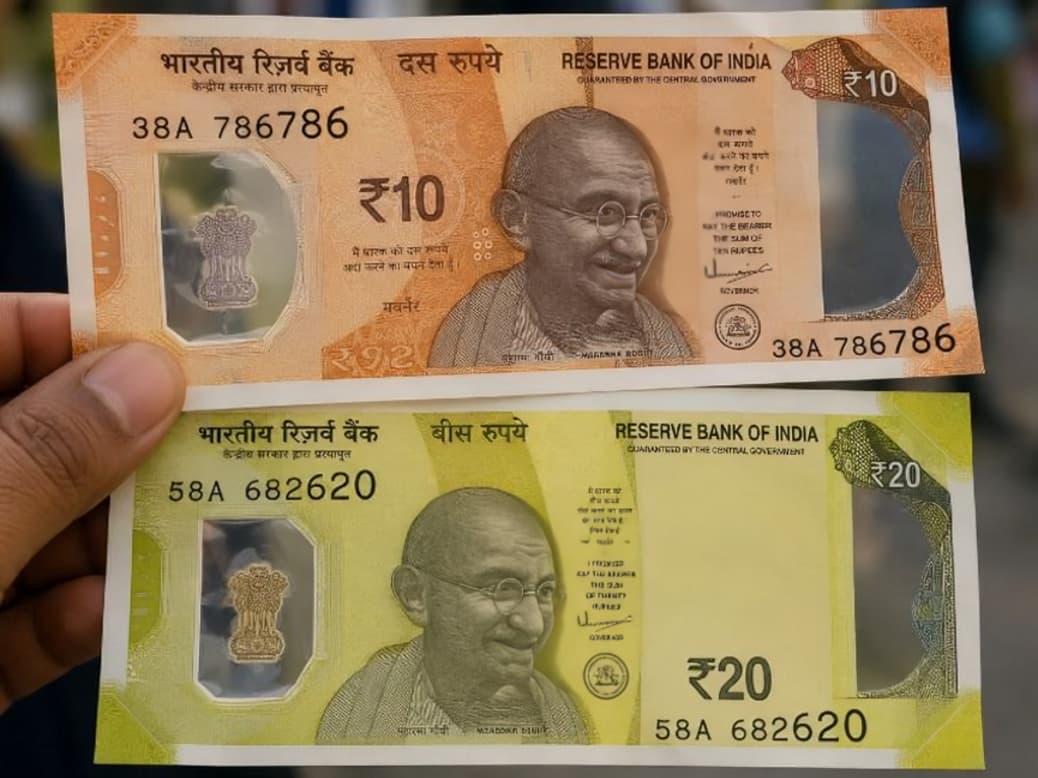
The Reserve Bank of India is preparing to introduce polymer-based ₹10 and ₹20 banknotes as part of a pilot programme aimed at testing a more durable form of currency. According to a recent report, the pilot rollout could begin on April 1, 2027. The proposed notes are expected to retain the same dimensions as the existing paper-based ₹10 and ₹20 notes, which could help banks avoid the additional expense of modifying ATMs.
The proposed move is part of the RBI's efforts to examine alternative materials for banknotes, particularly lower denominations that are frequently used in everyday transactions. Polymer notes are made using a plastic-based substrate rather than the traditional paper-based material. They are generally considered more resistant to wear and tear and may have a longer lifespan.
However, the proposed introduction does not mean that existing paper currency will be withdrawn. The government has clarified that polymer notes are expected to circulate alongside paper-based banknotes. The decision on wider issuance will depend on the outcome of the field trials and the RBI's assessment.
Polymer ₹10 and ₹20 Notes May Arrive in 2027
According to reports, the RBI is targeting April 1, 2027, for the beginning of the polymer currency pilot. The proposed notes will be in the denominations of ₹10 and ₹20, which are among the commonly used banknotes in India.
The government has already approved the RBI's proposal to conduct field trials involving one billion polymer notes each in the ₹10 and ₹20 denominations. This means the proposed trial covers a total of two billion notes.
The central bank will examine how the new material performs under Indian climatic conditions and regular usage. Factors such as durability, handling, resistance to damage and public acceptance will be important in determining whether polymer currency is suitable for wider circulation.
RBI Governor Sanjay Malhotra has previously said that polymer notes could last significantly longer than conventional paper-based notes. He has also indicated that the central bank wants to assess their performance in India before deciding whether to expand their use.
Although April 2027 has been reported as the likely starting point for the pilot, the exact implementation timeline remains subject to the procurement process and other preparations.
Why Is RBI Considering Polymer Currency?
One of the main reasons behind the proposed change is the durability of polymer banknotes. Lower-denomination notes such as ₹10 and ₹20 are frequently exchanged in shops, markets, public transport and other everyday transactions. Because of their high circulation, these notes can become damaged or worn out more quickly.
Polymer banknotes are designed to withstand regular handling better than conventional paper-based notes. International studies cited by the government indicate that polymer notes have a significantly longer lifespan than paper banknotes.
A longer lifespan could reduce the frequency with which damaged notes need to be replaced. This may help reduce the need for repeated printing and distribution of replacement currency over time.
Polymer material can also support additional security features. Depending on the design, such notes may include transparent windows and other features that can make counterfeiting more difficult. The RBI is expected to assess the suitability of such features as part of the development and testing process.
The central bank is also examining whether polymer currency can meet India's requirements in different weather conditions and usage environments. The performance of the notes in areas with different temperatures and humidity levels will be important before any decision on wider adoption.
Same Dimensions Could Help Banks Avoid ATM Costs
One important aspect of the proposed polymer notes is their expected size. According to a report published on October 30, 2026, the RBI plans to retain the dimensions of the existing ₹10 and ₹20 banknotes for the polymer versions.
Maintaining the same dimensions could help banks avoid major changes to their ATM infrastructure. ATMs are designed to handle currency notes according to specific measurements. A significant change in note dimensions could require banks to modify cash-dispensing systems, adjust sensors and recalibrate machines.
Such changes can involve additional expenditure and technical work. By retaining the existing dimensions, the proposed polymer notes could be introduced with fewer adjustments to the current banking infrastructure.
This could be particularly useful for banks that operate large ATM networks across the country. However, the actual compatibility of the new notes with ATMs and other currency-handling equipment will depend on their final specifications and testing.
The RBI's reported decision to maintain the existing dimensions is therefore an important consideration in the proposed transition to polymer currency.
Will Polymer Notes Replace Existing Paper Currency?
One of the main questions surrounding the proposed introduction is whether existing ₹10 and ₹20 paper notes will become invalid. The government has clarified that there is currently no proposal to replace paper-based currency with polymer notes.
According to the Finance Ministry's statement in Parliament, the polymer notes are proposed to be issued alongside existing paper-substrate banknotes. The initial exercise is intended to test the new material rather than immediately replace the current currency system.
This means that the introduction of polymer notes should not be viewed as a withdrawal of existing paper notes. Both types are expected to remain in circulation if the pilot proceeds as planned.
The RBI and the government will consider the results of the field trials before deciding on regular issuance or expansion to other denominations. Any future changes to the currency system will depend on official decisions and announcements.
Therefore, people who currently use ₹10 and ₹20 paper notes do not need to be concerned about an immediate replacement or withdrawal based on the present proposal.
Field Trials Will Determine Future Expansion
The proposed field trials will help the RBI understand how polymer notes perform in real-world conditions. The central bank will need to assess whether the material remains suitable after repeated handling and whether it can withstand the different climatic conditions found across India.
Public acceptance will also be an important factor. Currency notes are used by people across different age groups and in various economic activities. The new notes must be convenient to handle, identify and use in everyday transactions.
The procurement process for the polymer material is also an important stage in the project. The RBI's wholly owned subsidiary, Bharatiya Reserve Bank Note Mudran Private Limited, has initiated steps to identify suppliers of the required polymer substrate.
After the trial, the central bank will review the findings and decide whether the notes can be introduced more widely. The possibility of extending polymer currency to other denominations would also depend on the results and future policy decisions.
What This Means for the Public
The proposed polymer ₹10 and ₹20 notes could bring a change to India's currency system, particularly in the way frequently used lower-denomination notes are manufactured. Their expected durability may help reduce the replacement of damaged notes, while retaining existing dimensions could limit the need for major ATM modifications.
However, the project is still linked to a pilot and testing process. The reported April 2027 timeline should be understood as a proposed target rather than confirmation of a completed nationwide launch.
For now, existing paper-based currency is expected to remain in circulation. The introduction of polymer notes will be an additional step in the RBI's effort to evaluate alternative banknote materials. The final decision on wider issuance will depend on the performance of the new notes during testing and the central bank's assessment of their suitability for India's currency requirements.