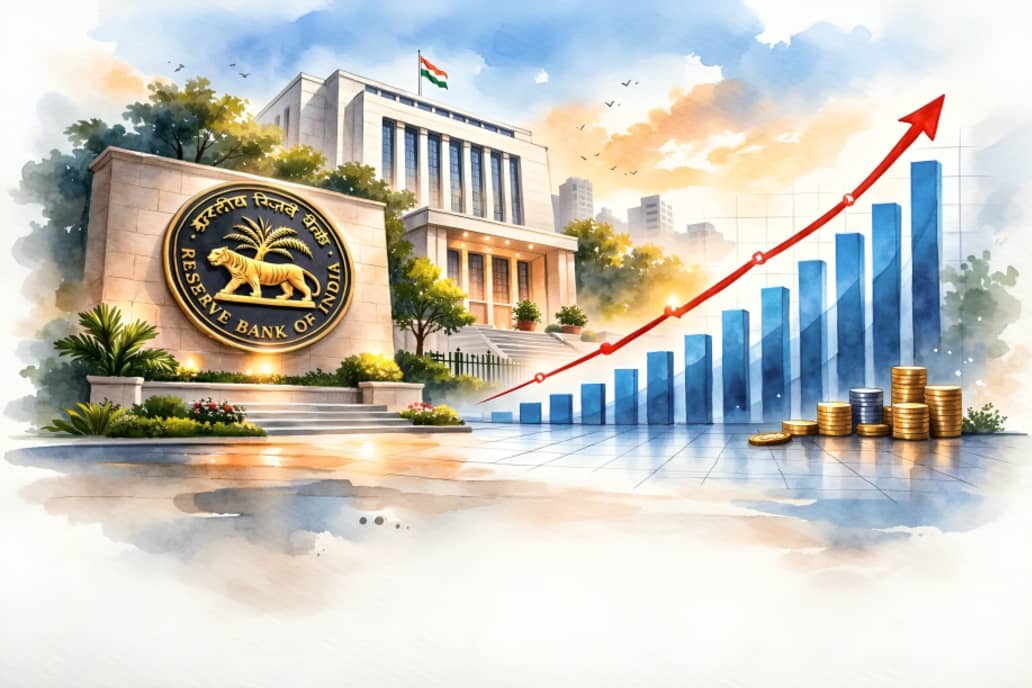
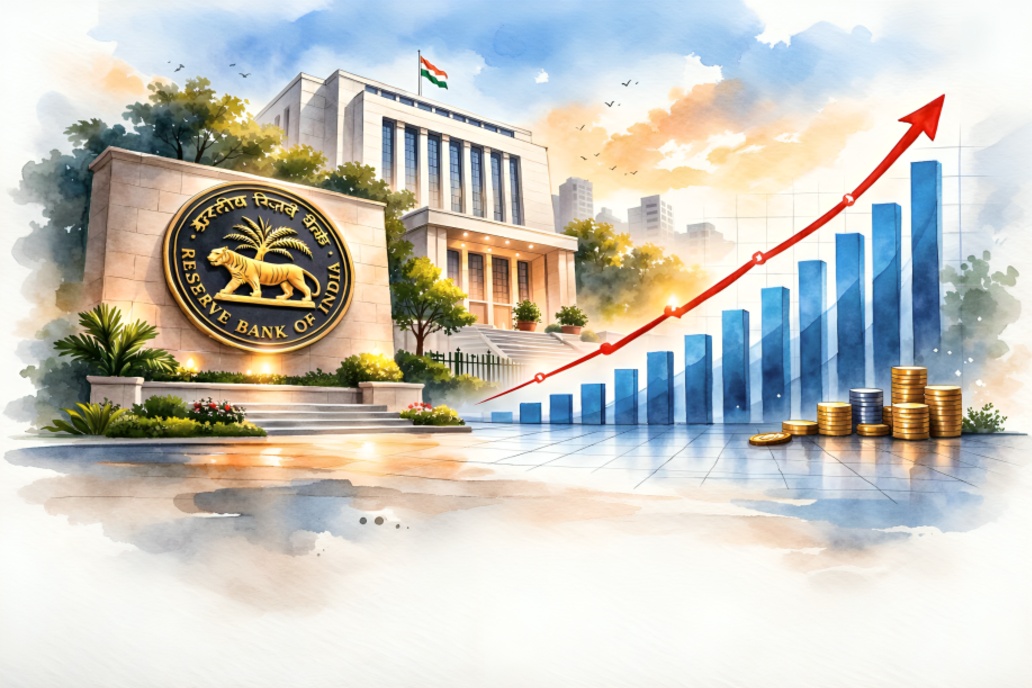
Indian government bond yields are expected to remain elevated after the Reserve Bank of India announced its first interest rate increase in nearly four years and shifted its monetary policy stance towards tightening. The RBI raised the benchmark repo rate by 25 basis points from 5.25 percent to 5.50 percent at its October monetary policy meeting. The central bank also changed its policy stance from neutral to calibrated tightening, indicating that future policy action will depend on incoming economic and inflation data.
The RBI decision has had a direct impact on the government bond market. The benchmark 10 year government bond yield rose to around 7.25 percent after the policy announcement and touched a near three year high. On October 8, the benchmark yield remained close to that level, with the 6.94 percent 2036 government bond yield reported at around 7.24 percent during morning trading. Bond yields and bond prices move in opposite directions, meaning higher yields generally indicate lower bond prices.
The immediate focus of market participants is whether the benchmark yield will remain near the 7.25 percent level. A primary dealership trader cited in a Reuters report said the 10 year benchmark could remain around 7.25 percent unless the RBI announces a fresh open market sale of government securities. The market is therefore watching both monetary policy signals and liquidity operations for further direction.
The RBI's policy stance is an important factor for the bond market. By moving from neutral to calibrated tightening, the central bank has indicated that further rate cuts are not expected in the near term. RBI Governor Sanjay Malhotra said future policy decisions would depend on evolving economic conditions, particularly inflation and growth. The revised stance leaves room for either another rate increase or a pause, depending on incoming data.
Inflation has become a key reason behind the RBI's change in approach. The central bank raised its FY27 consumer price inflation forecast to 5.2 percent from its earlier projection of 5 percent. Its forecast for core inflation was also increased to 4.4 percent from 4.3 percent. The RBI has indicated that inflation risks are broader than they were previously, making monetary policy calibration necessary.
The RBI has also raised its economic growth projection. The central bank increased its FY27 real GDP growth forecast to 7.1 percent from 6.7 percent. This combination of stronger growth expectations and increased inflation risks provides the background to the latest rate decision. The RBI is attempting to maintain price stability while ensuring that monetary policy does not unnecessarily weaken economic activity.
Global market conditions are another important factor for Indian government bonds. US Treasury yields have remained elevated, increasing the relative attractiveness of overseas fixed income assets and creating additional pressure on emerging market bond yields. On October 8, Indian bond traders were also monitoring global yields as they assessed the impact of the RBI's policy shift.
Crude oil prices are adding another layer of uncertainty. International crude prices have moved above the 100 dollar per barrel level, creating concerns about India's inflation outlook because the country imports a large share of its crude oil requirements. Higher energy prices can increase transportation and production costs and may contribute to broader price pressures. The RBI has therefore included global oil price movements among the risks to the inflation outlook.
The bond market had already been pricing in some expectations of higher interest rates before the RBI announcement. The benchmark 10 year yield had been moving higher in recent sessions. The policy decision accelerated that movement as investors reassessed the possibility of additional rate increases.
For existing bondholders, rising yields can result in mark to market losses because bond prices generally fall when market yields increase. However, higher yields can also make newly issued government securities more attractive to investors seeking fixed income opportunities. The effect therefore differs depending on whether an investor already holds bonds or is considering new purchases.
The RBI's liquidity management will also remain important. Market participants are watching for any announcement involving open market operations, which could influence demand and supply conditions in the government securities market. A fresh government bond purchase by the RBI could support bond prices and moderate yields, while additional bond sales could create further upward pressure on yields.
The benchmark bond market is also influenced by government borrowing requirements. Large government borrowing programmes can affect the supply of securities available to investors. When supply is high, investors may demand higher yields to absorb additional government debt, particularly when monetary policy is moving towards tighter conditions.
The recent policy shift has therefore created a more challenging environment for the bond market. Investors are assessing several factors at the same time, including the repo rate, inflation projections, global bond yields, crude oil prices, currency movements, liquidity conditions and government borrowing.
The RBI's communication suggests that the central bank is not committing itself to a predetermined series of rate increases. Instead, Governor Sanjay Malhotra has indicated that future decisions will depend on economic data. This means that inflation readings, crude oil prices, growth data and global financial conditions will remain important indicators for the bond market.
The change in policy stance is nevertheless significant because it marks a shift away from the neutral position maintained earlier. The RBI has indicated that rate cuts are not currently under consideration, while another hike remains possible if inflationary pressures increase. This has reduced expectations of an immediate return to monetary easing.
For the Indian bond market, the near term outlook is therefore likely to remain sensitive to inflation and global financial developments. The benchmark 10 year yield is currently trading close to 7.25 percent, and market participants are expected to monitor whether it can remain around this level or move higher if inflation risks and global yields increase further.
Overall, the RBI's rate hike and policy shift have changed the interest rate outlook for Indian fixed income markets. The central bank has raised the repo rate to 5.50 percent, increased its inflation forecast and adopted a calibrated tightening stance. With bond yields already near multi year highs, the market is likely to remain cautious until there is greater clarity on inflation, crude prices, global interest rates and the RBI's next policy decision.