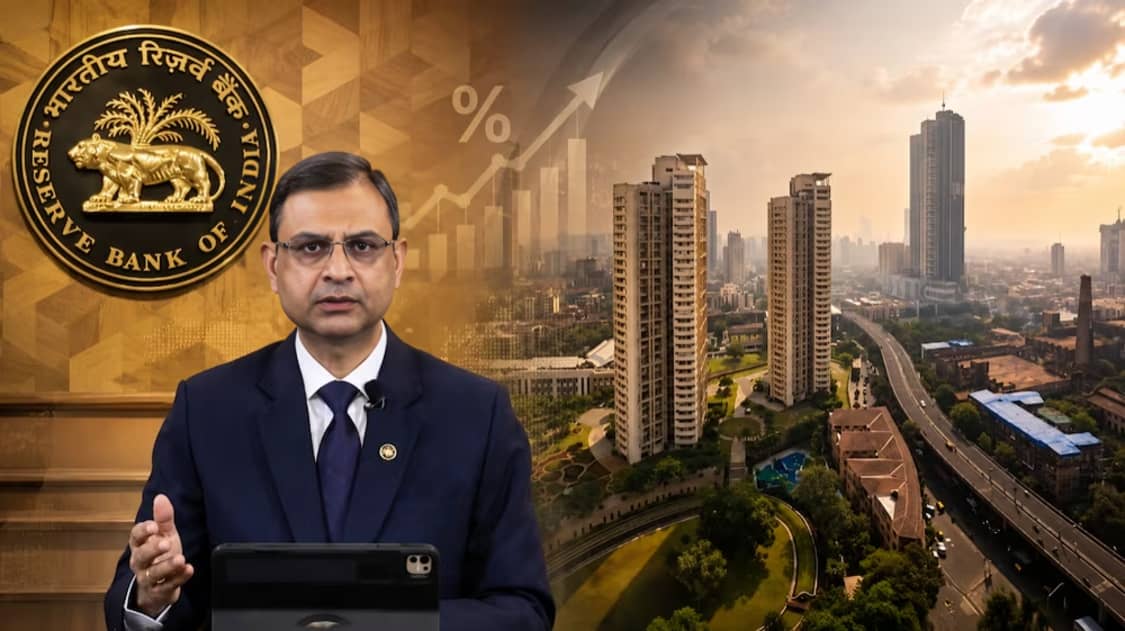

The Reserve Bank of India's decision to maintain the repo rate at 5.25 percent has received positive reactions from economists and industry experts, who believe the move will provide stability to the economy while supporting growth across key sectors. Analysts say the decision offers a balanced approach by encouraging investments, sustaining housing demand, and improving business confidence without creating additional inflationary pressure.
The repo rate is the benchmark interest rate at which the Reserve Bank of India lends funds to commercial banks. It plays a critical role in determining lending and borrowing costs across the financial system. A stable repo rate generally provides certainty to financial institutions, businesses, and consumers, enabling them to make long term financial decisions with greater confidence.
Experts from the real estate sector noted that keeping the repo rate unchanged is expected to benefit prospective homebuyers. Stable policy rates often help banks maintain relatively steady home loan interest rates, making housing finance more predictable for borrowers. This is particularly important for individuals planning to purchase residential properties or refinance existing loans.
Industry representatives believe the decision could also support ongoing momentum in the housing market. Affordable financing conditions, combined with improving consumer confidence, are expected to encourage demand in both affordable and premium housing segments. Developers may also benefit from improved access to financing for new residential projects.
Apart from the housing sector, manufacturing industries have also welcomed the RBI's policy stance. Experts from the container glass industry said that stable borrowing costs will support capacity expansion, modernization, and long term investment planning. The industry supplies glass containers for sectors such as food processing, beverages, pharmaceuticals, cosmetics, and consumer goods, making it an important component of India's manufacturing ecosystem.
Business leaders observed that a predictable interest rate environment allows companies to plan capital expenditure more effectively. Stable financing costs can encourage investments in new production facilities, technology upgrades, and infrastructure development while reducing uncertainty in financial planning.
Economists also highlighted that the RBI's decision reflects confidence in the current macroeconomic environment. Inflation has remained under close monitoring, while India's economic growth continues to be supported by strong domestic demand, infrastructure investment, and expanding industrial activity. Maintaining the existing policy rate provides the central bank with flexibility to respond to future economic developments if required.
Financial market participants generally viewed the policy announcement as being in line with expectations. Investors believe that policy continuity supports financial stability and allows businesses to focus on expansion rather than adjusting to sudden changes in borrowing costs.
The Reserve Bank of India has consistently emphasized that its monetary policy decisions are guided by evolving economic data, inflation trends, liquidity conditions, and global financial developments. The central bank aims to maintain price stability while ensuring adequate support for sustainable economic growth.
Experts believe that sectors dependent on long term financing, including real estate, manufacturing, infrastructure, and capital intensive industries, are likely to benefit from the continued stability in interest rates. Consumers may also gain from greater certainty regarding loan repayments and financing costs.
While future monetary policy decisions will depend on inflation, domestic growth, and international economic conditions, analysts say the current repo rate decision provides a supportive environment for investment, employment, industrial expansion, and consumer confidence.
The RBI's latest policy stance reinforces its commitment to balancing economic growth with inflation management while maintaining stability in India's financial system.