
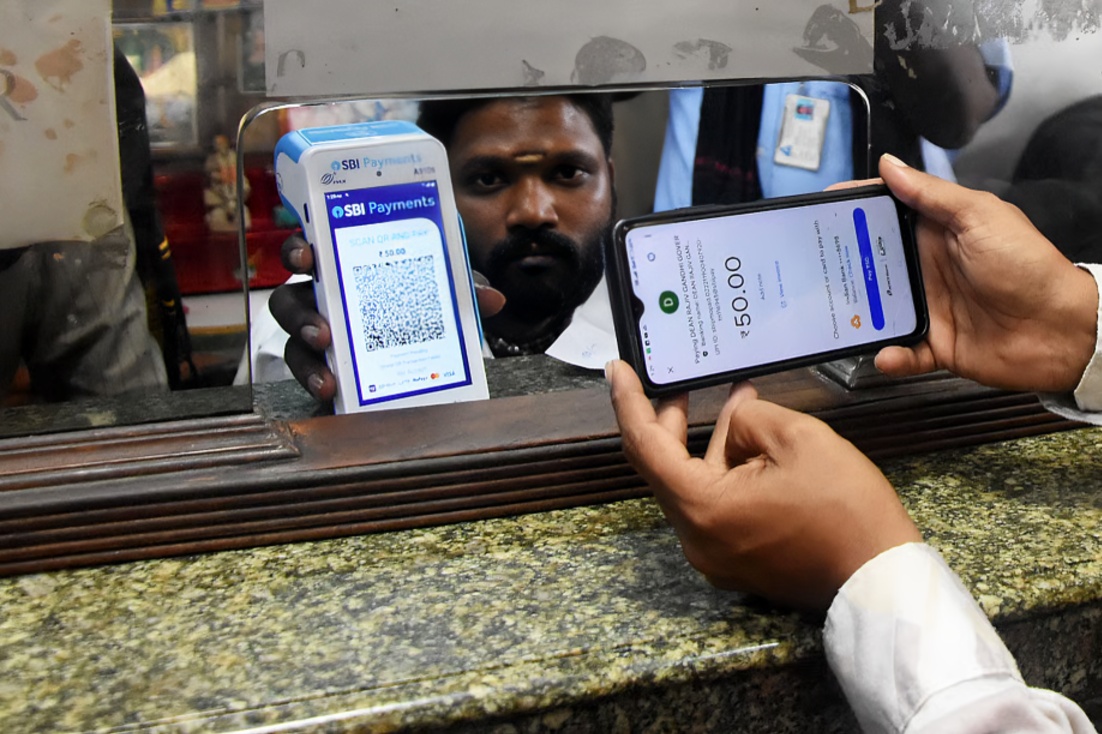
A new Merchant Discount Rate framework for selected Unified Payments Interface transactions will come into effect from October 15, 2026, introducing a 0.4% MDR on specified person-to-merchant UPI payments above Rs 2,000.
The new framework has generated questions among consumers about whether they will have to pay additional charges while using UPI. According to the Finance Ministry, MDR is a charge within the merchant payment ecosystem and is not intended to be directly imposed on customers.
The government has advised banks to ensure that merchants do not pass the MDR cost on to customers. UPI application providers have also been prohibited from imposing platform fees or hidden charges on users for these transactions.
Under the revised framework, person-to-person UPI transactions will continue to remain free regardless of the amount transferred. This means that sending money to another individual through UPI will not attract the new MDR.
Person-to-merchant transactions up to Rs 2,000 will also remain free of MDR. The government has stated that approximately 96% of UPI merchant transactions will remain unaffected because they are either below the Rs 2,000 threshold or covered under the zero-MDR framework for eligible small merchants.
The new MDR will apply to specified merchant transactions above Rs 2,000. The standard rate has been fixed at 0.4%. For transactions of Rs 75,000 and above, the MDR will be capped at Rs 300 per transaction.
For example, if an eligible merchant receives a UPI payment of Rs 10,000, the standard MDR would be Rs 40. However, this amount is part of the merchant-side payment ecosystem and is not intended to be added separately to the customer's payment amount.
The framework also provides exemptions for certain small merchants. Small merchants receiving up to Rs 1 lakh per month through UPI QR payments under the applicable small-merchant category will continue to receive payments without MDR. This provision is intended to keep smaller businesses and street-level merchants outside the new charge structure.
Certain essential sectors will have a different MDR structure. According to the government's framework, eligible transactions above Rs 2,000 involving sectors such as railways, telecommunications, insurance, fuel and agricultural inputs will attract a flat MDR of Rs 5 per transaction.
Capital market-related transactions will also have a separate rate. Payments connected with mutual funds, securities, stockbrokers and dealers will attract an MDR of 0.02%, subject to a maximum of Rs 300 per transaction.
The introduction of MDR represents a change from the earlier zero-MDR model for UPI merchant payments. The government and payment industry have said that continued investment is required in payment infrastructure, cybersecurity, fraud prevention, system reliability and customer support as UPI usage expands.
The National Payments Corporation of India has said the revised framework is intended to create a sustainable revenue mechanism within the digital payments ecosystem. MDR is distributed among participating entities such as banks, payment service providers and payment application providers. It is not a tax collected by the government or NPCI.
A major focus of the government's implementation plan is preventing merchants from transferring the new MDR cost to customers. Reports indicate that the Centre is considering monitoring mechanisms to track how banks, payment aggregators and other participants implement the new framework.
The government is expected to monitor whether merchants bear the MDR as intended or whether additional costs are being added to customer bills. Officials have also indicated that implementation will be closely watched after the October 15 rollout.
This monitoring is significant because UPI has become a major payment method for everyday purchases, online shopping, utility payments and other transactions. A separate surcharge imposed on customers could change the effective cost of digital payments, which is why the government has emphasised that consumers should not be made to bear the MDR.
The revised system does not mean that UPI as a whole will become a paid service. Person-to-person payments will remain free, while merchant payments up to Rs 2,000 will continue without MDR. Eligible small merchants will also remain under the zero-MDR framework.
For larger merchant transactions, the charge will be handled within the payment ecosystem according to the applicable MDR structure. The rate will vary for specified categories, including essential services and capital market transactions.
The government has also clarified that the new MDR framework is separate from transaction limits set by banks and NPCI. Daily transaction limits are security and risk-management measures and should not be interpreted as charges or fee thresholds.
The new system is expected to provide payment companies, banks and other ecosystem participants with a revenue stream that can support the operation and expansion of UPI infrastructure. At the same time, policymakers have sought to maintain free access for individuals and small-value transactions.
The change comes after years of rapid growth in UPI usage. According to Reuters, UPI processed about 24 billion transactions worth around $311 billion in August 2026, highlighting the scale of the country's digital payment network.
From October 15, users should therefore distinguish between a merchant-side MDR and a customer fee. The official framework states that customers should not be charged the MDR separately. Banks have been advised to prevent merchants from passing the cost to consumers, and UPI application providers are prohibited from imposing hidden or platform charges related to the new MDR.
The actual implementation will be closely observed once the new framework takes effect. The government has indicated that monitoring will focus on whether the intended merchant-side structure is followed.
For consumers, the key points are that person-to-person UPI payments remain free, merchant payments up to Rs 2,000 remain free, and eligible small merchants remain exempt. The new 0.4% MDR applies only to specified merchant transactions above Rs 2,000, with a Rs 300 maximum for transactions of Rs 75,000 and above.
The October 15 implementation will therefore change the payment economics for certain larger merchant transactions while keeping most everyday UPI payments outside the MDR framework.