
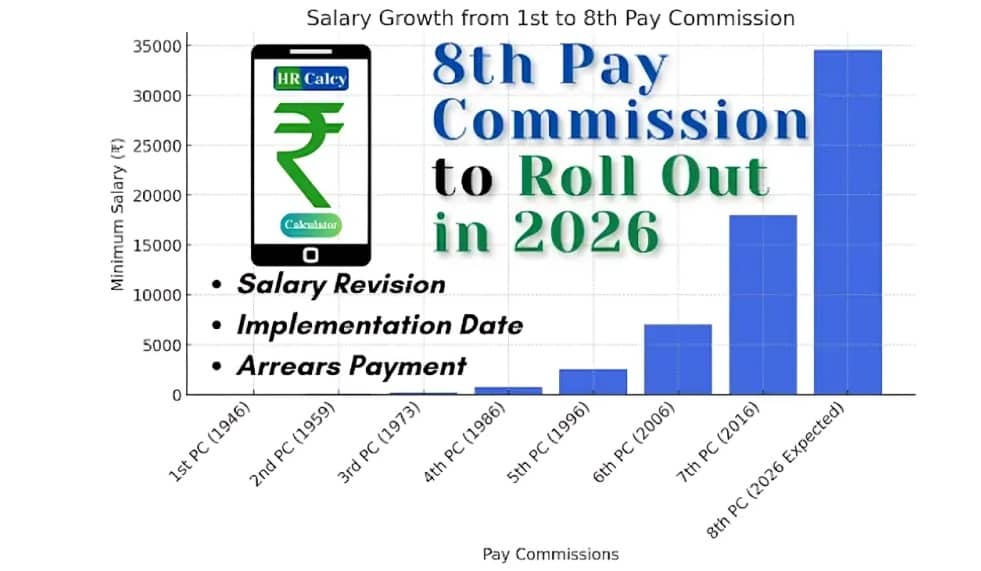
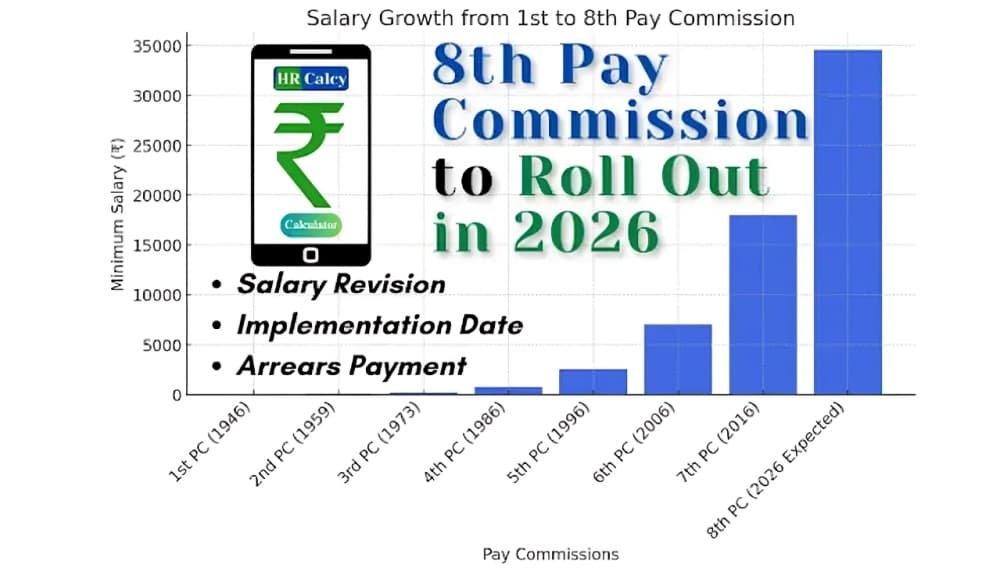
The 8th Pay Commission, expected to come into effect from January 2026, is anticipated to revise salaries of central government employees across all pay levels, from Level 1 to Level 18. Although the government has not yet formally constituted the commission, discussions around possible pay hikes have already gained momentum among employees and policy analysts.
Under the 7th Pay Commission, salaries were revised using a fitment factor of 2.57, which multiplied the existing basic pay to arrive at the new pay structure. For the 8th Pay Commission, experts suggest that the fitment factor could range between 2.86 and 3.0, depending on inflation trends, fiscal capacity, and recommendations by the commission.
If a fitment factor of 2.86 is applied, a Level 1 employee with a current basic pay of Rs 18,000 could see their revised basic salary increase to approximately Rs 51,480. Similarly, employees at Level 2, currently drawing a basic pay of Rs 19,900, may see it rise to around Rs 56,914. At Level 3, the basic pay could increase from Rs 21,700 to nearly Rs 62,062.
For mid-level employees, the impact would be more substantial in absolute terms. A Level 6 employee, such as a government officer, currently earning a basic salary of Rs 35,400, could see it rise to over Rs 1 lakh. At Level 10, which includes entry-level IAS and IPS officers, the basic pay could increase from Rs 56,100 to approximately Rs 1.6 lakh.
At the senior-most levels, including Level 17 and Level 18, the salary revision could be even more significant. Level 18 officers, such as cabinet secretaries, currently draw a fixed salary of Rs 2.5 lakh per month. With the 8th Pay Commission, this figure could increase depending on whether the government revises the fixed pay structure or introduces a new ceiling.
Apart from basic pay, allowances such as Dearness Allowance, House Rent Allowance, and Travel Allowance are also expected to rise, as most of them are calculated as a percentage of basic pay. Pensioners are also likely to benefit, as revised pay scales directly affect pension calculations.
However, experts caution that these figures are indicative and subject to change. The final recommendations will depend on economic conditions, inflation rates, government revenue, and fiscal discipline. The government will also assess the financial burden of implementing the revised pay structure, which could run into several lakh crore rupees annually.
Employee unions have been demanding early constitution of the 8th Pay Commission, citing rising living costs and inflation. On the other hand, the government has emphasised the need to balance employee welfare with fiscal responsibility.
As 2026 approaches, clarity on the 8th Pay Commission is expected to improve. Until then, the projected salary hikes offer a glimpse into how government pay structures may evolve in the coming years.


