
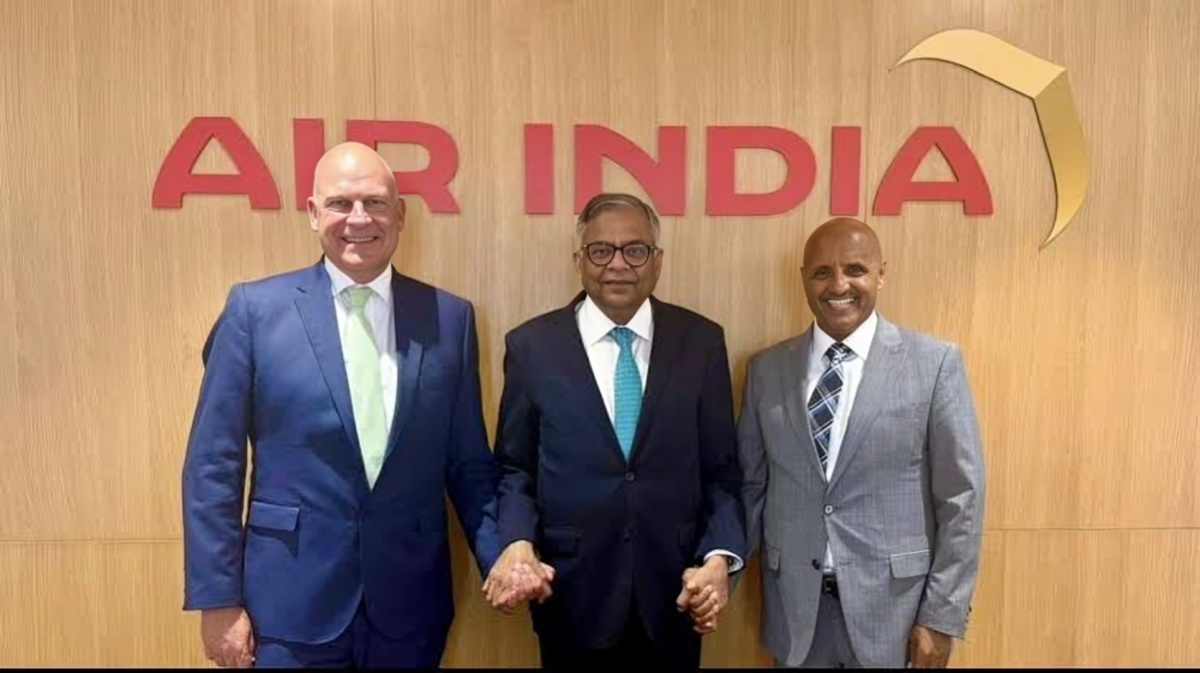
Air India’s board of directors met in Mumbai as the Tata Group owned airline prepared for a change in its top leadership. The meeting focused on the transition from Campbell Wilson, the outgoing Managing Director and Chief Executive Officer, to Tewolde Gebremariam, who has been appointed as the company’s next CEO and Managing Director.
According to reports, the board discussed the remuneration and salary structure of Gebremariam as part of the preparations for his new role. A subsequent report by The Economic Times said the board approved his remuneration package while also discussing operational priorities and the handover from Wilson. The meeting was chaired by Tata Sons Chairman N Chandrasekaran at Bombay House in Mumbai.
The leadership transition comes at an important stage in Air India’s transformation under Tata Group ownership. The Tata Group completed its acquisition of Air India from the Indian government in January 2022. Since then, the airline has been undergoing changes involving its fleet, network, operations, customer experience and organisational structure.
Campbell Wilson became Air India’s Managing Director and CEO in 2022 and has overseen a major part of the airline’s transformation programme. During the latest board meeting, Wilson reportedly briefed the board on the airline’s current operational position, progress made during his tenure and areas that still require management attention. The discussion was described as part of the operational handover to the incoming leadership.
Tewolde Gebremariam was formally appointed as Air India’s CEO and Managing Director by the company’s board in August 2026. Air India said the appointment followed a global search for a leader with experience in airline transformation, operational excellence, safety, service and profitable growth.
Gebremariam previously served as Chief Executive Officer of Ethiopian Airlines Group. According to Air India, he led the airline group through a period of significant expansion and developed experience in managing complex aviation operations, international networks, hub development, maintenance and training infrastructure.
Air India said his experience in operational reliability and safety was among the factors considered during the appointment process. The company also highlighted his experience in expanding long haul international networks and managing large scale airline operations.
The incoming CEO is expected to focus on operational execution as Air India moves into another phase of its transformation. Safety, reliability and consistency are expected to remain important areas for the airline as it manages a large fleet, international operations and an ongoing aircraft modernisation programme.
Air India’s official announcement said Gebremariam would focus on operational reliability, safety standards, engineering quality and long term growth. The company also said the new leadership would work with employees and aviation authorities to strengthen international connectivity and Air India’s position as a global aviation hub.
Cost management is another important issue for the airline. Air India operates in a highly competitive aviation market where fuel expenses, aircraft utilisation, airport charges, staffing costs, maintenance and foreign exchange movements can have a significant impact on financial performance.
The incoming CEO therefore takes charge at a time when the airline is expected to balance expansion plans with operational efficiency. The focus on cost consciousness does not necessarily mean a reduction in services, but rather greater attention to how resources are used across the airline’s operations.
Air India is also continuing to expand and modernise its fleet. According to the airline, the wider Air India Group has placed orders for hundreds of new aircraft and is progressively retrofitting its existing aircraft. The company has also been developing aviation training and maintenance infrastructure as part of its long term transformation programme.
The leadership change also follows a period in which Air India has faced operational challenges and disruptions. The airline’s incoming leadership will therefore need to address day to day reliability while continuing the longer term transformation programme.
The board meeting provided an opportunity to review the airline’s current operational position and establish priorities for the next phase. According to reports, N Chandrasekaran outlined expectations for the incoming leadership, with reliability and execution among the areas receiving attention.
The exact details of Gebremariam’s salary package have not been publicly disclosed in the reports reviewed for this article. Reports have confirmed that remuneration was discussed and that the package was approved, but a detailed breakdown of fixed salary, incentives, benefits or performance linked compensation was not provided in the publicly available information.
This distinction is important because executive compensation can include several components beyond basic salary. These may include performance incentives, benefits and other contractual arrangements. Unless Air India or its authorised representatives disclose the detailed structure, individual figures should not be treated as confirmed.
The board also acknowledged Campbell Wilson’s contribution during his tenure. Air India has credited Wilson with leading important parts of the airline’s transformation, including fleet modernisation, organisational changes and integration work. His departure marks the next stage of the leadership transition.
Gebremariam is expected to formally take charge during September 2026. His appointment is part of Air India’s continuing effort to build a larger international airline while improving operational performance and financial sustainability.
For passengers, the most visible areas of the transition could include flight reliability, service consistency, aircraft availability and the pace of improvements to the customer experience. For the company, the broader priorities include operational discipline, safety, cost management, fleet deployment and international network development.
The board meeting therefore represents both a leadership transition and a review of Air India’s next phase. While compensation was among the matters discussed, the incoming CEO’s operational priorities are also central to the transition.
As Gebremariam prepares to take over, Air India is moving from the leadership phase of Campbell Wilson towards a new management period focused on operational execution and further transformation. The airline’s performance under the new leadership will be closely watched as it continues its plans to expand its international presence and strengthen its position in the global aviation market.