
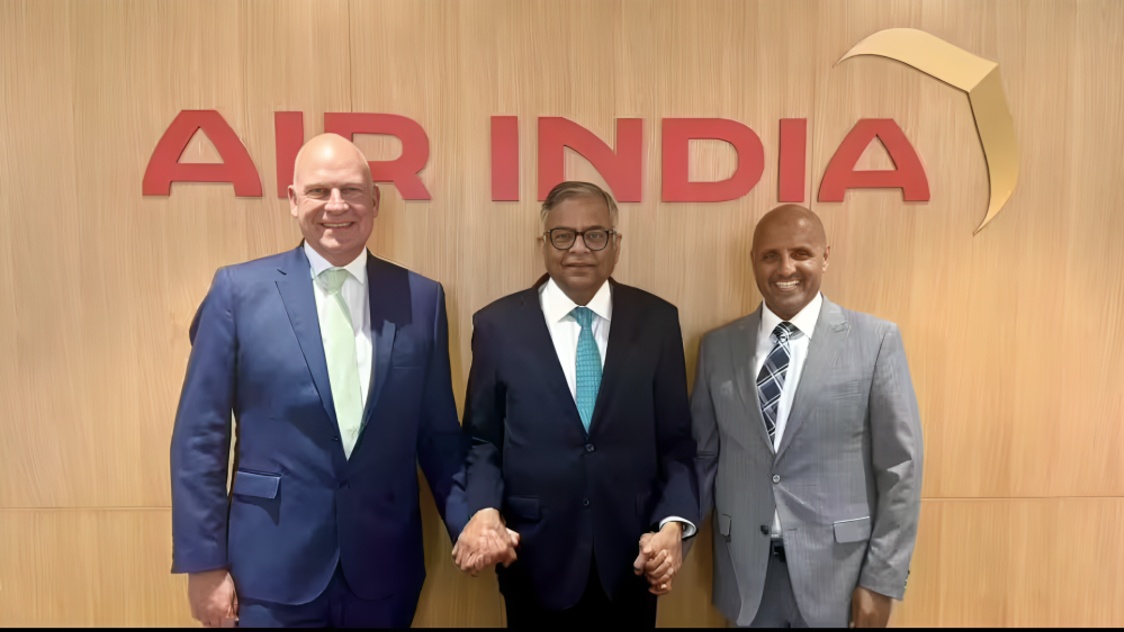
Air India is preparing for a major leadership transition, with the airline’s board meeting in Mumbai to discuss several important matters ahead of Tewolde Gebremariam taking charge as the new Chief Executive Officer and Managing Director. Among the key issues expected to be considered is the compensation structure for the incoming CEO.
The board meeting is being chaired by N Chandrasekaran, Chairman of Tata Sons and Air India. The meeting comes as Campbell Wilson prepares to leave his position as Air India’s Managing Director and CEO. Wilson has led the airline since the Tata Group took control of the carrier and has been overseeing its transformation and integration efforts.
Gebremariam was selected by Air India in August 2026 following a search process overseen by a board committee. The aviation veteran brings nearly four decades of experience in the industry and spent more than 11 years as the chief executive of Ethiopian Airlines Group. His experience in managing a major international airline is expected to be important as Air India attempts to strengthen its operations and improve its financial performance.
The exact salary and remuneration package that Gebremariam will receive has not been publicly disclosed. Reports indicate that the Air India board is considering his compensation as part of the wider leadership transition. This means there is currently no confirmed public figure for his annual salary, performance incentives or other benefits.
The focus on the incoming CEO’s remuneration comes at a challenging stage for Air India. The airline is undergoing one of the largest transformation programmes in its history while dealing with financial losses, operational difficulties and pressure to improve customer service and safety standards.
Gebremariam is taking over at a time when Air India is also dealing with the effects of geopolitical disruptions. Changes in international airspace availability, conflicts affecting aviation routes, fuel-price volatility and disruptions to flight operations have created additional challenges for airlines operating international networks.
Air India has also faced operational difficulties in recent months. The airline has been working to improve punctuality, baggage handling, aircraft availability and overall passenger experience. These areas are expected to remain important priorities under the new leadership.
Safety is another major focus for the incoming management team. During a recent town hall meeting involving Air India employees, Gebremariam and N Chandrasekaran emphasised the importance of strengthening safety standards and operational reliability. Chandrasekaran said safety and customer trust must remain central to Air India’s next phase of development.
Gebremariam has also sought the cooperation of Air India employees as he prepares to lead the airline. In his address to staff, he stressed that operational excellence requires consistent execution and attention to basic processes. His approach is expected to place considerable emphasis on reliability, discipline and the quality of the passenger experience.
The incoming CEO has also expressed an ambition to revitalise Air India and restore confidence in the airline. His comments have focused on improving operational performance while building a stronger organisational culture.
The leadership change is significant because Air India is in the middle of an ambitious fleet expansion programme. The airline group has plans to add hundreds of aircraft over the coming years as it seeks to strengthen its domestic and international network. Managing such a large expansion while improving existing operations will be one of Gebremariam’s major responsibilities.
Air India is also working to integrate and streamline its aviation businesses under the Tata Group. The group has been pursuing a broader strategy to create a stronger airline operation following its acquisition of Air India and the subsequent integration of other aviation assets.
The financial situation adds another layer of complexity. Air India has been under pressure to reduce losses and improve efficiency as it invests heavily in fleet expansion, technology, employee development and customer service. The company therefore needs to balance long-term investment with greater financial discipline.
Cost consciousness is expected to be another major area of focus. N Chandrasekaran has told employees that Air India needs to build a stronger culture of cost discipline while maintaining high standards of safety and customer service.
The compensation discussion for the incoming CEO should also be viewed in this wider context. Executive remuneration at a major airline can include fixed salary, performance-linked incentives and other benefits. However, the precise structure for Gebremariam has not been made public, and it would be premature to estimate his final package without an official disclosure.
The previous CEO’s compensation provides some context about how senior executive remuneration can be structured at Air India. Campbell Wilson’s remuneration package approved for 2025 included fixed pay, performance-linked incentives and long-term stock incentives. Reports put the maximum annual package at around Rs 27.75 crore. However, this figure relates to Wilson and should not be treated as Gebremariam’s salary.
Gebremariam’s appointment marks a new phase for Air India. His experience at Ethiopian Airlines is particularly relevant because he previously led an airline through a period of international expansion and development. His background could help Air India as it attempts to build a larger global network and compete more effectively with established international carriers.
At Ethiopian Airlines, Gebremariam was associated with a long period of growth and expansion. His experience included managing international operations, fleet development and a large workforce. Air India is expected to benefit from that international aviation experience as it seeks to expand its own global presence.
However, the challenges facing Air India are substantial. The airline needs to improve operational consistency while continuing its fleet modernisation programme. It must also rebuild passenger confidence and ensure that safety remains a central part of its organisational culture.
The transition from Wilson to Gebremariam is therefore more than a routine change in senior management. It comes at a critical stage in Air India’s transformation under Tata Group ownership.
Wilson’s tenure included significant changes to Air India’s fleet, network and organisational structure. He was also involved in the airline’s efforts to modernise its customer experience and integrate the carrier into a broader aviation strategy. The incoming CEO will now be expected to build on that foundation while addressing areas where performance remains under pressure.
Gebremariam has already indicated that he wants employees to play an important role in the next phase. His emphasis on cooperation suggests that internal culture and workforce engagement will be important components of his leadership strategy.
The airline’s ability to execute its plans will also depend on external factors. Global fuel prices, aircraft delivery schedules, geopolitical developments and international travel demand can all influence Air India’s performance.
The airline is additionally expected to focus on punctuality and customer service. For passengers, improvements in flight reliability, baggage handling, aircraft cleanliness and communication during disruptions will be important indicators of whether the transformation is delivering practical results.
The board’s current discussions therefore have significance beyond the CEO’s compensation package. The meeting represents part of the formal transition process as Air India prepares for a new leadership phase.
Gebremariam is expected to formally assume his responsibilities later this month, subject to the required approvals. Once he takes charge, the focus is likely to shift quickly toward implementing his operational priorities and working with the management team to address the airline’s immediate challenges.
For now, the exact details of his salary remain undisclosed. The board’s consideration of the compensation structure is an expected part of appointing a new chief executive and does not by itself indicate the final value of the package.
Air India’s next phase will ultimately be judged by operational improvements, financial performance, safety standards and customer satisfaction rather than the executive pay package alone. Gebremariam will have to manage these priorities while overseeing one of the most ambitious expansion programmes in the airline’s history.
The leadership transition comes with high expectations. With his long experience in international aviation, Gebremariam has been brought in to help Air India move through a difficult period and establish a more reliable and financially sustainable operation.
As the board finalises the transition and compensation arrangements, the larger challenge will be ensuring that the new leadership can translate its stated priorities into measurable improvements across Air India’s operations.