
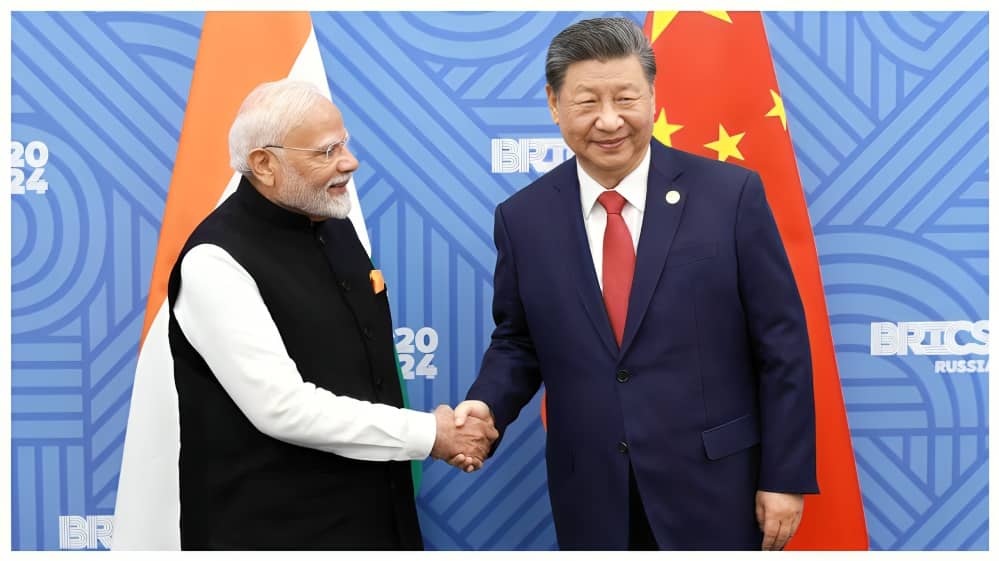
The Cabinet Committee on Economic Affairs has approved a relaxation in the foreign direct investment rules for countries that share land borders with India including China. The decision was taken during a meeting chaired by Prime Minister Narendra Modi and is expected to modify certain requirements introduced earlier under the foreign investment policy framework.
In 2020 the Government of India revised its foreign direct investment policy through Press Note 3. The measure was introduced during the COVID 19 pandemic when global markets were experiencing economic uncertainty. At that time the government required all foreign investments from countries sharing land borders with India to obtain prior government approval before investing in Indian companies.
The objective of the 2020 policy change was to prevent opportunistic takeovers of Indian businesses that might have become financially vulnerable during the pandemic. The rule applied to investors from neighbouring countries such as China Pakistan Nepal Bhutan Myanmar Bangladesh and Afghanistan. Any investment proposal from these countries had to undergo additional scrutiny and receive approval from the government before it could proceed.
According to recent reports the Cabinet Committee on Economic Affairs has now approved a relaxation of these restrictions. The decision is expected to simplify the investment process while still maintaining regulatory monitoring of foreign capital entering the country. Government officials have indicated that the revised framework aims to balance economic growth with national security considerations.
Foreign direct investment plays an important role in the development of the Indian economy. It brings capital technology expertise and employment opportunities to domestic industries. Over the years India has introduced several reforms to make its investment environment more attractive to global investors.
However policies relating to investments from neighbouring countries have often been handled with additional caution due to strategic and economic considerations. The 2020 policy was introduced at a time when global financial markets were experiencing volatility and there were concerns that undervalued companies might become targets for acquisitions.
The recent decision by the Cabinet Committee on Economic Affairs signals a shift toward a more flexible approach while continuing to safeguard national interests. Officials believe that easing certain procedural requirements can help promote investment activity and strengthen economic partnerships with neighbouring countries.
Experts in economic policy note that India has been working to maintain a balance between encouraging foreign investment and protecting critical sectors of the economy. Government authorities continue to evaluate investment proposals carefully particularly in sectors that are considered strategically sensitive.
The decision to relax the rules may also be viewed in the context of India broader economic strategy aimed at boosting manufacturing expanding infrastructure and attracting global capital. Foreign investment is often seen as an important driver for economic expansion and job creation.
While the relaxation of rules may simplify the investment process the government is expected to continue monitoring foreign investments to ensure transparency and compliance with national regulations. Authorities have emphasised that safeguards will remain in place to protect the interests of Indian companies and the overall economy.
Further details about the implementation of the revised policy are expected to be announced by the relevant government departments in the coming period.


