
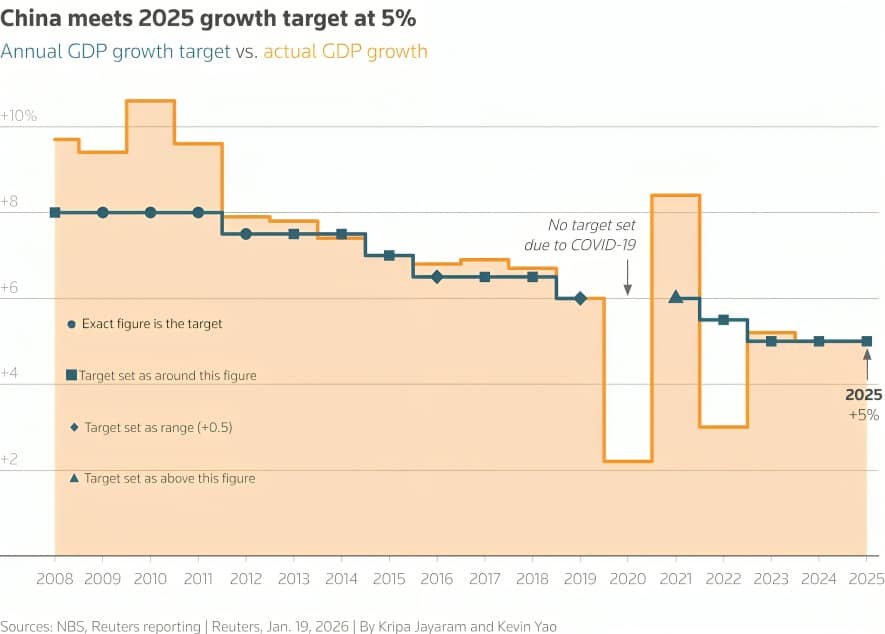
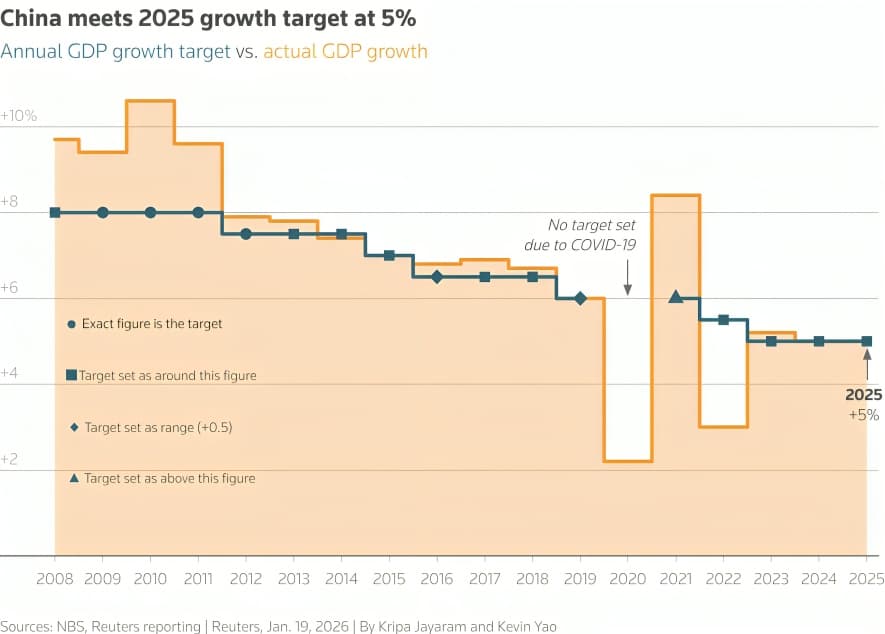
China has reached its 2025 gross domestic product growth target, signaling resilience in the world’s second-largest economy amid global uncertainty. The achievement was driven largely by steady industrial production, strong export performance, and continued government investment in infrastructure and manufacturing. However, despite meeting the headline growth target, household confidence remains subdued, raising concerns about the sustainability of future economic expansion.
Official data indicates that state-backed investment and manufacturing activity played a major role in supporting economic growth. Infrastructure projects, advanced manufacturing, and technology-driven industries received policy support, helping offset weaknesses in other sectors. Exports also contributed positively, benefiting from stable global demand for Chinese goods, particularly in areas such as electronics, machinery, and renewable energy equipment.
In contrast, household consumption has remained relatively weak. Many Chinese consumers continue to spend cautiously due to slower income growth and uncertainty in the job market. Youth unemployment and uneven wage recovery have affected consumer sentiment, leading families to prioritize savings over discretionary spending. This cautious behavior has limited the recovery of sectors such as retail, hospitality, and real estate services.
The property sector remains a key factor influencing household confidence. Ongoing challenges faced by property developers and declining home prices in several cities have reduced household wealth and weakened consumer willingness to spend. As real estate has traditionally played a central role in household investment and financial security, continued instability in this sector has had a broader impact on domestic demand.
Economists have noted that while China’s investment-led growth model has helped meet short-term targets, it may not be sufficient to ensure long-term economic stability. Stronger household consumption is seen as essential for achieving balanced growth and reducing reliance on exports and government spending. Without a meaningful rebound in consumer confidence, overall economic momentum could face pressure in the coming years.
In response, Chinese policymakers are expected to focus on targeted measures to support households. These may include policies aimed at boosting employment, increasing disposable incomes, and improving social security coverage. Steps to stabilize the property market and restore confidence among homebuyers are also considered important for encouraging spending.
Additionally, authorities may expand consumer-focused incentives and credit access for small businesses, which play a vital role in job creation. By improving income security and reducing financial uncertainty, the government hopes to encourage households to increase consumption and support broader economic growth.
China’s ability to meet its 2025 GDP target highlights the effectiveness of policy support and industrial strength. However, the continued caution among households underscores the challenges facing the economy’s transition toward consumption-led growth. How effectively policymakers address these concerns will play a crucial role in shaping China’s economic outlook beyond 2025.


