
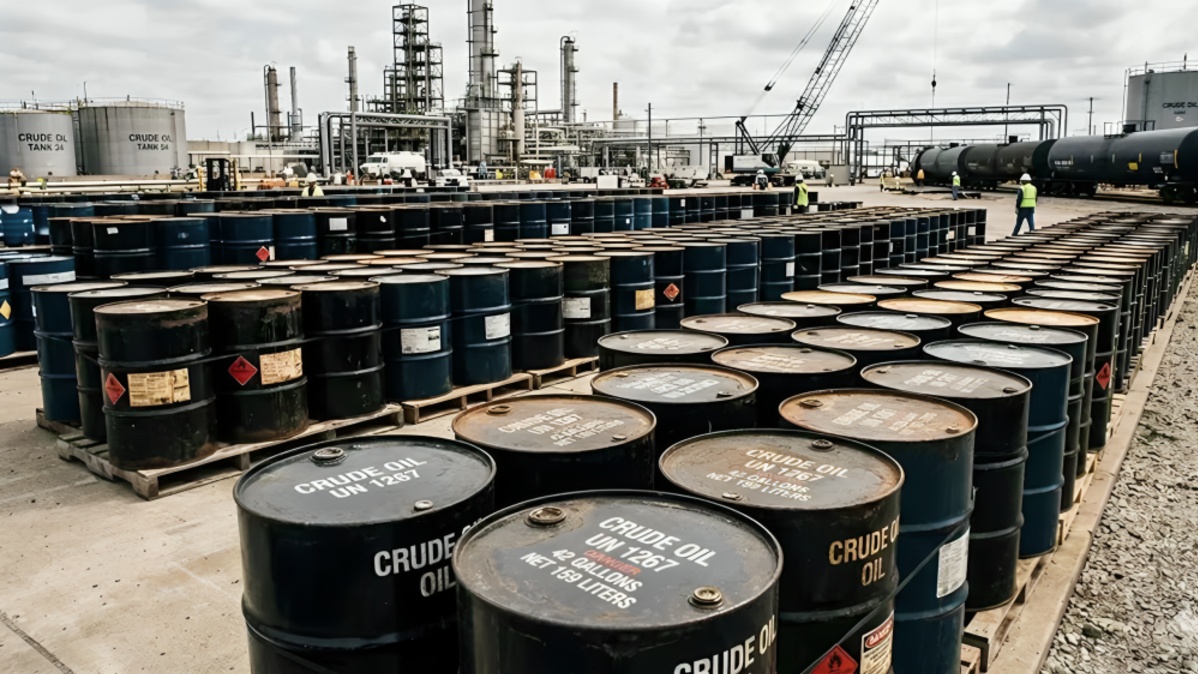
Crude oil prices have remained above the 100 dollar per barrel level for more than 18 days, keeping pressure on oil-importing economies such as India. The prolonged rise in global energy prices has increased concerns about fuel costs, transportation expenses, inflation and household budgets.
Brent crude was trading around 102 dollars per barrel on September 21, although prices had eased from higher levels seen during the recent escalation in West Asia. Despite the decline, crude has remained above 100 dollars for an extended period as geopolitical tensions continue to affect global oil supply and shipping routes.
The impact is particularly important for India because the country imports more than 85 percent of its crude oil requirements. When international crude prices rise, Indian refiners and oil marketing companies face higher costs for importing petroleum. The extent to which those costs are passed on to consumers depends on domestic fuel pricing decisions, taxes, margins and other market conditions.
The latest data shows that the increase in crude prices has already affected India's import bill. India’s crude oil import bill rose 48 percent to 74.8 billion dollars during April to August 2026, even though the volume of imports remained broadly similar to the previous year. The average price of the Indian crude basket also increased sharply during September.
Higher crude prices can affect consumers in several ways. The most direct impact is through petrol and diesel prices. If oil marketing companies pass higher international costs through to domestic fuel prices, motorists could face higher expenses for commuting and personal travel.
However, domestic petrol and diesel prices did not change in several major Indian cities on September 21. In Delhi, petrol was priced at Rs 102.12 per litre and diesel at Rs 95.20 per litre. In Mumbai, petrol was Rs 111.21 per litre and diesel was Rs 97.83 per litre. Chennai recorded petrol at Rs 107.77 per litre and diesel at Rs 99.55 per litre.
This means that a sustained increase in global crude prices does not automatically result in an immediate increase in retail fuel prices. Domestic prices can remain unchanged for a period depending on pricing decisions by oil marketing companies and broader government and market considerations.
The second major impact is transportation. Diesel is widely used by commercial vehicles, trucks, buses and other forms of freight transport. If diesel and other transportation costs increase, logistics companies may face higher operating expenses.
Higher transportation costs can eventually affect the prices of goods transported across the country. Food products, manufactured goods, construction materials and other commodities often move through multiple stages of the supply chain before reaching consumers. An increase in fuel costs can therefore add to the overall cost of distribution.
Air travel is another sector exposed to higher crude prices. Airlines use aviation turbine fuel as a major operating expense. A prolonged increase in crude prices can push up the cost of aviation fuel, putting pressure on airline margins. Earlier analysis by Business Standard, citing ICRA, noted that fuel can account for about 25 percent of airline operating expenses.
If higher fuel costs persist, airlines may respond through higher fares, fuel surcharges, changes to capacity or other cost-management measures. The effect on passengers can vary depending on the airline, route, competition and fuel-hedging arrangements.
Higher crude prices can also influence inflation. Fuel is directly important for transportation and energy, while indirectly affecting the cost of many goods and services. If businesses face higher energy, freight and production expenses, some of those costs may eventually be passed on to consumers.
According to a September 21 assessment from Kotak Securities, sustained crude prices above 100 dollars per barrel could push India's retail inflation toward the 5.8 percent to 6 percent range by the next quarter. The assessment also said persistently high oil prices could put pressure on monetary policy. This is an analyst projection rather than an established outcome.
Household budgets can therefore feel the impact even when petrol and diesel prices remain unchanged. Families may face higher prices for transportation, travel and products whose production or distribution depends heavily on fuel.
The impact can also differ between households. People who rely heavily on private vehicles may be more directly affected by changes in petrol prices. Families that regularly travel by air could face higher ticket prices if airlines increase fares because of fuel costs. Meanwhile, households that spend a larger portion of their income on transported food and other goods could experience indirect effects.
The government and oil companies also face financial implications from sustained high crude prices. Higher import costs can increase India's overall demand for foreign currency and put pressure on the trade balance. The country could also face a wider current account deficit if elevated oil prices continue for an extended period.
A weaker rupee can add another layer of pressure because crude oil is purchased internationally in US dollars. If the rupee depreciates against the dollar while crude prices are rising, the cost of imported oil in rupee terms can increase further.
Oil marketing companies can also experience margin pressure when international crude prices rise but domestic fuel prices do not immediately increase. Business Standard previously reported that OMCs could face losses on petrol and diesel when Brent crude remains elevated and retail prices stay unchanged.
At the same time, higher crude prices can benefit some companies, particularly upstream oil and gas producers, because stronger international prices can improve revenue from crude production. The effect is therefore different across sectors of the economy.
The current rise in oil prices is closely linked to geopolitical developments in West Asia. Concerns about supply disruptions, shipping routes and the Strait of Hormuz have contributed to higher energy prices. Any improvement in the geopolitical situation could ease some of the pressure, while further disruptions could keep prices elevated.
For Indian consumers, the immediate situation is therefore one of monitoring rather than assuming that global crude prices will automatically translate into higher retail fuel prices. Petrol and diesel prices remained unchanged in major cities on September 21 despite Brent crude remaining above 100 dollars.
However, if high crude prices persist for a longer period, the effects could become more visible across the economy. Fuel, transportation, aviation, manufacturing and logistics costs could all come under pressure. This could eventually influence consumer prices and household spending.
India’s large dependence on imported crude means that international oil prices will remain an important economic factor. The latest increase in the import bill demonstrates how quickly higher global prices can raise the country's energy expenditure even when import volumes do not change significantly.
For consumers, the key factors to watch are domestic petrol and diesel prices, airline fares, transportation costs and the broader inflation trend. Whether the current crude price increase results in higher household expenses will depend on how long oil prices remain elevated and how much of the additional cost is passed through the economy.