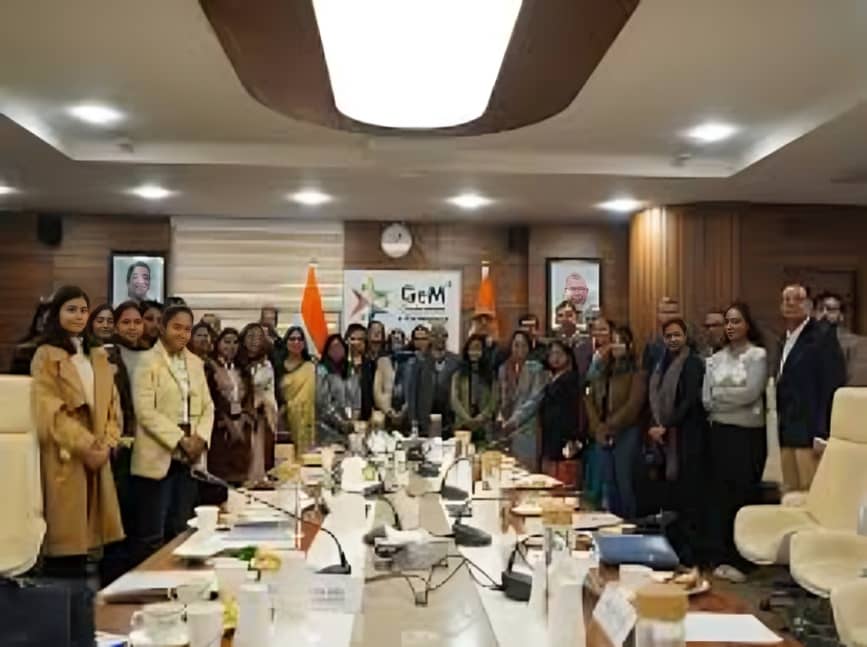
The Womaniya initiative, introduced under the Government e Marketplace, has emerged as a key driver in promoting women entrepreneurship in India. The program has recorded contracts worth approximately Rs 28000 crore within a year, highlighting its growing impact on empowering women led businesses across the country.
According to government data, more than 2.1 lakh women led micro and small enterprises have registered on the platform during the current financial year. These enterprises have collectively contributed to a total order volume of 13.7 lakh transactions. The initiative has also exceeded expectations in terms of procurement share, with women entrepreneurs receiving about 5.6 percent of total orders on the platform, significantly higher than the mandated target of 3 percent.
The Government e Marketplace, commonly known as GeM, is an online platform designed to facilitate procurement of goods and services by government departments and public sector units. The Womaniya initiative specifically focuses on encouraging participation from women entrepreneurs by providing them with greater visibility and access to government contracts.
One of the key objectives of the initiative is to create a level playing field for women led businesses. By simplifying the registration process and offering a transparent procurement system, the platform allows women entrepreneurs to compete fairly with other businesses. This has helped reduce barriers that traditionally limited their participation in public procurement.
To avail benefits under the Womaniya initiative, women entrepreneurs need to register their businesses on the GeM portal. The registration process involves providing basic details such as business credentials, ownership information and relevant certifications. Once registered, businesses can list their products and services on the platform and participate in bidding for government contracts.
The platform also offers various support mechanisms to help new participants understand the procurement process. Training sessions, user guides and customer support services are available to assist entrepreneurs in navigating the system. These resources play an important role in enabling women led enterprises to effectively utilize the platform.
The success of the Womaniya initiative reflects broader efforts by the government to promote inclusive economic growth. Encouraging women entrepreneurship is seen as a critical component of economic development, as it contributes to job creation, innovation and overall productivity. By providing access to large scale procurement opportunities, the initiative helps women entrepreneurs expand their businesses and achieve financial stability.
Experts believe that the increasing participation of women in public procurement is a positive sign for the economy. It not only enhances diversity in the business ecosystem but also ensures more equitable distribution of opportunities. The growth in order volume and contract value indicates rising confidence among women entrepreneurs in using digital platforms for business expansion.
However, challenges remain, including the need for greater awareness and digital literacy among potential participants. Expanding outreach programs and providing additional training can help address these issues and bring more women into the formal business ecosystem.
In conclusion, the Womaniya initiative under the Government e Marketplace has made significant progress in supporting women entrepreneurs. With strong growth in registrations, order volume and contract value, the program is playing a vital role in promoting inclusive development. Continued efforts to enhance accessibility and awareness are expected to further strengthen its impact in the coming years.