
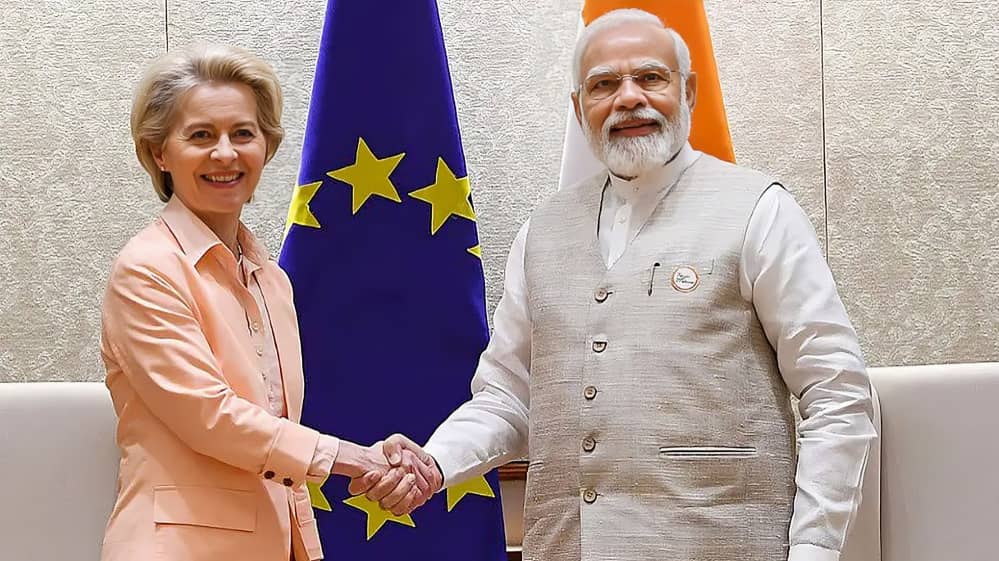
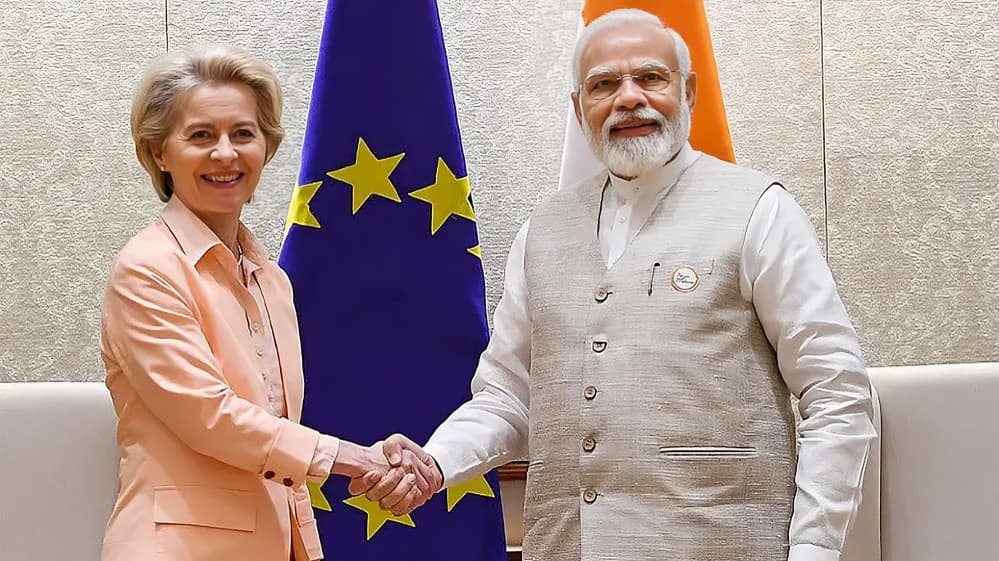
India and the European Union are poised to unveil a landmark free trade agreement that is expected to reshape their strategic and economic partnership. The agreement, described by European Commission President Ursula von der Leyen as a historic milestone, is being viewed as one of the most comprehensive trade pacts negotiated by India in recent years.
The India EU Free Trade Agreement aims to deepen cooperation across multiple sectors, including goods and services trade, defence collaboration, technology exchange, climate action and people to people mobility. Officials on both sides have indicated that the pact is designed not only to boost trade volumes but also to align long term strategic interests.
Trade liberalisation forms a central pillar of the agreement. The deal is expected to lower tariffs, simplify customs procedures and improve market access for Indian and European businesses. Sectors such as manufacturing, pharmaceuticals, automobiles, textiles and digital services are likely to benefit from reduced trade barriers and regulatory cooperation.
Beyond trade, the agreement places strong emphasis on defence and strategic cooperation. With changing global security dynamics, both India and the European Union are looking to enhance defence manufacturing partnerships, joint research initiatives and technology sharing. The pact is expected to provide a structured framework for deeper collaboration in this area.
Climate action and sustainability are also key components of the agreement. India and the EU have committed to working together on clean energy transitions, green technologies and sustainable industrial practices. The deal aligns with India’s long term climate goals and the European Union’s environmental standards, creating pathways for joint investments in renewable energy and low carbon technologies.
Another important aspect of the agreement is worker mobility and people to people ties. The FTA is expected to ease movement for skilled professionals, students and researchers, enhancing cooperation in education, innovation and workforce development. This provision is seen as a major opportunity for Indian professionals seeking global exposure and employment in European markets.
Technology and digital cooperation feature prominently in the agreement as well. Areas such as artificial intelligence, semiconductors, cybersecurity and data governance are expected to see closer collaboration. The pact aims to promote innovation while ensuring secure and trusted digital ecosystems.
Officials believe the agreement will strengthen supply chain resilience by reducing overdependence on limited markets and encouraging diversification. For India, the deal offers expanded access to one of the world’s largest consumer markets. For the European Union, it provides a stronger economic foothold in a fast growing economy.
The India EU Free Trade Agreement is being viewed as a strategic response to evolving global trade patterns. By combining economic cooperation with strategic alignment, the pact is expected to elevate the partnership to a new level.
Once implemented, the agreement is likely to have far reaching implications for businesses, workers and policymakers on both sides, reinforcing India EU relations as a cornerstone of global economic and strategic cooperation.


