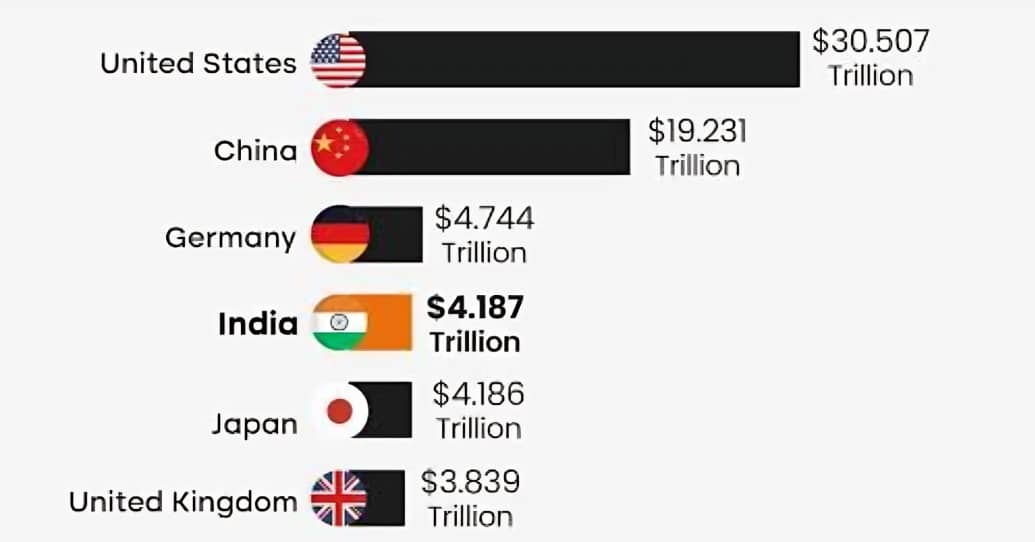
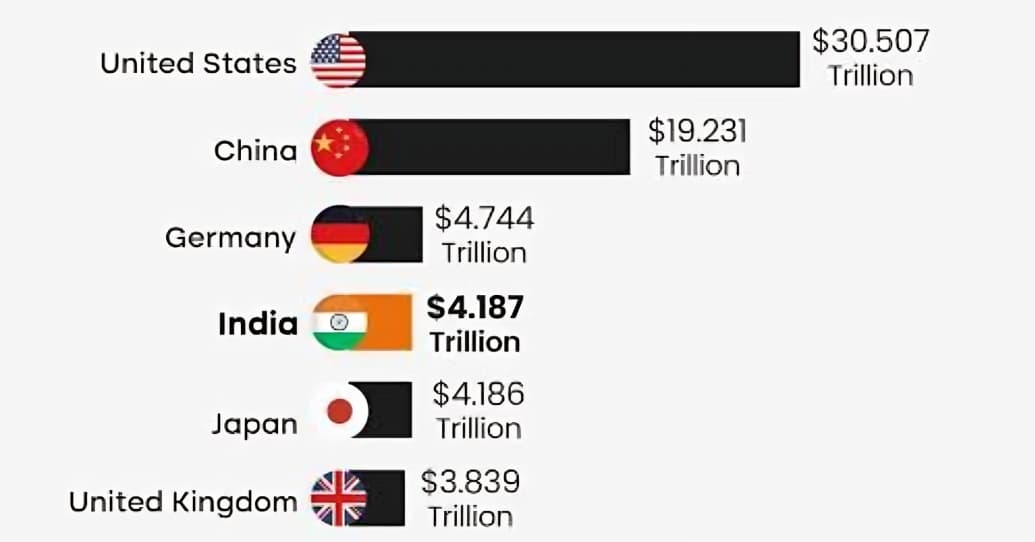
India has achieved a major economic milestone by becoming the world’s fourth-largest economy, surpassing Japan in overall economic output. This development reflects years of sustained growth driven by domestic consumption, infrastructure expansion, manufacturing push, and digital transformation. Global economic institutions and analysts have highlighted India’s resilience amid global uncertainties, positioning the country as one of the fastest-growing major economies.
According to international economic estimates, India’s gross domestic product has expanded steadily over the past few years despite challenges such as global inflation, geopolitical tensions, and supply chain disruptions. Strong performance in services, rising manufacturing output, and increased government capital expenditure have played a crucial role in boosting economic momentum. Reforms aimed at improving ease of doing business, attracting foreign direct investment, and strengthening financial inclusion have further supported growth.
The achievement has also attracted reactions from China, India’s largest regional economic competitor. Chinese commentators and analysts have acknowledged India’s economic rise while noting differences in economic structure and development models. Some Chinese state-linked voices highlighted that India’s growth presents both competition and opportunity in Asia’s broader economic landscape, especially in trade, manufacturing, and global supply chains.
India’s demographic advantage remains one of its strongest growth drivers. With a young and expanding workforce, rising urbanisation, and increasing consumer demand, the country is well-positioned for long-term expansion. Sectors such as information technology, pharmaceuticals, renewable energy, electronics manufacturing, and startups continue to attract global investors.
Economists project that India could become the world’s third-largest economy by 2030 if current growth rates are maintained. This projection is based on assumptions of continued policy stability, investment inflows, infrastructure development, and productivity improvements. Government initiatives focused on manufacturing self-reliance, logistics efficiency, and digital public infrastructure are expected to further strengthen the economy.
However, experts also caution that challenges remain. Employment generation, income inequality, skill development, and climate-related risks need sustained policy attention. Global economic slowdowns and geopolitical tensions could also impact trade and investment flows. Addressing these issues will be critical to ensuring inclusive and sustainable growth.
India’s rise to the fourth position underscores its growing influence in global economic forums such as the G20, World Trade Organization, and international financial institutions. As the country continues to expand its economic footprint, its role in shaping global economic policies and supply chains is expected to increase.
The milestone not only highlights India’s economic potential but also signals a shift in the global economic order, with emerging economies playing a more prominent role in driving global growth.