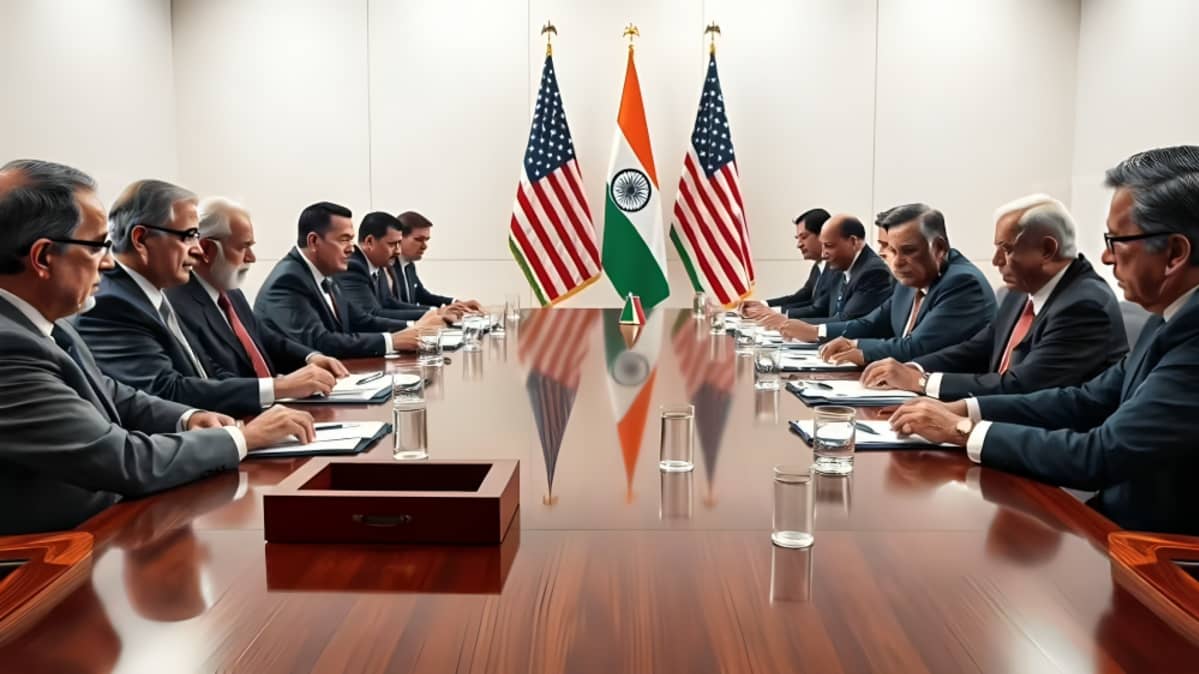

The Ministry of External Affairs has stated that India has formally communicated its position to the United States following the latest announcement of new tariffs by US President Donald Trump. The government confirmed that while it has taken note of the proposed tariff measures, discussions between the two countries remain active as part of ongoing bilateral trade negotiations.
Speaking on the matter, the Ministry of External Affairs said India continues to engage with the United States through established diplomatic and trade channels. Officials emphasized that both countries are maintaining dialogue with the objective of addressing outstanding trade issues and strengthening economic cooperation.
The latest tariff announcement by the United States has drawn attention because it includes several countries, including India. Although the proposed measures have generated concern among businesses and exporters, Indian officials indicated that discussions are continuing and that the government is actively representing the country's interests during negotiations.
Trade relations between India and the United States have expanded significantly over the past decade. The two countries share strong economic ties across sectors including information technology, pharmaceuticals, engineering goods, agriculture, energy, manufacturing, and services. Bilateral trade has continued to grow, making the United States one of India's most important trading partners.
Government officials reiterated that India remains committed to resolving trade issues through dialogue and constructive engagement. The Ministry of External Affairs stressed that diplomatic communication remains the preferred approach for addressing differences while preserving the broader strategic partnership between the two nations.
Industry experts note that tariffs can influence the competitiveness of exports by increasing the cost of products entering foreign markets. Businesses involved in international trade closely monitor such developments because tariff changes can affect pricing, supply chains, and investment decisions.
Despite periodic disagreements over trade policies, India and the United States continue to cooperate across a wide range of areas beyond commerce. The partnership includes collaboration in defense, technology, clean energy, education, healthcare, and regional security. Analysts believe these broader strategic interests encourage both governments to seek mutually beneficial solutions to trade concerns.
The ongoing negotiations are expected to cover various aspects of bilateral trade, including market access, tariff structures, investment opportunities, digital commerce, and regulatory issues. Both governments have repeatedly emphasized the importance of maintaining open communication to address challenges while supporting long term economic growth.
Business organizations and exporters are closely following the negotiations, as any changes in tariff policy could influence export performance in several sectors. Companies with significant exposure to the US market are expected to monitor further announcements before making strategic business decisions.
Economic analysts believe that continued dialogue offers the best opportunity to reduce uncertainty and maintain stable trade relations. They note that trade negotiations between major economies often involve multiple rounds of discussions before mutually acceptable outcomes are reached.
The Ministry of External Affairs has not indicated any immediate changes to India's trade policy in response to the US announcement. Instead, officials have reaffirmed the government's commitment to protecting national economic interests while continuing constructive engagement with the United States.
As discussions progress, businesses, investors, and exporters will continue to watch developments closely. Any future decisions regarding tariffs or trade arrangements are expected to emerge through official negotiations between the two governments.
The latest statement from the Ministry of External Affairs underscores India's position that dialogue remains the preferred path for resolving trade differences. With negotiations continuing, both India and the United States are expected to work toward solutions that support stable economic relations while addressing the concerns of both sides.