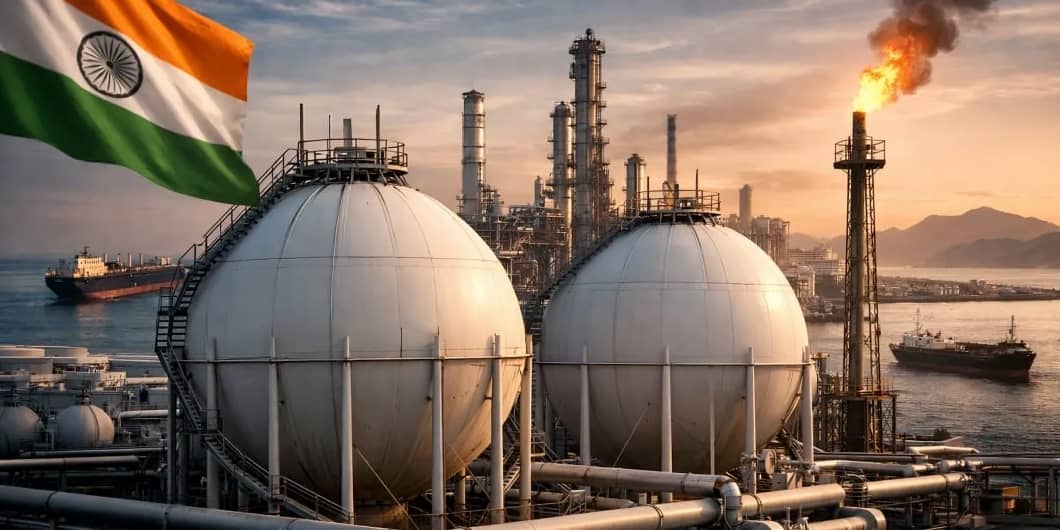

India has taken a significant step towards strengthening its energy security by increasing domestic production of liquefied petroleum gas to meet nearly 60 percent of its total demand. This development comes at a time when tensions in the Middle East are affecting global energy markets and raising concerns about supply disruptions and price volatility.
Liquefied petroleum gas plays a crucial role in India’s energy mix, particularly for household cooking and certain industrial applications. A large portion of the population depends on LPG for daily use, making it essential for the government to ensure a stable and reliable supply. Increasing domestic production is seen as a strategic move to reduce reliance on imports and protect the country from external uncertainties.
Global energy markets have been experiencing fluctuations due to geopolitical developments, especially in the Middle East, a region that is a major supplier of oil and gas. Any disruption in supply from this region can have a direct impact on countries that depend heavily on imports. By boosting domestic production, India aims to mitigate these risks and maintain continuity in supply.
Officials have emphasized that achieving 60 percent self sufficiency in LPG production is a notable milestone. It reflects ongoing efforts to expand production capacity and improve efficiency in the energy sector. Investments in infrastructure, technology, and exploration have contributed to this progress.
The move is also aligned with India’s broader goal of enhancing energy independence. Reducing import dependence not only improves energy security but also helps in managing the trade balance. Lower imports can reduce the impact of global price fluctuations on the domestic economy.
In addition to increasing production, the government continues to focus on improving distribution networks to ensure that LPG reaches consumers efficiently. Initiatives aimed at expanding access to clean cooking fuel have been a priority, particularly in rural and underserved areas. Ensuring availability at affordable prices remains a key objective.
Experts believe that strengthening domestic production capabilities is essential in the current global scenario. While imports will continue to play a role, a higher level of self reliance provides greater flexibility in managing supply and demand. It also allows the country to respond more effectively to global market changes.
At the same time, the government is exploring alternative energy sources and promoting cleaner fuels as part of its long term strategy. Diversification of energy sources is considered important for achieving sustainability and reducing environmental impact.
The increase in LPG production also highlights the role of public and private sector collaboration in the energy industry. Coordinated efforts have enabled improvements in production capacity and operational efficiency.
However, challenges remain in meeting the growing demand for energy. As the economy expands and population increases, consumption is expected to rise. Continuous investment and policy support will be required to sustain production levels and meet future needs.
In conclusion, India’s decision to boost domestic LPG production to meet 60 percent of its demand is a strategic response to global energy challenges. The move enhances energy security, reduces dependence on imports, and ensures a stable supply for consumers. As global uncertainties continue, such measures are expected to play a crucial role in maintaining economic stability and supporting the country’s development goals.