

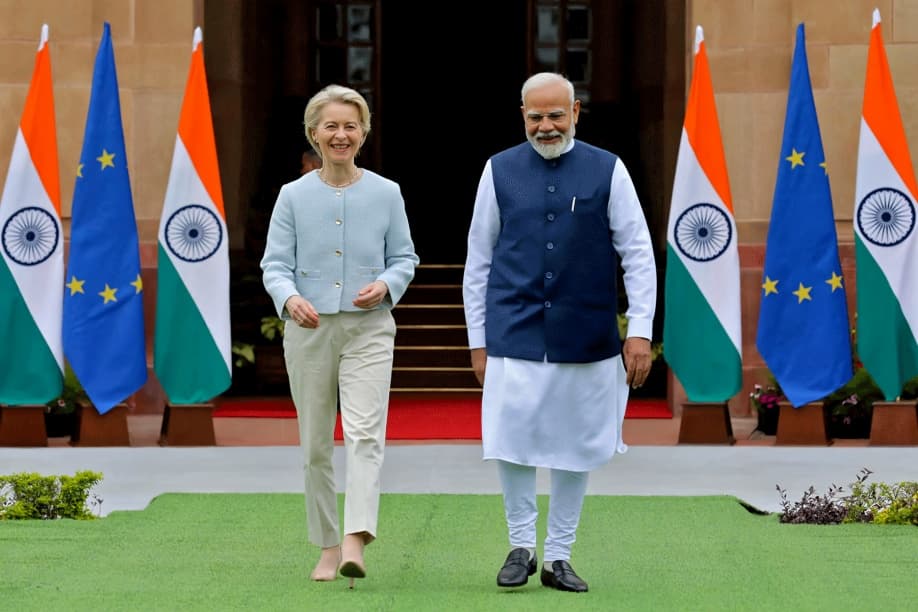
India and the European Union appear to be nearing the conclusion of a long-pending free trade agreement, a development that could reshape trade relations between the two economies and deliver tangible benefits to consumers and exporters. According to government sources cited by Reuters, the agreement may be announced during the India–EU summit scheduled to take place between January 25 and 28.
The proposed free trade agreement aims to reduce tariffs, ease regulatory barriers, and expand market access for goods and services traded between India and the 27-member European Union. One of the most visible outcomes for Indian consumers could be lower prices on imported European products, particularly automobiles and wine. Luxury carmakers such as BMW, Mercedes-Benz, and Audi could see reduced import duties, potentially making their vehicles more affordable in the Indian market. Similarly, lower tariffs on European wines may increase availability and bring down prices for consumers.
In return, Indian exporters are expected to gain improved access to European markets. Sectors likely to benefit include textiles and garments, jewellery, electronics, chemicals, pharmaceuticals, and engineering goods. The EU is one of India’s largest trading partners, and enhanced access could help Indian manufacturers diversify export destinations amid global economic uncertainties.
An Indian government source indicated that the announcement could follow Prime Minister Narendra Modi’s meetings with European Council President Antonio Costa and European Commission President Ursula von der Leyen, who are expected to jointly chair the summit in India. Negotiations for the agreement have been ongoing for several years and were previously stalled over issues such as tariff reductions, labour standards, environmental norms, and intellectual property rights.
The renewed momentum comes at a time when both India and the EU are seeking to strengthen supply chains and reduce dependence on limited markets. For the EU, India represents a fast-growing consumer base and a key strategic partner in Asia. For India, the agreement aligns with its broader goal of expanding exports, attracting foreign investment, and integrating more deeply into global value chains.
Economists note that while the deal could bring price benefits for consumers, it may also raise concerns among certain domestic industries that face increased competition from European imports. The government is expected to balance these concerns through phased tariff reductions and safeguards for sensitive sectors.
If finalised, the India–EU free trade agreement would mark one of the most significant trade deals for India in recent years. It could also signal India’s growing role in global trade at a time when protectionism and geopolitical tensions continue to affect international commerce. The final terms and implementation timeline will be closely watched by industry, investors, and consumers alike.


