
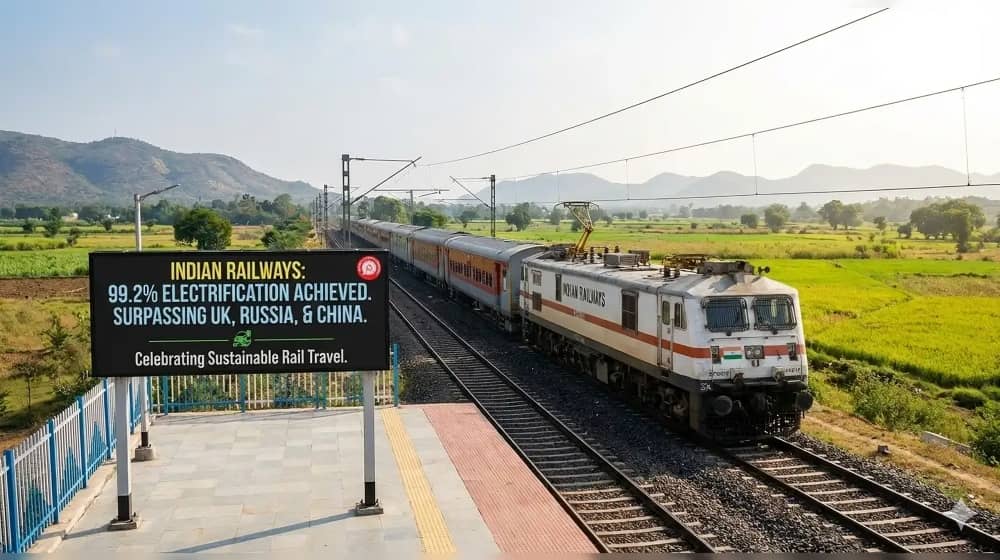
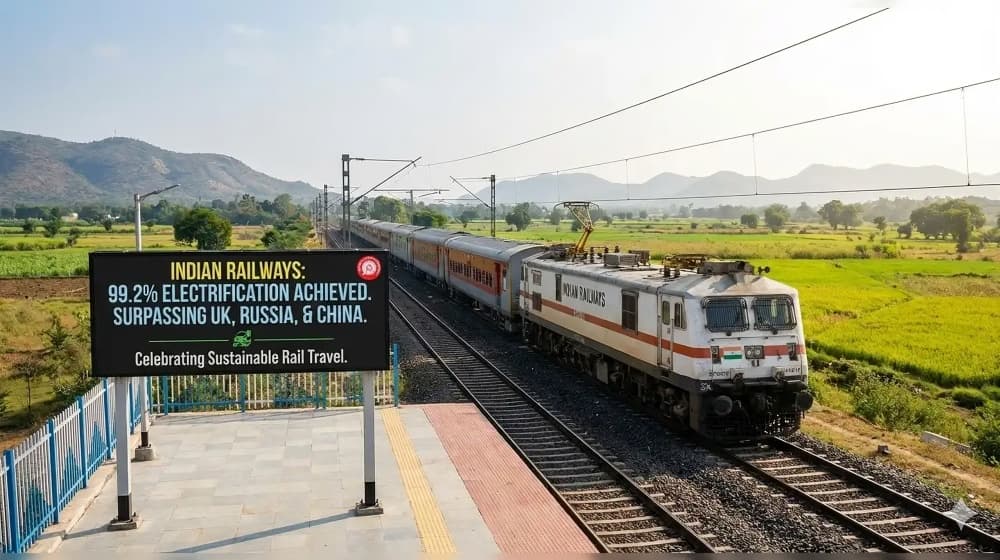
Indian Railways has achieved a historic milestone by electrifying 99.2% of its broad gauge (BG) network, making it one of the most electrified railway systems globally. According to the International Union of Railways (UIC) June 2025 report and a statement from the Ministry of Railways, India now surpasses major global counterparts, including the United Kingdom (39%), Russia (52%), and China (82%) in terms of railway electrification.
Electrification of the broad gauge network is a major step towards modernising India’s rail infrastructure. It improves energy efficiency, reduces reliance on fossil fuels, and lowers carbon emissions, aligning with India’s ambitious climate and sustainability targets. By shifting from diesel-powered locomotives to electric ones, Indian Railways is enhancing operational efficiency, reducing fuel costs, and supporting environmentally friendly transportation.
The Ministry of Railways noted that this milestone reflects years of planning and investment in electrification projects across the country. Strategic execution of these projects involved upgrading infrastructure, installing overhead equipment, and integrating modern signaling systems to ensure safety and efficiency. These efforts have also contributed to faster train operations, reduced travel times, and better reliability for passengers and freight services alike.
India’s electrification achievement is significant not just for domestic transportation but also in the global context. While other leading railway nations continue to rely on diesel traction for substantial portions of their networks, India’s progress demonstrates technological advancement and strong policy commitment to sustainable transport. Comparatively, the UK has electrified only 39% of its network, Russia 52%, and China 82%, showcasing India’s leadership in railway modernization.
The electrification drive also supports India’s broader energy transition goals. Reducing diesel consumption lowers greenhouse gas emissions and air pollution. This milestone contributes to India’s pledge to achieve net-zero carbon emissions by 2070 and underscores the role of railway infrastructure in supporting national climate objectives.
In addition to environmental benefits, electrification is expected to boost economic efficiency. Electric trains require lower maintenance costs compared to diesel engines and offer higher hauling capacity, allowing for more freight and passenger movement with fewer resources. This enhances the competitiveness of rail transport as a sustainable alternative to road transport for long-distance freight.
Looking ahead, Indian Railways aims to complete full network electrification and integrate renewable energy sources wherever possible, further enhancing sustainability. With these initiatives, India continues to strengthen its position as a global leader in railway modernization while providing a cleaner, faster, and more reliable transportation system for millions of passengers and businesses.


