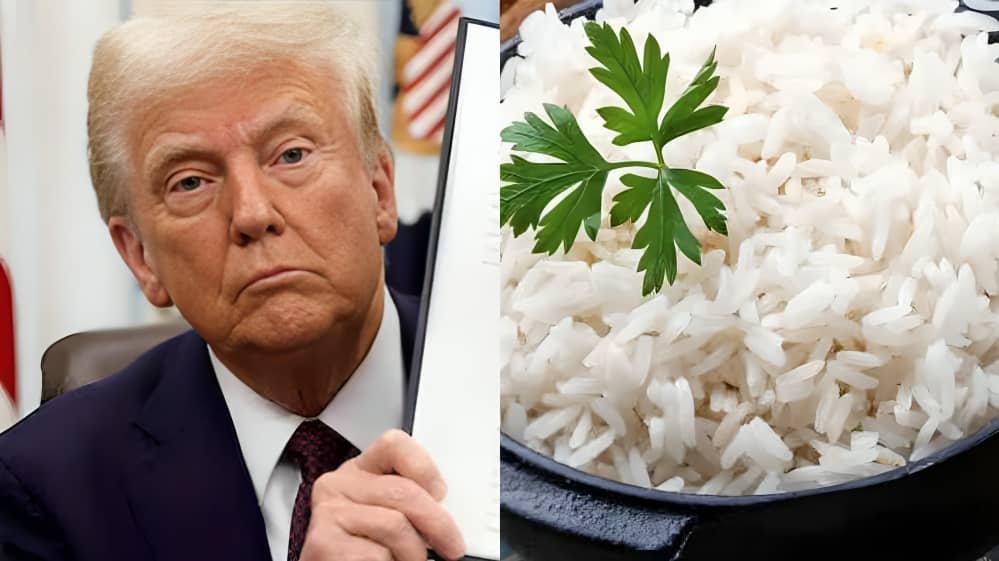
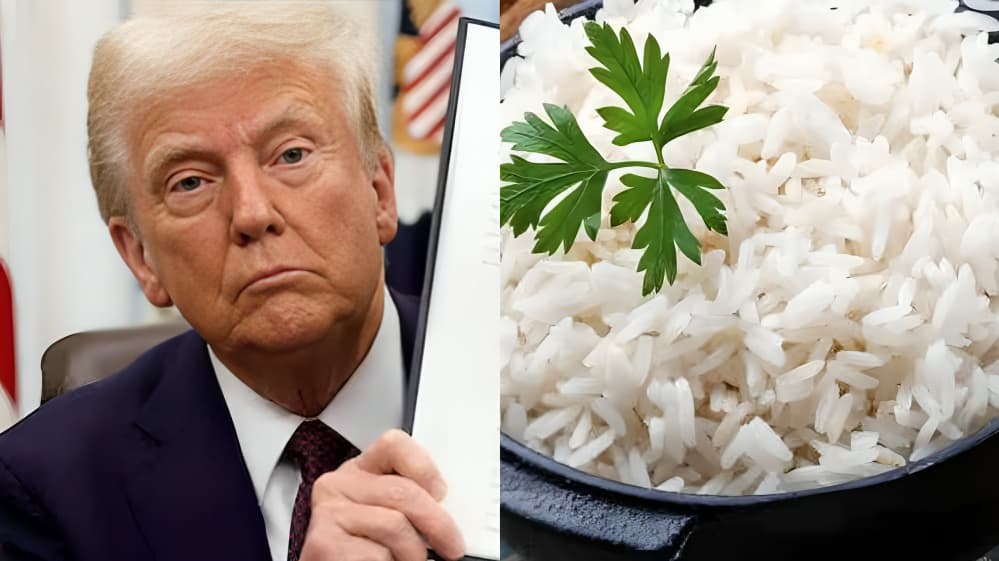
Indian rice exporters have largely dismissed US President Donald Trump’s recent tariff threat on Indian rice imports, asserting that the American market represents only a small fraction of India’s total exports. Speaking after Trump’s comments about allegedly unfair rice dumping practices, industry leaders emphasized that global demand for Indian rice remains robust, and the impact of any additional US duties would be minimal.
Trump had expressed concerns over imports from countries such as India, Vietnam, and Thailand, claiming that these imports were undermining domestic US farmers by lowering rice prices. He stated, “They shouldn’t be dumping. You can’t do that,” in reference to Indian rice. US farmers have been lobbying for protectionist measures, citing falling domestic prices and the effect of imports on their livelihoods.
However, Indian exporters remain unfazed, highlighting the limited size of the US market. Prem Garg, President of the India Rice Exporters Federation, clarified that basmati rice exports to the US constitute less than 3% of India’s six million tonnes of annual basmati exports. When considering India’s total rice exports of 21 million tonnes, America accounts for under 1%, making the threat of tariffs largely symbolic from a trade volume perspective.
India’s rice exporters point to strong demand in other global markets. Countries such as Benin, Russia, and several African and Middle Eastern nations have shown significant growth in import volumes, providing Indian producers with alternatives to offset any potential impact in the US. These markets are increasingly important as India seeks to diversify its export destinations and reduce reliance on individual buyers.
The industry is confident that quality, competitive pricing, and established supply chains will continue to support India’s dominance in the global rice market. Exporters emphasize that their focus remains on meeting international demand efficiently and expanding market presence in emerging economies. In addition, Indian rice has a reputation for high quality, particularly basmati rice, which strengthens its global competitiveness despite potential trade tensions in smaller markets.
Analysts suggest that the Trump administration’s statements are part of broader protectionist rhetoric rather than actionable policy changes that could materially affect Indian exports. Even if duties were imposed, the small share of the US market in India’s overall rice exports means the financial impact on Indian producers would be limited.
The sector’s strategy continues to focus on diversification, exploring new markets, and leveraging India’s competitive advantage in rice production. Industry leaders also highlight the importance of bilateral trade agreements and negotiations to secure favourable terms in international markets.
In conclusion, while US tariff threats have generated media attention, Indian rice exporters remain confident in the sector’s resilience. With global demand rising and alternative markets expanding, the potential impact on India’s rice exports is minimal. The industry continues to prioritize growth, diversification, and strengthening its global presence, ensuring that any geopolitical trade disputes have limited influence on the overall performance of Indian rice exports.