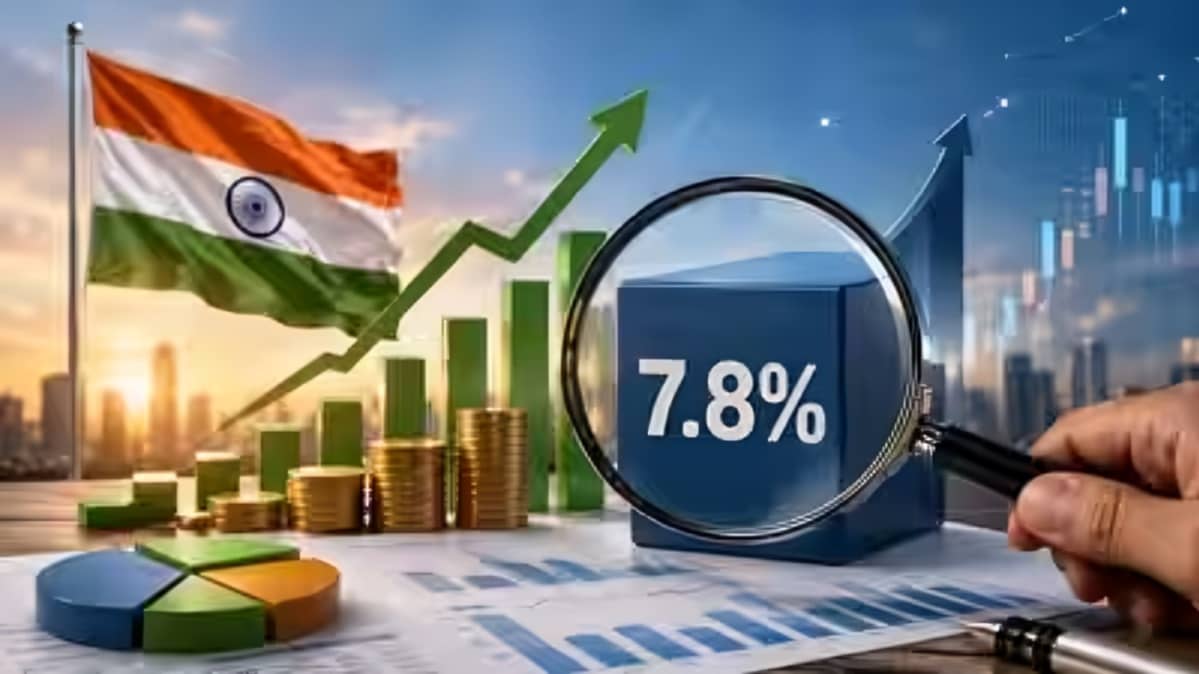
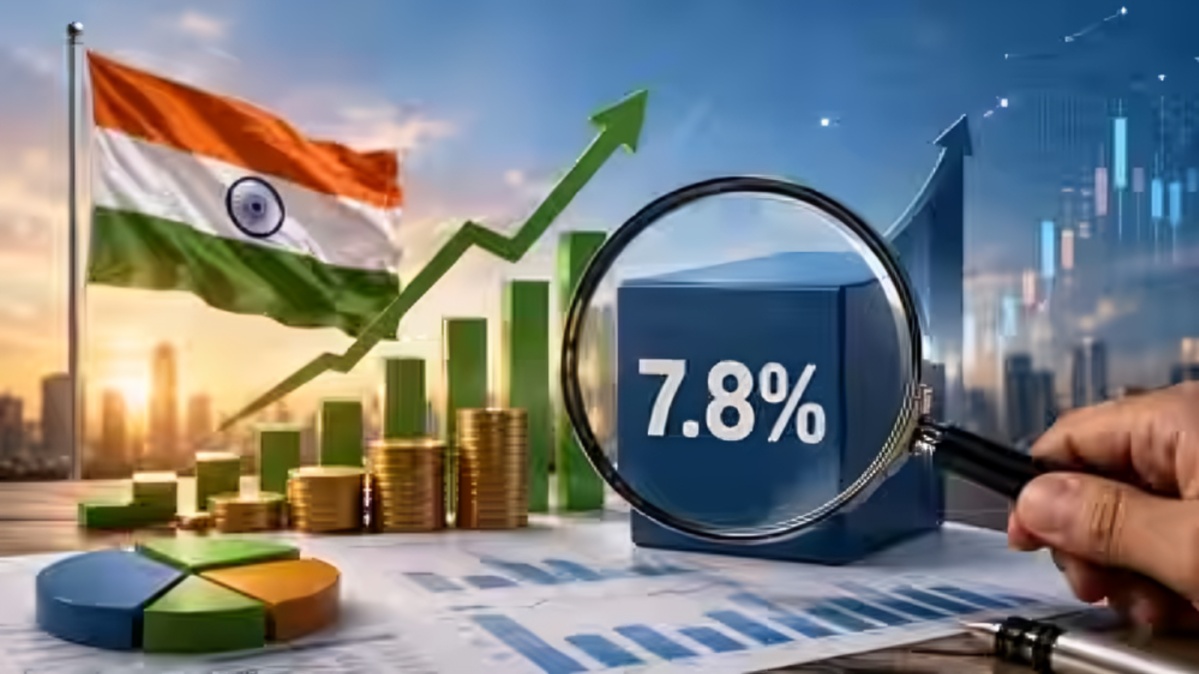
India’s economy grew by 7.8% in real terms during the April-June quarter of FY2026-27, according to the latest estimates released by the Ministry of Statistics and Programme Implementation. The growth rate was higher than the Reserve Bank of India’s earlier projection of 7% and exceeded most market expectations. Real GDP was estimated at Rs 81.36 lakh crore at constant 2022-23 prices, compared with the corresponding period of the previous financial year.
The strong headline number has strengthened the view that India continues to maintain solid economic momentum. At the same time, it has reopened an important question about how GDP growth should be interpreted in an economy where a large number of businesses and workers operate outside the formal corporate system.
The unorganised economy includes a wide range of small businesses, household enterprises, self-employed workers and other economic activities that are not always captured through conventional corporate reporting systems. These businesses include small retailers, repair shops, local manufacturers, street vendors, household enterprises and many service providers. Their economic activity can be significant even when their operations remain relatively small and informal.
The debate does not necessarily mean that the 7.8% GDP estimate is incorrect. Instead, it raises a broader question about whether a strong aggregate growth number automatically translates into better economic conditions for every section of society.
According to MoSPI, the new GDP series with 2022-23 as its base year was designed to improve the measurement of several parts of the economy. One of the major changes is the greater use of annual data from the Annual Survey of Unincorporated Sector Enterprises, or ASUSE, along with information from the Periodic Labour Force Survey. The ministry says these sources allow the household sector and informal economic activities to be measured more regularly instead of relying heavily on older survey benchmarks or indirect indicators.
This is an important methodological improvement because the unorganised sector can change rapidly. A small enterprise may expand, reduce operations, change its workforce or shift from one activity to another within a relatively short period. Regular surveys can therefore provide more timely information about these changes.
The latest GDP data also shows that growth was broad-based across several major sectors. Real Gross Value Added grew by 8.2% in the first quarter. The tertiary sector expanded by 10%, supported particularly by financial, real estate, information technology and professional services, which grew by 12.1%. The secondary sector recorded 8.6% growth, while the primary sector grew 2.9%, with agriculture and allied activities expanding 3.6%.
On the expenditure side, gross fixed capital formation increased 11.9%, while private final consumption expenditure grew 7.1%. These indicators suggest that investment and consumer demand remained important contributors to economic activity during the quarter.
However, headline GDP does not directly measure several issues that matter to households and workers. Employment quality, wage growth, job security, access to formal credit and the financial health of small enterprises can provide a different perspective on economic conditions.
For example, a rise in overall production may occur alongside uneven income growth. A large formal company may experience strong expansion while a small local business faces higher operating costs or weaker demand. Similarly, aggregate consumption can rise without every household experiencing the same improvement in purchasing power.
This is why economists often examine GDP alongside employment, wages, household consumption, credit availability, business registrations, tax collections and other indicators. Looking at multiple measures can provide a more complete picture of whether economic growth is reaching different sections of the population.
The current debate has also been influenced by the introduction of the new GDP methodology. Some economists and commentators have questioned aspects of the revised series and its historical comparability. MoSPI has defended the methodology and said the new series incorporates updated data sources, improved deflation methods and other statistical changes intended to make national accounts more comprehensive and reliable.
The distinction between measuring GDP accurately and assessing economic well-being is therefore important. Even if the 7.8% figure accurately represents the estimated expansion of economic output under the new methodology, it cannot by itself answer every question about household prosperity or employment.
The unorganised economy remains particularly important in this discussion because its activities are spread across millions of small enterprises and self-employed workers. Capturing their contribution accurately is difficult, but the government's increased use of ASUSE and PLFS data represents an effort to address that challenge.
The latest figures therefore provide evidence of strong aggregate economic growth, while also highlighting the need for deeper analysis. The 7.8% number is an important indicator of India's economic performance, but understanding the country's broader economic health requires looking beyond a single growth rate.
For policymakers, the challenge will be to ensure that strong GDP growth is accompanied by stronger job creation, improving household incomes, greater access to finance and sustainable growth for small and unorganised businesses. The quality and distribution of growth will ultimately matter as much as the headline percentage.