
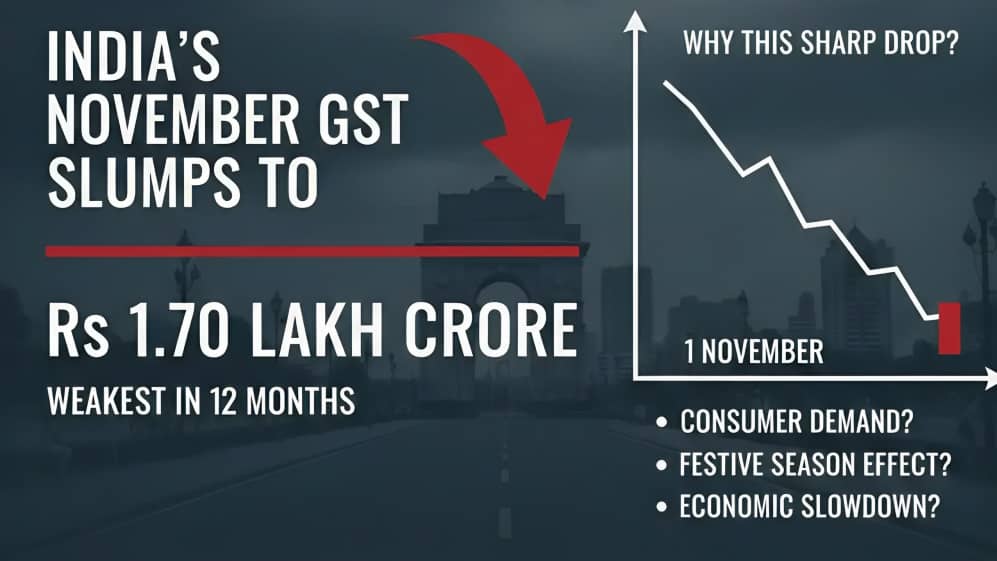
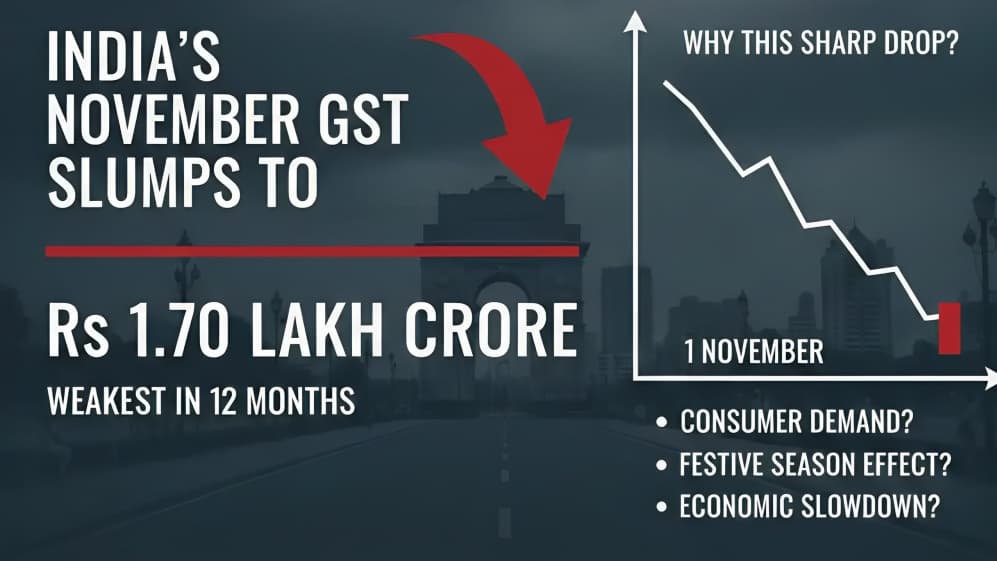
India’s Goods and Services Tax (GST) collections for November 2025 have fallen sharply to Rs 1.70 lakh crore, marking the lowest monthly collection in the past 12 months. While the revenue is marginally higher than the Rs 1.66 lakh crore collected in November 2024, it represents a substantial drop from the Rs 1.88 lakh crore recorded in October 2025. The decline has raised concerns among policymakers, economists, and industry stakeholders about slowing economic momentum and its impact on government revenues.
Experts point to multiple factors behind the decrease. Reduced manufacturing activity, moderation in consumer spending after the festive season, and disruptions in supply chains have contributed to the slowdown. Key sectors, including automobiles, consumer goods, and electronics, reported softer sales in November, affecting GST inflows. Analysts note that these trends highlight underlying vulnerabilities in economic recovery and signal the need for targeted policy interventions.
Despite the drop, the government remains committed to timely collection and distribution of GST revenues to states. Officials emphasize that structural reforms, digitization of tax compliance, and measures to widen the taxpayer base have strengthened revenue administration. Continuous monitoring and enforcement efforts aim to reduce tax evasion and ensure adherence to filing deadlines.
The November GST shortfall also underscores the importance of fiscal planning for both the central and state governments. Reduced collections could affect budgetary allocations for infrastructure, social welfare schemes, and public services. Economists suggest that policymakers may consider temporary measures such as incentivizing compliance, offering rebates, or adjusting sector-specific rates to stimulate economic activity and improve GST inflows in the coming months.
Industry leaders have stressed the role of private sector growth in stabilizing GST revenues. Encouraging higher production, boosting exports, and supporting small and medium enterprises (SMEs) are essential to enhance tax collections sustainably. Additionally, easing logistical bottlenecks and promoting digital payment adoption can contribute to smoother tax administration and higher compliance rates.
While the decline in November collections is notable, it should be viewed within the broader context of India’s economic trajectory. Moderate seasonal fluctuations, short-term demand variations, and global economic uncertainties often influence monthly GST receipts. However, sustained lower collections over multiple months may warrant more strategic interventions from the government.
In conclusion, India’s November 2025 GST collection of Rs 1.70 lakh crore highlights the challenges of maintaining stable revenue streams amid fluctuating economic conditions. Strengthening compliance, incentivizing growth, and supporting key sectors will be critical to ensuring healthy GST inflows in the future. Policymakers, industry stakeholders, and taxpayers alike will be closely watching December’s collections for indications of recovery and sustained economic momentum.


