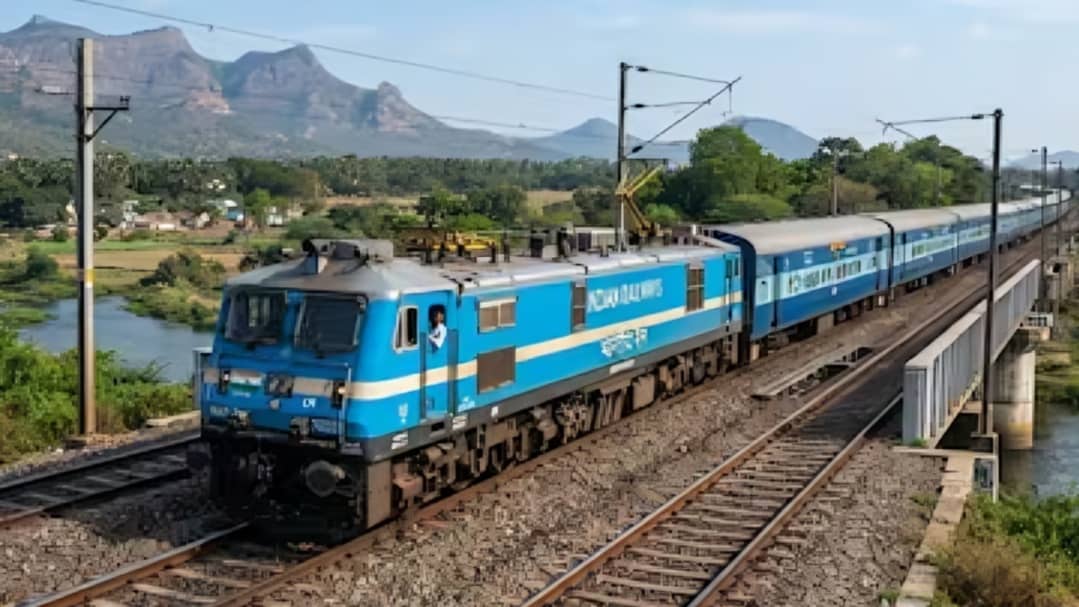
The Comptroller and Auditor General of India has raised concerns over the collection of superfast surcharge by Indian Railways from passengers travelling on trains that did not meet the prescribed speed criteria.
According to the latest audit findings reported on August 14, 2026, Indian Railways collected around Rs 168 crore through the irregular levy of superfast surcharge during the period from April 2022 to March 2023. The audit has highlighted concerns over whether the additional charge was appropriately applied to passengers.
The superfast surcharge is an additional amount collected from passengers travelling on services classified as superfast trains. Such classification is subject to prescribed operational criteria, including average speed requirements.
The CAG has previously recorded that Indian Railways uses an average speed benchmark of 55 kmph on broad gauge routes for classification as a superfast train. This criterion has been in place since 2007.
The latest findings have once again brought attention to the difference between the classification of certain trains and their actual operational performance. The audit observed that passengers were charged the superfast surcharge even when the concerned trains did not satisfy the applicable speed requirements.
The issue is significant because the surcharge is directly paid by passengers as part of their railway fare. When an additional charge is collected despite a service not meeting the prescribed conditions, questions can arise regarding the implementation of railway rules and passenger billing practices.
The CAG is India's constitutional audit institution and examines the financial and operational functioning of government departments and public authorities. Its observations are intended to identify irregularities and encourage corrective action.
Earlier CAG audits have also examined the classification of superfast trains. A previous audit found that several trains categorised as superfast had scheduled average speeds below the prescribed 55 kmph benchmark. The audit had also pointed out that the benchmark itself had remained unchanged since 2007.
The latest issue therefore adds to the wider discussion surrounding the classification and performance of superfast services across the Indian Railways network.
The matter also highlights the importance of ensuring that railway schedules and operational classifications accurately reflect the services being provided. If a train is classified as superfast and passengers are charged an additional amount, the prescribed conditions should be consistently applied.
For passengers, the superfast surcharge forms part of the total ticket cost. Any irregular collection can therefore increase the financial burden on travellers, particularly for passengers who regularly use long distance railway services.
The CAG's findings are also relevant from the perspective of railway administration. Proper monitoring of train speeds, timely revision of classifications and accurate fare collection are important for maintaining transparency in passenger services.
The audit findings do not mean that every superfast train is incorrectly classified. Instead, the observations concern specific instances where the prescribed criteria were reportedly not met while the surcharge continued to be collected.
The issue also underlines the need for regular reviews of railway classifications. As train schedules, infrastructure and operating conditions change, the accuracy of classifications can become increasingly important.
A previous CAG report noted that the 55 kmph benchmark for broad gauge superfast trains had not been revised since 2007 and described the benchmark as low in the context of railway rolling stock and sectional speeds.
The latest report comes at a time when Indian Railways is undertaking extensive modernisation, infrastructure expansion and efforts to improve train speeds. The CAG's observations could therefore add pressure for closer monitoring of passenger fare rules alongside operational improvements.
The CAG's current Railway Finances Report is Report No. 3 of 2026 for the Union Ministry of Railways. The report was tabled in Parliament on August 12, 2026 and covers the financial year ended March 2024.
The Rs 168 crore figure cited in the latest reporting relates specifically to the irregular levy of superfast surcharge identified for the April 2022 to March 2023 period. The finding highlights the importance of ensuring that additional passenger charges are supported by the applicable railway rules.
Going forward, closer monitoring of train classifications and fare collection could help prevent similar discrepancies. Corrective measures would also be important for ensuring that passengers are charged only those additional amounts that are permitted under the applicable railway regulations.
The CAG's observation ultimately brings passenger fare transparency and compliance into focus. For Indian Railways, ensuring that superfast charges are applied only to eligible services will be important for maintaining passenger confidence and strengthening financial accountability.