
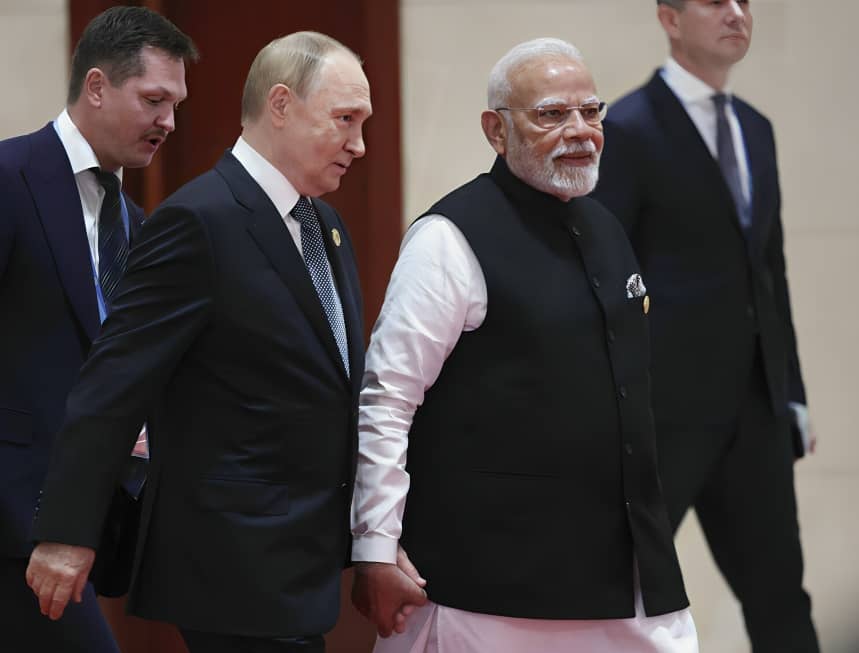

Russian President Vladimir Putin’s visit to India has intensified global attention on energy, trade, and defence ties between the two nations. The visit comes at a critical time when India is navigating geopolitical pressures, seeking affordable energy while maintaining robust international trade relations, particularly with the United States. Analysts are closely monitoring how New Delhi balances cheap Russian oil imports with potential US sanctions and trade considerations.
Energy security is at the forefront of discussions. Russia has offered discounted crude oil to India, helping reduce the country’s fuel import costs amid fluctuating global prices. This provides India with an opportunity to strengthen its energy supply chain and enhance economic stability. However, increased engagement with Russia also attracts scrutiny from Western countries, especially the US, which has imposed sanctions on Russian energy and defence sectors. India’s challenge lies in maximizing the benefits of Russian oil while remaining compliant with international trade regulations and sanctions frameworks.
Beyond energy, defence collaboration is a key pillar of the India-Russia relationship. India is one of the largest importers of Russian military equipment, and ongoing arms deals are likely to be a major point of discussion during Putin’s visit. Analysts expect talks to cover maintenance, upgrades, and potential new acquisitions, reinforcing India’s strategic defence capabilities while strengthening long-standing ties with Moscow.
The United States is closely monitoring India’s growing energy dependence on Russia. While Washington recognizes India’s strategic autonomy, officials have expressed concerns over potential risks associated with sanctions and geopolitical alignments. India must carefully navigate these dynamics, ensuring that its economic and strategic interests are protected without creating friction with key Western partners.
The Modi-Putin meetings are also expected to touch on broader geopolitical issues, including regional security, counter-terrorism, and multilateral cooperation. India’s foreign policy has traditionally focused on maintaining strategic autonomy, balancing relations between major global powers while safeguarding national interests. The current scenario, however, adds complexity as energy security, trade sanctions, and defence procurement intersect.
Experts suggest that India’s approach will likely emphasize pragmatism, prioritizing affordable energy and defence preparedness while engaging in dialogue with the US and other partners to mitigate any potential diplomatic or trade fallout. The ability to maintain this balance will influence not only India’s energy and defence security but also its position in global geopolitics.
In conclusion, Putin’s India visit underscores the intricate interplay of energy, trade, and strategic partnerships in international relations. India faces the dual task of leveraging opportunities from Russian oil and defence cooperation while addressing external pressures from the United States and the international community. How New Delhi manages these challenges will shape the future of its energy strategy, defence readiness, and global diplomatic stance.


