S&P Retains India's FY27 GDP Growth Forecast at 7 Percent, Warns El Niño Could Push Food Inflation Higher
New Delhi, November 23, 2026
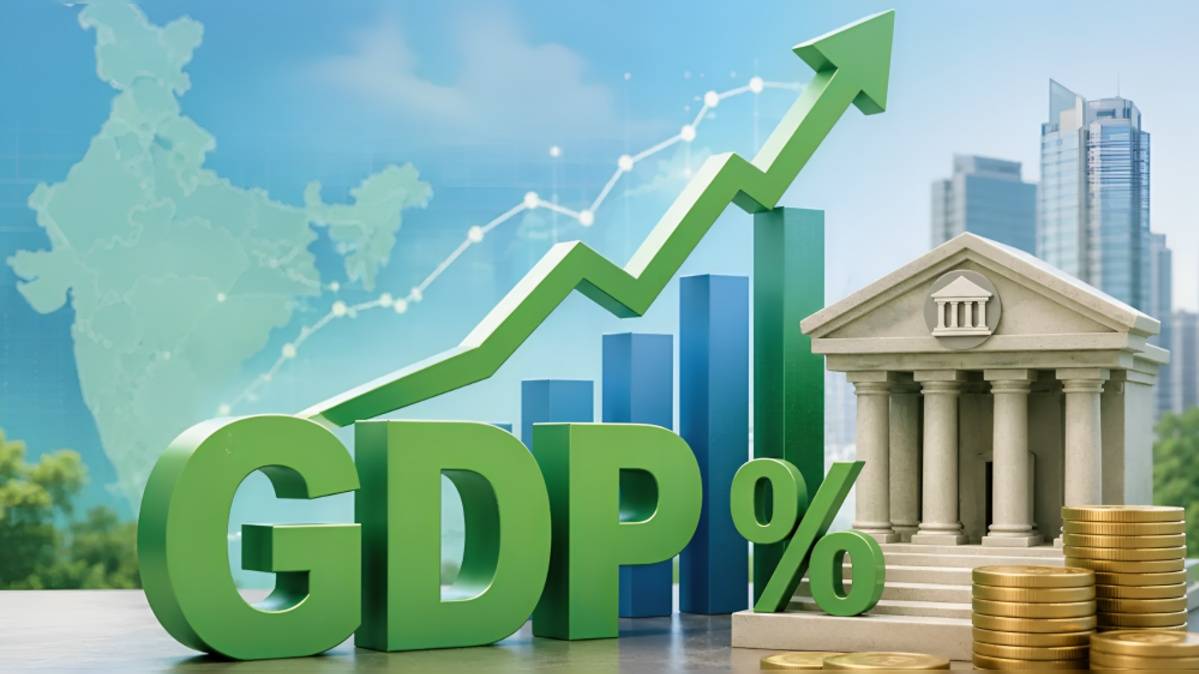
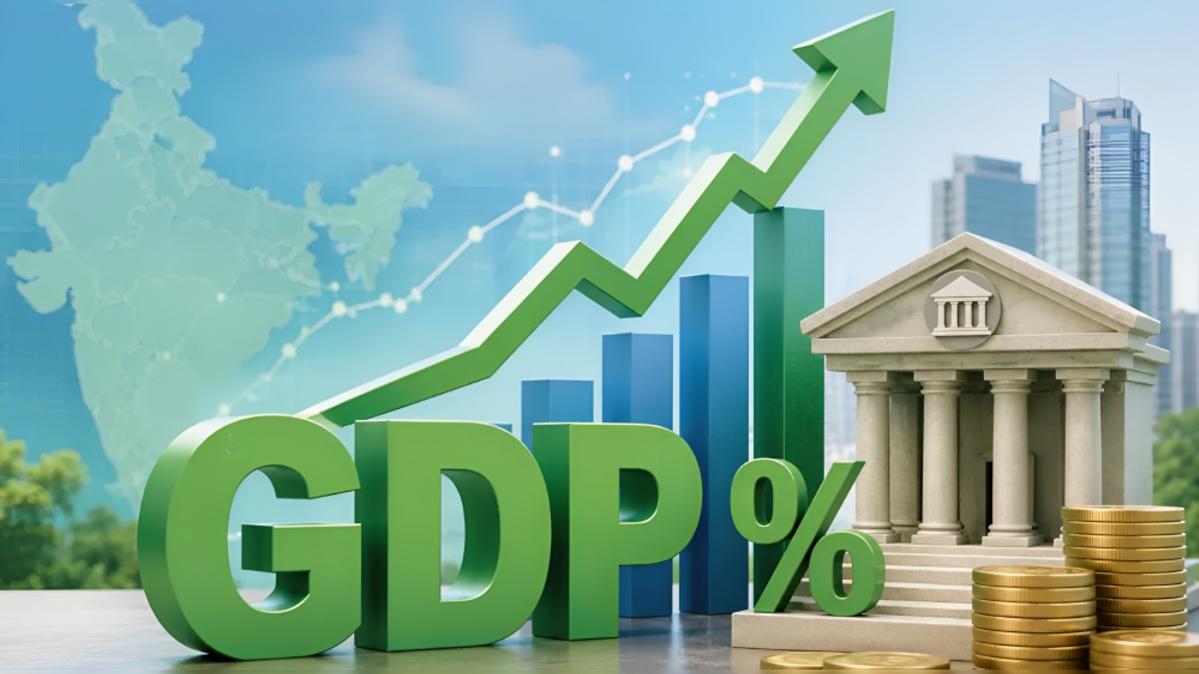
S&P Global Ratings has maintained its forecast for India's economic growth at 7 percent for the financial year 2026 to 2027, reflecting confidence in the country's economic resilience despite inflationary pressures and global uncertainties.
However, the international rating agency has warned that El Niño-related weather disruptions, uneven monsoon rainfall and higher production costs could increase food prices in the coming months.
In its latest Asia-Pacific Economic Outlook, S&P projected that India would remain among the fastest-growing major economies in the region alongside Vietnam in 2027.
The agency also expects India's economy to expand by 7 percent in FY28, although this represents a downward revision of 20 basis points from its earlier estimate.
While the growth outlook remains encouraging, S&P believes inflation risks could become more significant during the second half of the current financial year.
S&P Maintains India's GDP Growth Forecast at 7 Percent
S&P Global Ratings has retained its projection of 7 percent economic growth for India in FY27, which ends on March 31, 2027.
The forecast indicates that the Indian economy is expected to maintain steady expansion despite challenges arising from international trade disruptions, elevated energy prices and changing weather conditions.
According to the agency, economic activity has received support from strong goods exports, public investment and household consumption.
These factors have helped India maintain growth momentum even as several other economies face slower expansion.
S&P expects India and Vietnam to be among the strongest-performing economies in the Asia-Pacific region in 2027.
However, the agency has also highlighted risks that could affect economic conditions during the remaining months of the financial year.
India's FY28 Growth Forecast Reduced to 7 Percent
Although S&P has maintained its FY27 growth estimate, it has lowered its forecast for the following financial year.
The agency now expects India's economy to grow by 7 percent in FY28, compared with its earlier projection of 7.2 percent.
The downward revision reflects expectations that some of the factors supporting current growth may weaken.
Higher input costs, inflationary pressures and external economic uncertainties could affect consumption and business activity.
Nevertheless, a projected growth rate of 7 percent would still indicate substantial economic expansion.
The revised outlook suggests that India could continue to perform strongly relative to several regional economies, even if the pace of growth moderates.
El Niño Raises Concerns Over Food Inflation
One of the most important risks identified by S&P is the possible impact of El Niño on India's agricultural production.
El Niño is a climate phenomenon associated with unusually warm ocean temperatures in the central and eastern tropical Pacific.
It can influence weather patterns across different regions of the world.
In India, certain El Niño conditions are associated with a higher risk of weaker monsoon rainfall, although the relationship is not the same every year.
S&P warned that persistent El Niño conditions, combined with deficient rainfall and lower reservoir levels, could affect agricultural output.
Reduced crop production may limit the supply of essential food commodities.
When supply becomes insufficient to meet demand, prices can rise.
This could place additional financial pressure on households already facing higher living expenses.
Uneven Monsoon Could Affect Agricultural Production
India's agricultural sector depends heavily on seasonal rainfall.
Although irrigation infrastructure has expanded, many farming regions continue to rely on the southwest monsoon.
Insufficient or uneven rainfall can affect soil moisture, irrigation availability and crop development.
S&P highlighted concerns about deficient summer rainfall and lower water levels in reservoirs.
These conditions may influence both existing agricultural production and the upcoming winter crop.
The winter crop season is particularly important for commodities such as wheat and several pulses.
If water availability becomes restricted, farmers may face higher irrigation costs or lower yields.
However, the actual impact will depend on regional rainfall patterns, irrigation facilities and crop conditions.
The agency's warning represents a risk assessment rather than confirmation of a nationwide crop shortage.
Food Prices Could Increase Across India
Higher food inflation could affect several categories of essential household expenditure.
Prices of vegetables, cereals, pulses and other agricultural products can respond to changes in crop availability.
When agricultural output is disrupted, supply shortages may lead to increased market prices.
Transportation, storage and distribution costs can also influence the final price paid by consumers.
S&P expects food prices to face upward pressure in parts of the Asia-Pacific region, particularly India.
The agency believes adverse weather conditions could contribute to inflation at a time when other production costs are also rising.
However, the extent of any price increase will depend on actual crop output, government measures and market conditions.
India's Retail Inflation Reaches 6.1 Percent in October
S&P's warning comes after India's retail inflation increased to 6.1 percent in October 2026.
The reading exceeded the Reserve Bank of India's upper tolerance threshold of 6 percent.
India's monetary policy framework aims to maintain consumer price inflation at 4 percent, with a tolerance band extending from 2 percent to 6 percent.
Inflation above the upper threshold can increase pressure on policymakers to contain price growth.
Rising food prices are particularly important because food accounts for a significant share of household expenditure.
S&P expects consumer inflation to average 5.3 percent during FY27.
The agency has also indicated that inflation risks remain tilted towards higher outcomes.
S&P Expects Inflation to Moderate in FY28
Despite the near-term concerns, S&P expects inflation to ease during the following financial year.
The agency has projected average consumer inflation of 4.7 percent in FY28.
This suggests that price pressures could gradually moderate after the current period of elevated inflation.
However, the forecast depends on several assumptions.
Improved agricultural conditions, reduced energy costs and more stable supply chains could help ease inflation.
Conversely, further weather disruptions or unexpected increases in commodity prices could delay the improvement.
S&P's outlook therefore reflects both the possibility of stabilisation and the uncertainty surrounding future economic conditions.
RBI May Raise Interest Rates in December
S&P Global Ratings expects the Reserve Bank of India to increase its policy interest rate by 25 basis points in December 2026.
A basis point represents one hundredth of a percentage point.
Therefore, a 25-basis-point increase would raise the policy rate by 0.25 percentage points.
The agency also anticipates another interest rate increase in early 2027.
These expectations reflect concerns about inflation remaining above comfortable levels.
Higher interest rates can help reduce inflationary pressures by moderating borrowing and spending.
However, they can also increase financing costs for businesses and households.
It is important to note that S&P's forecast does not represent an official RBI decision.
The central bank will determine its policy based on its own assessment of inflation, growth and financial conditions.
How Higher Interest Rates Could Affect Borrowers
If the RBI raises its policy rate, borrowing costs could increase for some consumers and businesses.
Floating-rate home loans and other loans linked to external benchmarks may be affected, depending on their terms.
Higher interest costs can increase monthly repayments or extend loan repayment periods.
Businesses may also face higher financing expenses when borrowing for investment and expansion.
At the same time, higher interest rates can help discourage excessive demand and support efforts to control inflation.
The actual impact on individual borrowers will depend on their loan agreements and how banks adjust lending rates.
S&P expects the policy rate to reach approximately 6 percent by March 2027.
However, this remains an economic forecast rather than a confirmed policy path.
Strong Exports Support India's Economic Growth
S&P identified merchandise exports as an important contributor to India's economic performance.
The agency noted that Indian exporters have benefited from stronger integration into global supply chains.
Trade diversification has also supported export growth.
Industries such as electronics, engineering goods and chemicals have contributed to the expansion.
These sectors provide opportunities for manufacturing activity, investment and employment.
S&P believes the combination of export performance and domestic demand has helped India withstand global economic uncertainty.
However, international trade conditions remain important.
Changes in overseas demand, commodity prices and trade policies could influence export performance in future quarters.
Government Investment Helps Maintain Momentum
Public-sector investment has been another important factor supporting India's economy.
Government spending on infrastructure can contribute to activity in construction, manufacturing and related services.
Projects involving transport, energy and other public facilities may also improve economic efficiency over time.
Such investment can create demand for materials, equipment and labour.
S&P identified public investment as one of the factors supporting growth during the June and September quarters.
However, infrastructure investment alone cannot eliminate the risks associated with inflation or weak agricultural production.
Maintaining stable growth requires contributions from several sectors of the economy.
Household Consumption Remains Important
Household spending continues to play a major role in India's economic growth.
Consumer demand supports businesses across retail, manufacturing, transport and services.
S&P observed that household consumption had been supported by buoyant credit growth.
Access to credit can help consumers finance purchases and support economic activity.
However, higher food prices could reduce the amount households have available for other expenses.
Families spending more on essential groceries may postpone discretionary purchases.
This could affect demand for consumer goods and certain services.
Therefore, persistent food inflation could influence economic growth even when headline GDP forecasts remain strong.
Higher Input Costs May Reach Consumers
S&P also warned that businesses could increasingly pass higher input costs to consumers.
Input costs include expenses associated with raw materials, energy, transport and other production requirements.
When these costs rise, companies may initially absorb part of the increase through lower profit margins.
However, sustained cost pressures can lead businesses to increase their selling prices.
This process can spread inflation beyond food and energy products.
S&P expects the combination of earlier supply disruptions and fresh cost pressures to make India's inflation outlook less favourable during the second half of FY27.
The agency's warning suggests that controlling inflation may become more challenging if price increases spread across multiple sectors.
Global Energy Prices Remain a Major Risk
S&P identified elevated energy prices as one of the biggest economic challenges facing the Asia-Pacific region.
India imports a substantial portion of its crude oil requirements.
Higher international oil prices can increase import costs and affect transportation, manufacturing and other industries.
Energy prices can also influence the cost of fertilisers and agricultural production.
When these costs rise, they may contribute to higher prices across the economy.
S&P expects energy-related pressures to ease somewhat in 2027.
However, global geopolitical developments and changes in supply conditions could affect that outlook.
India's Economic Growth Remains Resilient
Despite these risks, S&P continues to expect India to maintain relatively strong economic growth.
The agency's 7 percent forecast reflects confidence in domestic demand, investment activity and export performance.
India's economic outlook remains supported by several structural factors, including a large domestic market and expanding industrial activity.
However, the combination of higher inflation and slower growth in some sectors could create challenges.
Policymakers will need to balance efforts to control prices with measures supporting economic activity.
S&P's assessment suggests that India remains well positioned for continued expansion, but the benefits of growth could be affected by rising living costs.
September Quarter GDP Data Awaited
India is scheduled to release its official GDP growth figures for the July to September 2026 quarter on November 30.
The data will provide an updated picture of economic activity during the second quarter of FY27.
The Reserve Bank of India had earlier projected growth of 7.2 percent for the quarter.
The Finance Ministry's Monthly Economic Review estimated growth at approximately 7.35 percent.
The official figures will help economists assess whether the economy is maintaining its expected momentum.
They may also influence future growth forecasts and monetary policy expectations.
Until the data are released, the estimates remain projections.
Final Summary
S&P Global Ratings has retained India's FY27 economic growth forecast at 7 percent and expects the country to remain among the fastest-growing economies in the Asia-Pacific region.
The agency also projects 7 percent growth in FY28, following a downward revision from its previous estimate.
However, S&P has warned that persistent El Niño conditions, uneven monsoon rainfall and lower reservoir levels could affect agricultural production and increase food prices.
The agency expects consumer inflation to average 5.3 percent in FY27 before easing to 4.7 percent in FY28.
It also anticipates a 25-basis-point RBI interest rate increase in December, followed by another possible increase in early 2027.
While strong exports, public investment and household consumption continue to support India's economy, inflation remains an important challenge.
The outlook highlights the need to monitor agricultural conditions, food prices, global energy costs and future monetary policy decisions.