
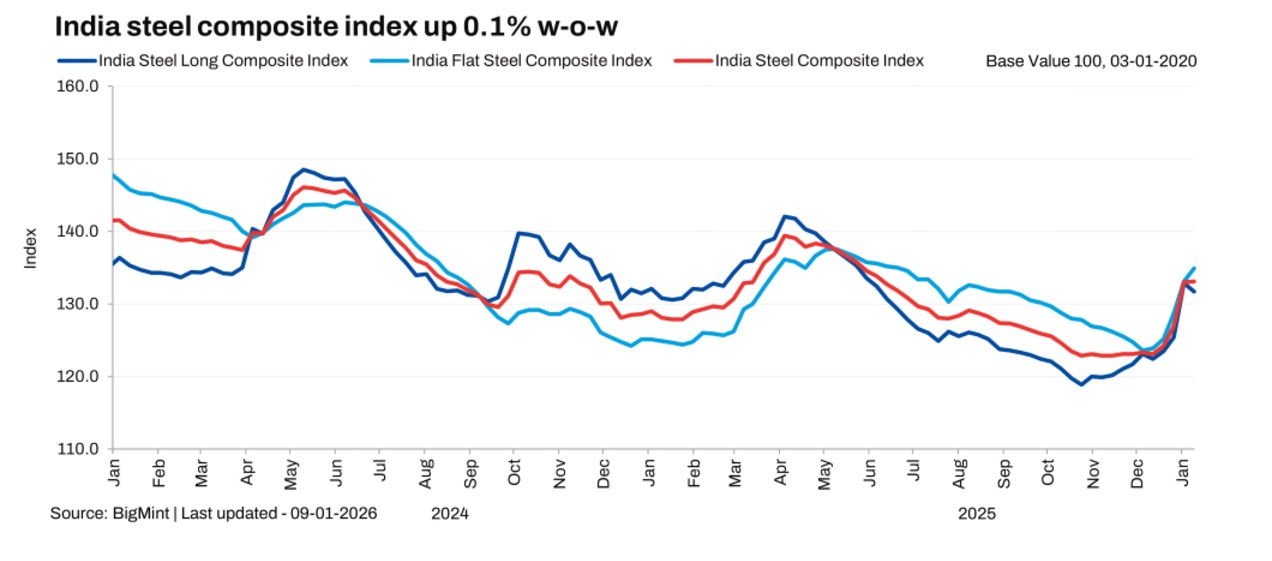
Domestic steel prices in India have climbed to their highest level in four years, with higher raw material costs and improving demand contributing to the recent increase. According to market research firm BigMint, the current upward trend could continue through the remaining quarters of the financial year as demand from construction, infrastructure and automobile sectors is expected to remain firm.
Hot rolled coil, or HRC, prices have reached Rs 64,000 per tonne, while cold rolled coil, or CRC, prices have climbed to Rs 75,000 per tonne. According to BigMint data cited in the report, these price levels were last seen in June 2022.
The increase has been particularly sharp since the beginning of August. HRC prices have risen by Rs 6,000 per tonne from Rs 58,000 per tonne on August 1 to Rs 64,000 per tonne. During the same period, CRC prices have increased by Rs 8,500 per tonne, moving from Rs 66,500 to Rs 75,000 per tonne.
The rise in steel prices has been attributed primarily to higher costs of key raw materials, particularly coking coal and iron ore, along with an increase in demand following the monsoon season.
Coking coal has seen a substantial increase in international prices. The mainly imported raw material reportedly rose by around USD 65 per tonne in just one month to reach approximately USD 305 per tonne. Iron ore fines also increased by around Rs 200 to Rs 250 per tonne, reaching approximately Rs 4,500 per tonne.
Coking coal is an important input in steel manufacturing through the blast furnace route. BigMint estimates that it accounts for more than 30 percent of the production cost of steel made using this process. Therefore, changes in coking coal prices can have a direct impact on the cost structure of steel producers.
At the same time, steel consumption in India has continued to grow. During April to August of financial year 2026 to 2027, steel consumption reached approximately 70 million tonnes, representing a 7 percent increase compared with the corresponding period of the previous year.
The demand outlook is another major factor behind the current steel price movement. BigMint expects steel prices to remain elevated during the remaining part of the financial year because construction and infrastructure activity is expected to increase after the monsoon period.
Construction and infrastructure together account for around 60 percent of steel consumption in India, according to the market research firm. Demand from these sectors traditionally strengthens after the monsoon season as construction projects and infrastructure activity pick up.
The automotive industry is also contributing to steel demand. Steel is widely used in vehicle manufacturing, making automobile production another important source of demand for flat steel products.
HRC and CRC are among the most widely used flat steel products. Hot rolled coil is used in areas such as construction, automobiles and industrial manufacturing, while cold rolled coil is commonly used for products requiring better surface finish and dimensional accuracy, including automobiles and consumer appliances.
Because steel is an important raw material for several industries, sustained increases in steel prices can have wider economic implications. Higher steel costs can increase manufacturing expenses for automobile companies, appliance manufacturers and construction businesses. Depending on market conditions, companies may absorb some of these additional costs or pass part of them through to customers.
The current price movement therefore has implications beyond the steel industry itself. If steel prices remain elevated for an extended period, businesses that rely heavily on steel may have to reassess their input costs, pricing strategies and project budgets.
The situation also reflects the interaction between domestic demand and international raw material markets. India imports a significant portion of the coking coal required by its steel industry, making domestic steel production costs sensitive to changes in international coking coal prices.
The rise in iron ore prices has added another cost pressure for steel producers. Iron ore is a fundamental raw material in steel production, and changes in its price can influence production economics.
According to BigMint's outlook, steel prices are unlikely to cool significantly during the remaining quarters of FY27 if demand from construction and infrastructure remains strong. The expected seasonal increase in post monsoon activity could provide additional support to the market.
However, the future movement of steel prices will also depend on raw material costs, domestic production, imports, demand conditions and global commodity markets. Any significant change in these factors could affect the direction of prices.
For consumers, the impact of higher steel prices may be seen indirectly through products and services that use steel as a major input. Automobiles, household appliances and construction projects are among the areas that could face higher input costs if the price increase continues.
The latest price movement marks a significant change from the relatively lower levels seen earlier in the year. The increase since August has pushed both HRC and CRC prices to levels last recorded around four years ago.
Market participants will therefore be watching demand during the post monsoon period closely. If construction and infrastructure activity remains strong and raw material prices stay elevated, steel prices could continue to remain firm during the second half of 2026.
For now, the BigMint assessment points to continued strength in the domestic steel market rather than an immediate decline in prices. The outlook will depend on how demand, raw material costs and broader economic activity develop during the remaining months of FY27.