
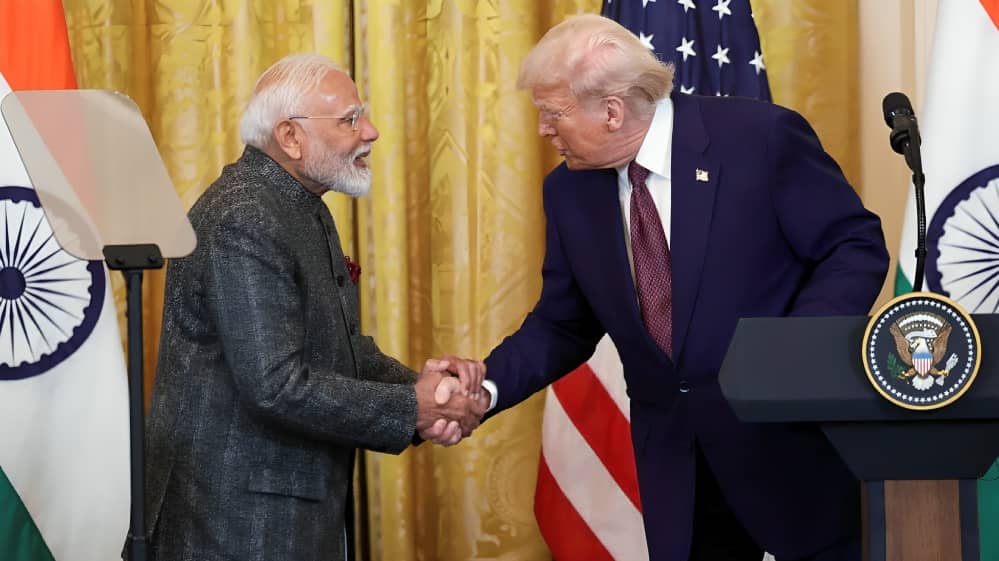
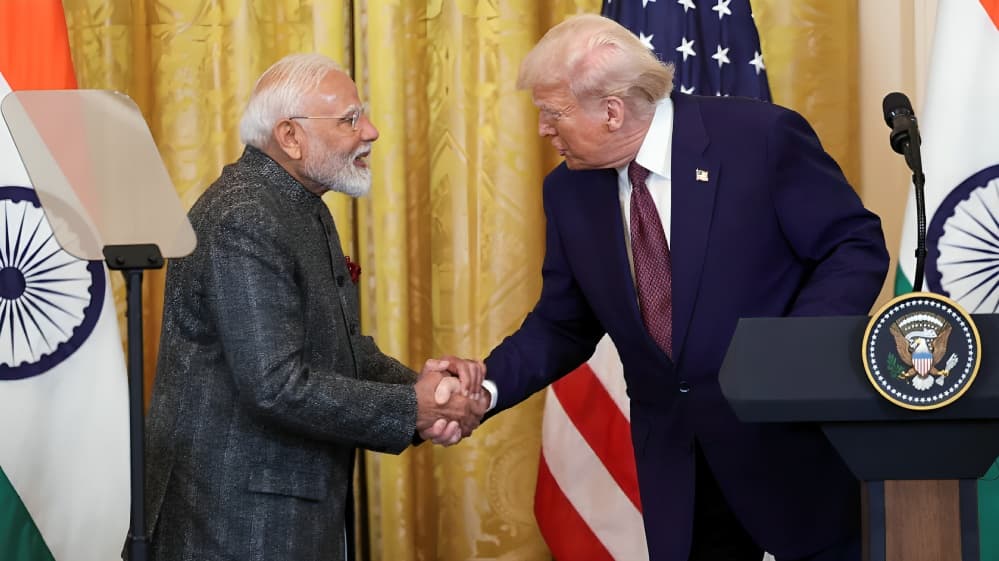
US President Donald Trump on Monday announced that the United States and India had agreed to a bilateral trade deal, highlighting several key elements that, according to him, shaped the agreement. The announcement, made via his social media platform, outlined tariff reductions, energy procurement shifts, and broader trade commitments.
One of the central points Trump emphasized was Indian Prime Minister Narendra Modi’s commitment to cease purchasing Russian oil in favor of imports from the United States and potentially Venezuela. According to Trump, this energy arrangement formed a strategic component of the trade deal, reflecting alignment in economic and geopolitical interests.
The trade deal also includes a reduction in reciprocal tariffs, with the US lowering tariffs on Indian goods from 25% to 18%. This reduction is expected to make Indian exports more competitive in the American market, potentially boosting trade volumes across sectors such as textiles, engineering goods, and chemicals. Trump cited the tariff cut as a gesture of friendship and respect for PM Modi, signaling strengthened economic ties between the two countries.
Trump further referenced a $500 billion pledge, aimed at expanding bilateral trade and investment over the coming years. While details of this pledge were not fully clarified, it is understood to represent the broader commitment to enhancing commercial cooperation between India and the US. This pledge underscores the strategic importance of India as a trading partner in the Indo-Pacific region.
While Trump listed multiple reasons and aspects for supporting the deal, some claims were not explicitly validated by PM Modi in his communications. Indian officials confirmed the tariff reduction and ongoing trade discussions but did not confirm other assertions made in Trump’s posts. Analysts note that such announcements, while highlighting opportunities, require careful review of official agreements to assess implications for domestic industries and energy policy.
The announcement has sparked significant discussion among trade analysts, policymakers, and industry stakeholders. For India, the potential benefits include increased market access for exports, enhanced foreign investment, and the opportunity to diversify energy procurement sources. For the United States, the deal strengthens economic engagement with a key partner and reduces dependence on other global suppliers.
Experts also point out that energy procurement shifts, particularly away from Russian oil, could have geopolitical implications, influencing India’s diplomatic relationships and trade negotiations with multiple countries. At the same time, the tariff reduction is expected to create competitive advantages for Indian exporters in the US market, helping them rival other global suppliers, including China.
In summary, Trump’s announcement of the India–US trade deal highlights tariff reductions, energy agreements, strategic trade pledges, and the Modi factor as key drivers. While some elements require confirmation from official Indian sources, the development signals deepening economic and strategic cooperation between the two countries, with potential long-term benefits for trade, investment, and bilateral relations.


