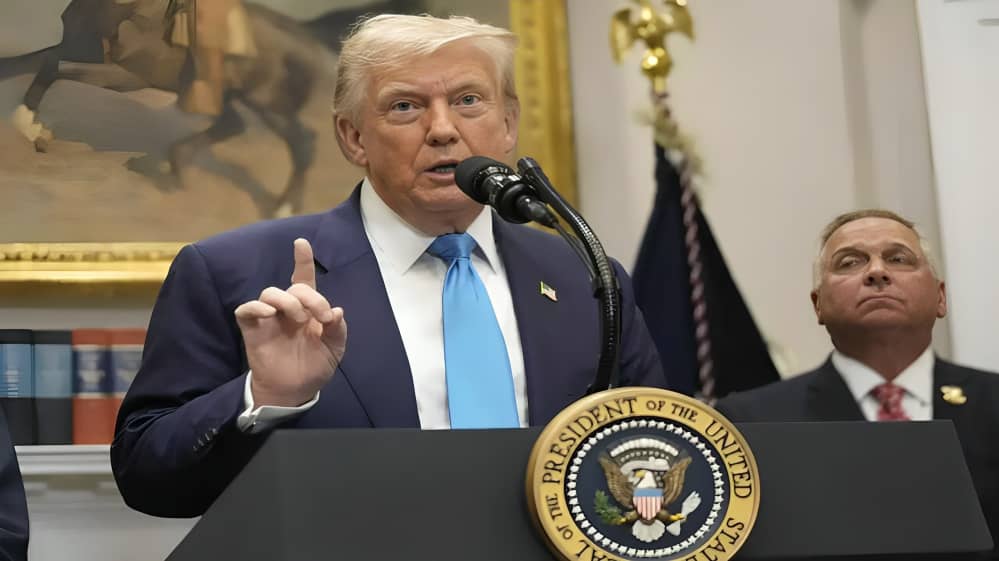
Former President Donald Trump’s legal defeat in a major Supreme Court case limiting his ability to impose tariffs unilaterally marks a significant moment in US trade policy, but it does not herald a return to the pre Trump era of largely free trade. The ruling, while restricting sudden or unilateral tariff impositions, indicates that US trade will continue in a structured but protectionist direction for the foreseeable future.
The Supreme Court’s decision requires the executive branch to rely on clearer legal and procedural justifications when imposing tariffs. Sudden, sweeping measures without statutory support are now legally constrained. Analysts suggest that this will make future tariffs more predictable and targeted, reducing market shocks caused by impulsive trade decisions. Tariffs will need to be formally justified, focusing on specific sectors or trade partners, rather than broad, blanket measures.
However, the broader trajectory of US trade policy has already changed. Over the past several years, a bipartisan consensus has emerged in Washington in favour of protecting domestic industries and strategic sectors. Both Republican and Democratic lawmakers increasingly support selective tariffs, industrial incentives, and policies aimed at enhancing national competitiveness. While they may differ on tone and implementation, the underlying approach now favours reciprocity, strategic autonomy and domestic production.
Economists and trade experts highlight that this shift reflects the reality of global economic competition. The United States is prioritising critical industries, supply chain security, and technological leadership. Measures such as tariffs, subsidies, and regulatory oversight are viewed as tools to safeguard long term national interests, rather than temporary political instruments.
Global markets are adjusting to this new paradigm. International businesses and supply chains are preparing for a phase of predictable yet protectionist policies, where trade actions are procedurally grounded but still designed to favour domestic industry. Emerging trade agreements and negotiations must account for these changes, as US trade decisions will continue to emphasise strategic and economic reciprocity.
While the Supreme Court ruling limits unilateral powers, it also codifies a more stable approach to protectionism. This balance is expected to reduce uncertainty for global traders while reinforcing the long term shift toward controlled and selective trade measures.
In summary, Trump’s legal setback has not restored free trade norms but has instead signalled a more structured protectionist phase in US trade policy. Global commerce and supply chains must now operate under a system where tariffs and industrial measures are predictable, justified, and aligned with national strategic priorities. The ruling underscores that US trade policy is likely to remain oriented toward domestic protection and strategic reciprocity, setting expectations for international trade relationships for years to come.