
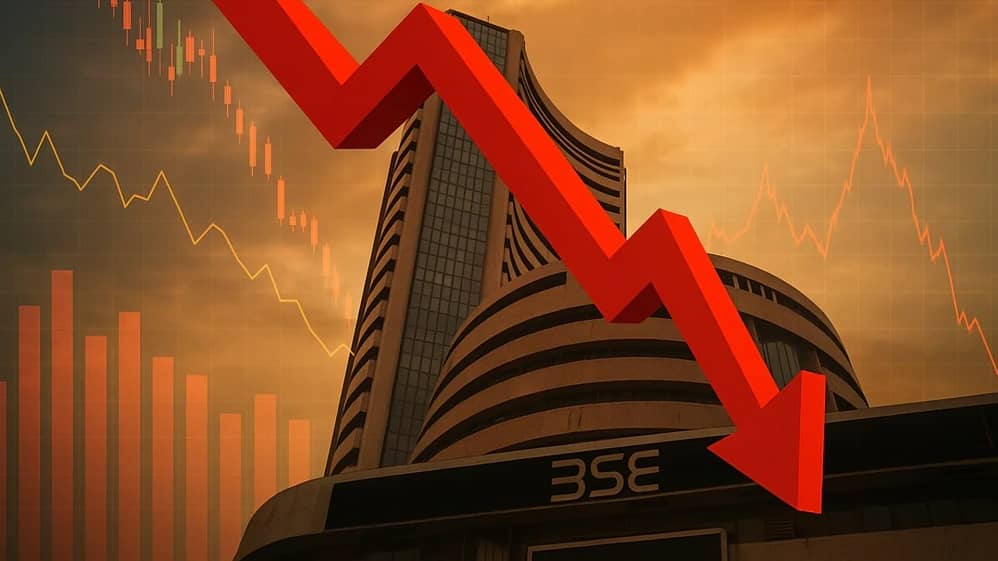
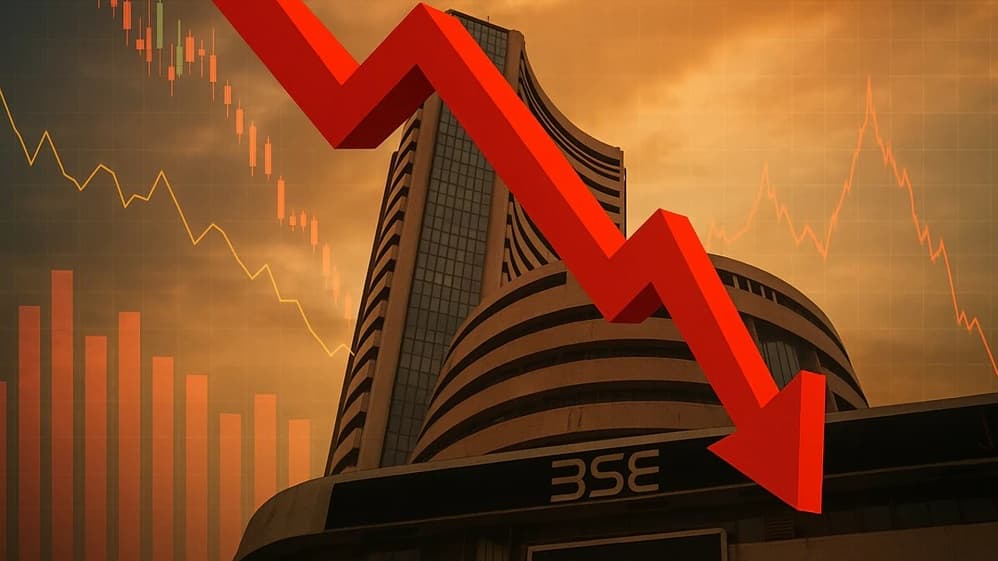
Mumbai: The Indian stock market experienced a significant decline during trading as the benchmark BSE Sensex dropped by more than 1100 points amid widespread selling pressure across sectors. The fall reflects growing caution among investors influenced by global economic uncertainty and fluctuations in international financial markets.
During the morning trading session the benchmark index slipped into negative territory. At around 1020 am the Sensex was reported trading about 525 points lower compared to its previous closing level. However selling pressure intensified as the trading session progressed leading to a deeper decline in the index.
The broader market also reflected weakness as the Nifty 50 index traded lower along with the Sensex. Several major sectors including banking information technology and financial services witnessed declines during the session.
Market analysts say that a combination of global and domestic factors contributed to the market fall. International market volatility has been affecting investor sentiment across several countries. Concerns related to global economic growth interest rate trends and geopolitical tensions have made investors more cautious.
Foreign institutional investors are also closely monitoring global economic developments before making new investments in emerging markets including India. Changes in global capital flows can significantly influence stock market movements in countries like India where international investment plays a major role.
Apart from global factors profit booking by investors has also contributed to the market decline. After a period of strong gains in recent months some investors may have chosen to sell shares to lock in profits leading to short term market corrections.
The banking and financial sector stocks were among those that experienced noticeable declines. These sectors carry a large weight in benchmark indices which means price movements in these companies can significantly affect the overall market index.
Technology sector stocks also faced pressure as global technology companies experienced mixed performance. Investors often track global trends in the technology sector when making investment decisions in Indian technology companies.
Despite the market decline analysts note that such corrections are a normal part of stock market cycles. Markets often experience short term fluctuations due to investor sentiment economic data releases and global developments.
Financial experts advise investors to remain cautious but avoid making decisions based solely on short term market volatility. Long term investment strategies and diversified portfolios are generally recommended to manage risk during market fluctuations.
Economic indicators such as inflation data corporate earnings and central bank policies are expected to play an important role in shaping future market trends. Investors will also watch global developments including oil prices and international economic growth projections.
Market participants are likely to remain attentive to upcoming financial announcements and policy decisions that may influence investor confidence. Analysts say the overall direction of the market will depend on how global economic conditions evolve in the coming weeks.
While the current decline has created uncertainty in the short term many market experts believe that the long term outlook of the Indian economy remains supported by strong domestic demand and economic reforms.


