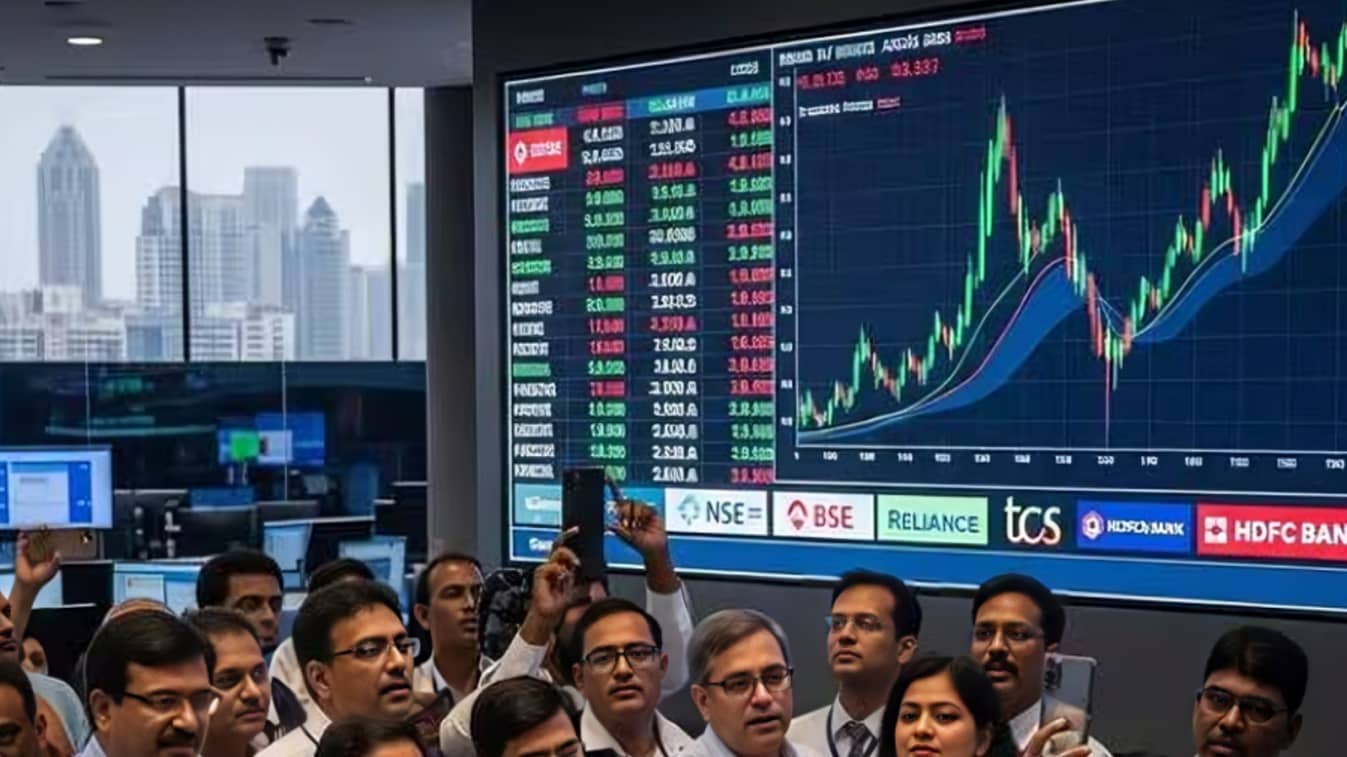
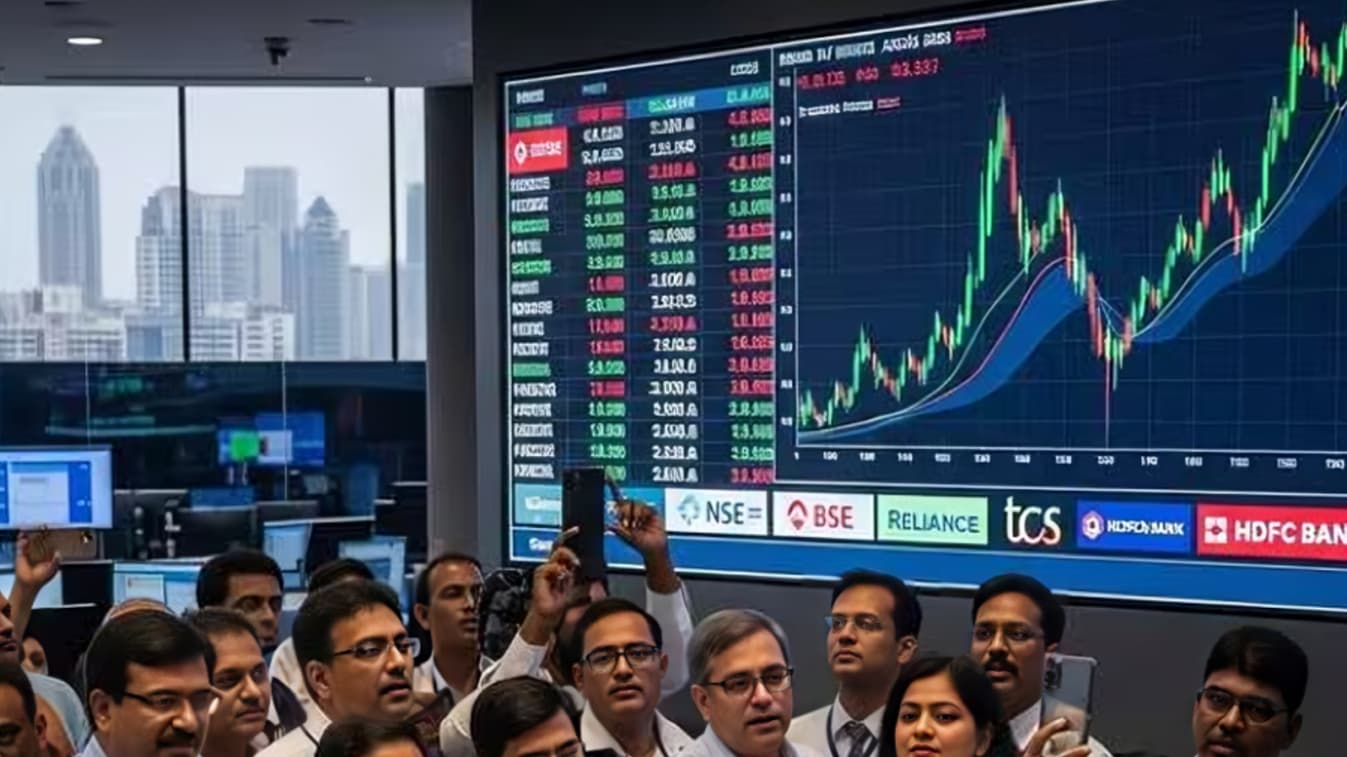
Asian stock markets witnessed sharp volatility on Wednesday, November 4, as investors reacted to developments surrounding the US midterm elections and concerns about the future of global technology investments. Japan’s Nikkei 225 and South Korea’s Kospi recorded steep intraday declines, with losses reaching around 4.5% in the regional sell-off. However, Indian equity markets showed resilience, with the Sensex and Nifty trading higher despite weakness across several Asian markets.
The contrasting performance highlighted differences in investor sentiment across regions. While concerns about political uncertainty and technology-sector valuations weighed on Asian markets, Indian equities received support from easing crude oil prices, positive corporate earnings and signs of renewed foreign investment.
Asian Markets Face Selling Pressure
Japan and South Korea were among the major markets affected by the regional sell-off. Japan’s Nikkei 225 declined sharply during Wednesday’s trading session, with losses reaching approximately 4.5% at one stage. South Korea’s Kospi also experienced significant selling pressure after initially opening higher.
The broader MSCI Asia-Pacific index declined during the session, reflecting weakness in technology-related stocks. Markets in Taiwan also faced pressure, while Hong Kong and mainland Chinese equities recorded comparatively moderate movements.
Technology shares were among the biggest contributors to the declines. Semiconductor companies and businesses connected to artificial intelligence infrastructure came under pressure as investors reassessed the outlook for future technology spending.
In Japan, semiconductor-related companies experienced notable losses. Shares of Kioxia Holdings declined by more than 11% at one stage, while Advantest and Tokyo Electron also recorded substantial declines.
South Korean technology companies were similarly affected. Samsung Electronics and SK Hynix, two major companies in the country's semiconductor industry, faced selling pressure as investors reduced exposure to technology stocks.
US Midterm Elections Create Market Uncertainty
The US midterm elections emerged as one of the major factors influencing global market sentiment. Early indications of Democratic gains in Congress prompted investors to assess the possible implications for the economic and regulatory policies of President Donald Trump’s administration.
Investors were particularly concerned about the possibility of increased regulatory scrutiny of artificial intelligence companies. A change in the balance of power in Congress could influence discussions around technology regulation, semiconductor exports and policies affecting data centre development.
The technology sector has attracted substantial investment in recent years because of growing demand for artificial intelligence services, advanced chips and computing infrastructure. Companies in Japan, South Korea and Taiwan are closely connected to this global technology supply chain.
Any uncertainty surrounding future AI investments in the United States could therefore affect expectations for Asian semiconductor manufacturers and technology suppliers.
Market strategists also pointed to the possibility of political gridlock in Washington if Democrats gained greater influence in Congress. Such a situation could complicate the administration's policy agenda and create uncertainty around future economic decisions. However, the full implications would depend on the final election results and subsequent policy developments.
Indian Stock Market Defies Global Weakness
While several Asian markets experienced declines, Indian benchmark indices remained relatively resilient during Wednesday's trading session.
The BSE Sensex and NSE Nifty 50 traded in positive territory, extending the gains recorded over the previous four sessions. Reuters reported that both indices were up around 0.1% by 10:28 a.m. Indian Standard Time. Other market updates during the morning reported stronger gains in the Nifty.
The domestic market's performance was supported by several factors, including improving corporate earnings, lower crude oil prices and renewed interest from foreign investors.
Twelve of the 16 major sectors tracked in the Indian market were trading higher during the morning session, according to Reuters. Small-cap and mid-cap indices also recorded gains, indicating that buying interest was not limited to the largest listed companies.
The performance of Indian equities stood out against the broader weakness in Asian technology stocks. Investors appeared to be focusing on domestic earnings and economic factors rather than reacting entirely to developments in overseas markets.
Falling Crude Oil Prices Offer Support
Crude oil prices remained an important factor for Indian markets. As one of the world's major oil-importing economies, India is sensitive to changes in international energy prices.
Brent crude prices declined by around 0.6% to approximately 103 dollars per barrel during the morning session, according to Reuters. Lower oil prices can help reduce India's import bill and ease pressure on inflation, corporate operating costs and the country's current account.
However, oil prices remained relatively elevated, and investors continued to monitor geopolitical developments and negotiations involving the United States and Iran. Any renewed disruption to global energy supplies could create fresh volatility in crude prices.
For Indian companies, a sustained reduction in energy costs could provide some relief, particularly in sectors where fuel and transportation expenses account for a significant share of operating expenditure.
Foreign Investor Activity and Corporate Earnings
Foreign investment flows also contributed to the positive sentiment in Indian equities. Reuters reported that foreign investors purchased approximately 821 million dollars' worth of Indian shares during November, helping reduce their net outflows for the year.
The return of foreign buying is being closely watched by market participants because overseas institutional investment can influence liquidity and the direction of benchmark indices.
Corporate earnings have also played an important role in supporting the market. Investors have been assessing quarterly financial results to understand the performance of companies across sectors.
Positive earnings announcements and expectations of improved business performance have helped attract buying interest in selected stocks. Market participants are also monitoring valuations, profit margins and management commentary to assess whether the recent market gains can be sustained.
Global Markets Remain Sensitive to Election Developments
The sharp movements in Asian equities underline how political developments in major economies can influence international financial markets.
The US midterm election outcome could affect expectations around technology regulation, trade policy, government spending and the broader business environment. These developments are particularly relevant to Asian economies that depend heavily on exports of semiconductors, electronic components and technology products.
For India, the immediate market impact was relatively limited during the morning session, with domestic benchmarks remaining positive. Nevertheless, investors are expected to monitor global market movements, crude oil prices, foreign investment flows and corporate earnings for further direction.
The sharp intraday declines in Japan and South Korea also highlight the volatility that can emerge when political uncertainty combines with concerns about high technology-sector valuations.
Market movements may change during the day as election results become clearer and investors reassess their positions. Therefore, the intraday declines in Asian indices should not automatically be treated as their final closing losses.