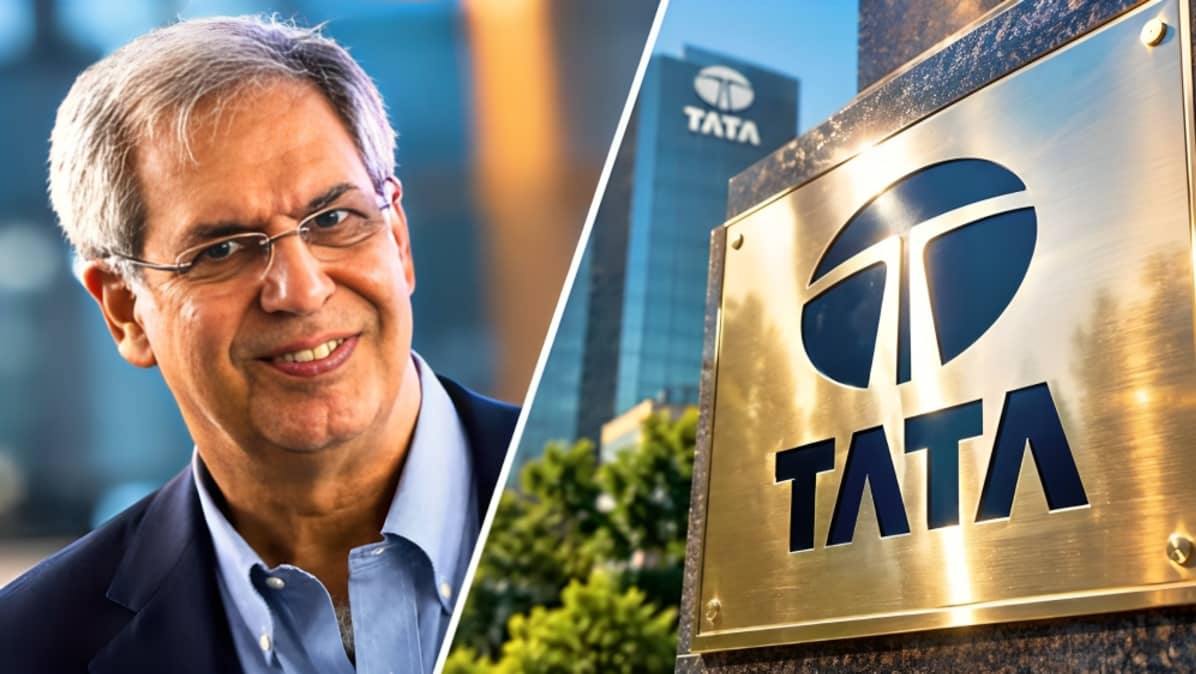
Tata Sons is facing an important regulatory and corporate restructuring decision after the Reserve Bank of India directed the company to comply with regulations applicable to upper-layer financial entities. Against this background, Tata Trusts Chairman Noel Tata has proposed a restructuring plan that could allow Tata Sons to remain an unlisted private company while changing its regulatory status.
The proposal involves merging Tata Electronics Systems and Tata Consulting Engineers with Tata Sons. According to reports, the restructuring is intended to increase the operating business component of Tata Sons and potentially take the company outside the regulatory definitions applicable to an upper-layer Non-Banking Financial Company or Core Investment Company.
In an exclusive conversation with Times Now Digital, senior partner Sanjay Asher of Crawford Bayley & Co. described Noel Tata’s proposed solution as a potentially suitable structure for Tata Sons. Asher indicated that the proposal could potentially be implemented within 30 days, although the timeline should be understood as a legal and procedural assessment rather than a confirmed deadline announced by Tata Sons or the Reserve Bank of India.
The proposed restructuring comes at a time when Tata Sons is dealing with the question of whether it should remain an unlisted company or comply with the regulatory requirements that could lead to a public listing. The issue has become significant because Tata Sons is the principal holding company of the Tata Group and has substantial investments across several group businesses.
The Reserve Bank of India’s regulatory framework is central to the issue. Tata Sons had previously sought to exit the upper-layer NBFC and CIC framework. However, the RBI rejected that request earlier in September 2026 and directed Tata Sons to comply with the applicable regulatory requirements.
The new proposal takes a different approach. Rather than simply seeking deregistration while retaining the same structure, Tata Trusts has proposed bringing additional operating businesses into Tata Sons. The companies proposed to be merged are Tata Electronics Systems and Tata Consulting Engineers.
The reasoning behind the proposal is linked to the regulatory tests used to determine whether a company qualifies as an NBFC or a Core Investment Company. Reports citing restructuring experts said that the addition of operating businesses could change Tata Sons’ asset and income profile sufficiently to affect its classification under these regulations.
According to figures cited by Tata Trusts, the merged entity could have operating revenue of about Rs 1.05 lakh crore as of March 31, 2026, compared with approximately Rs 40,072 crore in income from financial assets. This would increase the share of operating revenue in the combined entity’s overall income profile.
The proposal could also have implications for the definition of a Core Investment Company. A CIC is subject to requirements concerning the proportion of its net assets represented by investments in group companies. By adding operating assets through the proposed mergers, Tata Sons’ balance sheet would have a larger operating-business component. Reports have suggested that this could potentially take the company outside the relevant CIC definition.
Noel Tata has publicly argued that Tata Sons should explore alternatives to a public listing. On September 29, 2026, he said that the proposed reorganisation complies with existing RBI guidelines and urged Tata Sons and the RBI to examine the proposal. Tata Trusts holds a 66 percent stake in Tata Sons.
Noel Tata has also expressed concern about the possible impact of a public listing on the Tata Group’s long-term operating model and philanthropic activities. He has argued that the group’s structure has developed over many decades and that greater pressure from public-market investors could influence the way the group approaches long-term investments and social-development activities. These are Noel Tata’s stated views on the issue.
However, the restructuring proposal is not an automatic or immediate solution. Several regulatory and corporate steps would be required before the proposed merger could become effective. Reports indicate that the plan would require a no-objection certificate from the RBI before proceeding to the National Company Law Tribunal. Shareholder approval would also be required, including support representing at least 75 percent of the votes cast.
The proposal also comes amid differences among stakeholders over the future structure of Tata Sons. Tata Trusts has supported efforts to preserve the company’s unlisted status, while some trustees have backed a public listing. The Tata Sons board had also previously expressed a preference for listing as a means of complying with the applicable regulatory framework.
Legal experts have therefore highlighted both the potential advantages and the regulatory challenges surrounding Noel Tata’s plan. Sanjay Asher’s assessment that the structure could potentially be implemented within 30 days refers to the legal and procedural feasibility of the proposal. It does not mean that the RBI, NCLT, shareholders or other authorities have already approved the restructuring or that the entire process is guaranteed to conclude within that period.
The RBI’s response will remain particularly important because the regulator must determine whether the restructured Tata Sons genuinely falls outside the relevant regulatory categories. Recent legal analysis has described the proposal as legally possible but stressed that its success depends on regulatory scrutiny and approval.
The proposed restructuring therefore represents a significant development in the ongoing Tata Sons regulatory issue. If the necessary approvals are obtained and the proposed mergers are completed, the resulting change in Tata Sons’ business and financial profile could affect its regulatory classification. Until the required approvals are secured, however, the proposal remains a restructuring plan under consideration rather than a completed transaction.