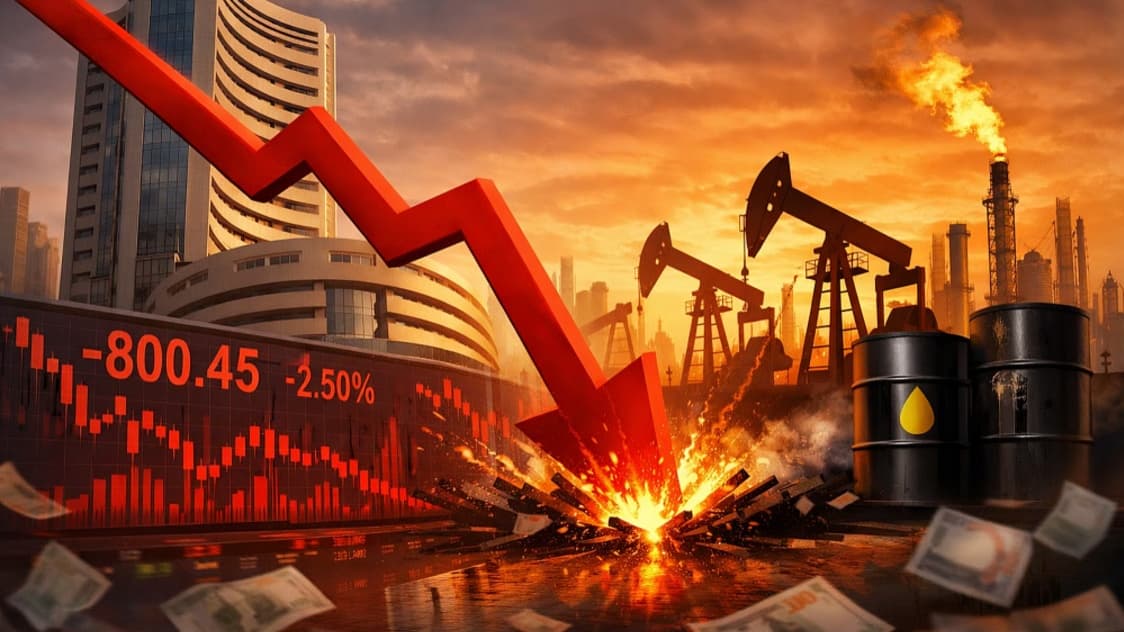
Indian equity markets witnessed a sharp sell-off on Wednesday as escalating geopolitical tensions in the Middle East triggered a global risk-off sentiment. The BSE Sensex plunged 1,764 points, or 2.2 percent, to 78,474, while the Nifty 50 declined 538 points, or 2.1 percent, to 24,327. The session erased nearly Rs 7.93 lakh crore from investor wealth, reflecting the sudden market volatility triggered by external factors.
Rising tensions between the United States and Iran have pushed crude oil prices higher, creating concerns over input costs, inflationary pressures, and trade deficits. India, being a major energy importer, is particularly sensitive to global crude price movements, and the surge in oil prices added pressure on both the currency and equity markets. The Indian rupee weakened further, intensifying the sell-off, while foreign portfolio investors (FPIs) pulled funds from equities, exacerbating the decline.
Sectoral indices across the Nifty fell sharply, with financials, automobile, capital goods, and oil & gas stocks experiencing the largest losses. Banking stocks faced heightened selling pressure due to concerns over macroeconomic stability, while auto and capital goods companies were affected by rising input costs and supply chain uncertainties. The IT sector was the only major segment to trade in positive territory, offering some respite amid the broad-based decline.
Market analysts highlight that Wednesday’s correction is largely a reaction to global developments rather than domestic economic weakness. Rising geopolitical uncertainty tends to drive investors toward safe-haven assets, often causing sudden fund outflows from emerging markets such as India. The combination of higher crude prices, currency depreciation, and foreign selling has created a perfect storm for equities.
Despite the steep decline, some experts note that long-term fundamentals for Indian markets remain robust. Corporate earnings growth, strong consumption demand, and continued domestic investment support the equity market’s medium- and long-term prospects. Analysts advise investors to focus on quality stocks and maintain a diversified portfolio to navigate volatility triggered by external events.
The session also underscored the interconnectedness of global markets, with Indian indices moving in tandem with international trends. US and European markets also reacted sharply to the escalating crisis, contributing to a risk-averse sentiment worldwide.
Investors will closely monitor developments in the Middle East, crude oil price trends, and currency fluctuations in the coming days to gauge the direction of the markets. Policymakers and regulators may also intervene if volatility intensifies, aiming to maintain stability in financial markets.
Overall, Wednesday’s market correction highlights the vulnerability of Indian equities to global geopolitical shocks. While headline losses are significant, underlying economic fundamentals and corporate performance are expected to support a recovery once external pressures ease. The focus will remain on managing risks amid heightened uncertainty and identifying selective opportunities for long-term investment.