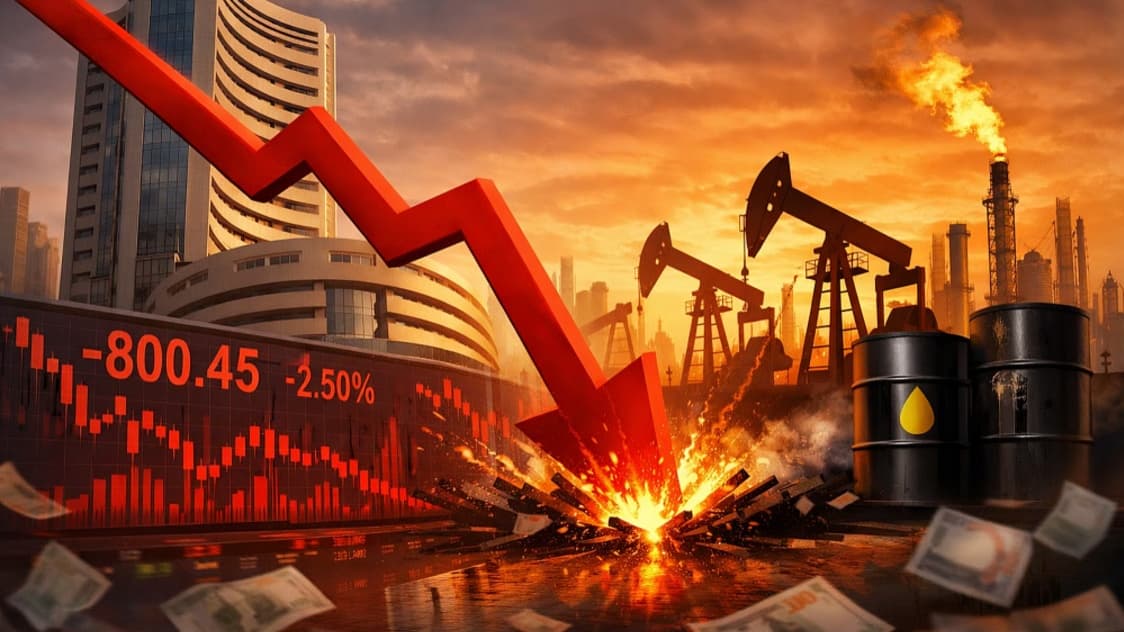
Indian stock markets experienced significant volatility as benchmark indices declined sharply in early trade, reflecting global uncertainty linked to escalating tensions in West Asia. The BSE Sensex fell more than 1,300 points during intraday trading, while the NSE Nifty slipped below the 24,900 level, indicating broad based selling pressure across sectors.
At the opening bell, the Sensex dropped 984.74 points, or 1.21 percent, to begin the session at 80,302.45. The Nifty 50 index also opened lower, falling 312.65 points, or 1.24 percent, to 24,866.00. As trading progressed, selling intensified in several heavyweight stocks, contributing to deeper losses.
Market analysts said the downturn was influenced by global geopolitical tensions, particularly developments in West Asia. Concerns about potential supply disruptions and rising crude oil prices weighed heavily on investor sentiment. India, being a major importer of crude oil, remains sensitive to fluctuations in global energy markets. Higher oil prices can lead to increased inflationary pressures and affect corporate profitability.
Foreign institutional investors were reportedly cautious amid the uncertain environment. Global risk aversion often results in capital outflows from emerging markets, including India, which can further pressure domestic indices. Currency movements and bond yield trends are also being closely watched by investors.
Sector wise, banking, information technology and energy stocks witnessed notable declines. Market participants said that uncertainty regarding global trade and economic stability contributed to broad based weakness. Midcap and smallcap stocks also faced selling pressure, indicating that risk appetite had weakened across segments.
Domestic factors such as inflation data, corporate earnings outlook and policy expectations remain important drivers for market direction. However, in the short term, global geopolitical developments are likely to dominate sentiment. Analysts noted that markets typically react sharply to unexpected international events but may stabilise once clarity emerges.
Experts advised investors to remain cautious and avoid panic driven decisions. Long term fundamentals of the Indian economy, including steady growth projections and structural reforms, remain intact according to market strategists. However, short term volatility could persist if geopolitical tensions escalate further.
Investors are also monitoring global equity markets, crude oil price trends and statements from major central banks for further cues. Developments in currency markets and foreign portfolio investment flows are expected to influence trading patterns in the coming sessions.
The sharp fall highlights the interconnected nature of global financial markets, where international events can rapidly impact domestic indices. Market participants are expected to remain vigilant as they assess both external risks and domestic economic indicators.