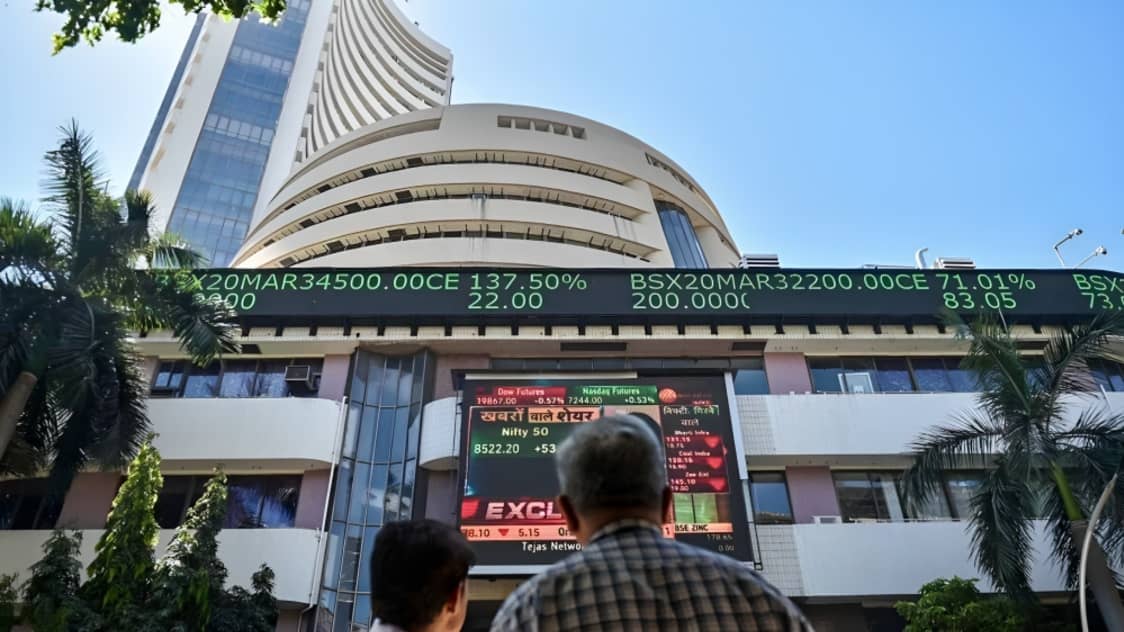
Indian stock markets witnessed a strong recovery on Thursday, October 15, 2026, as heavy buying in information technology shares lifted benchmark indices and helped them close at two-week highs. The BSE Sensex ended the session at 74,315.61, gaining 1,533.72 points, or 2.1 percent. The NSE Nifty 50 advanced 374.65 points, or 1.7 percent, to settle at 22,997.35.
The Nifty briefly crossed the 23,000 mark during the trading session before easing slightly towards the close. Information technology stocks were among the leading contributors to the rally, while selected banking and heavyweight stocks also supported the broader market.
IT Stocks Lead the Market Recovery
Information technology shares attracted strong buying interest during Thursday's session. The rally came after concerns over higher-than-expected US inflation triggered selling in technology stocks on Wall Street and weighed on several Asian markets.
Tech Mahindra emerged as one of the strongest performers in the Nifty 50, closing 4.8 percent higher. ICICI Bank gained 3.9 percent, while Reliance Industries advanced 3.4 percent. The Nifty Private Bank Index also finished higher, reflecting buying interest across parts of the banking sector.
The Nifty IT index gained during the session, although its performance varied from that of technology stocks in the United States and other Asian markets. Indian investors appeared to respond to domestic market factors and expectations surrounding corporate earnings, helping technology shares recover despite the unsettled global environment.
Sensex and Nifty Open Higher
The positive trend was visible from the opening bell. The Sensex rose by more than 300 points in early trade, while the Nifty moved above 22,700. Buying momentum strengthened as the session progressed, with the Sensex climbing more than 1,000 points during the morning.
At around 10:45 am, the Sensex was trading above 73,800, while the Nifty was above 22,900. The indices extended their gains during the afternoon and the Nifty moved above 23,000 before both benchmarks settled below their intraday highs.
By the end of the session, the Sensex had gained more than 1,500 points, while the Nifty closed just below the psychologically important 23,000 level. The closing performance represented a substantial improvement from the opening levels and indicated broad buying interest in several heavyweight stocks.
Global Inflation Concerns Remain in Focus
Despite the recovery in Indian equities, global market sentiment remained sensitive to inflation data from the United States. September inflation came in higher than economists had expected, strengthening concerns that the US Federal Reserve might keep interest rates elevated or consider further tightening.
The news put pressure on US technology and semiconductor shares. The Nasdaq Composite fell 1.9 percent on Wednesday, while the S&P 500 declined 1.1 percent. Asian markets also opened lower on Thursday, with Japan's Nikkei and South Korea's Kospi facing significant selling pressure.
Higher US interest rates can affect global investment flows, borrowing costs and valuations of growth-oriented companies. For Indian markets, these factors remain important because foreign investor activity and global risk appetite can influence short-term price movements.
However, the domestic rally demonstrated that global weakness does not always translate into uniform selling across every market or sector. Investors continued to buy selected Indian shares, particularly IT companies, as the trading session progressed.
IDBI Bank Shares Decline After Fairfax Deal
IDBI Bank remained in focus after the Union Cabinet approved the sale of a combined 60.72 percent stake in the lender to a Fairfax Financial Holdings-backed entity for approximately 52,878 crore rupees.
The transaction covers a 30.48 percent stake held by the central government and a 30.24 percent stake held by the Life Insurance Corporation of India. It represents a major milestone in the bank's proposed ownership transition.
However, IDBI Bank shares fell during Thursday's trading session despite the approval. Investors reacted to the agreed purchase price of 81 rupees per share, which was below the stock's previous market closing price. The decline followed a sharp rise in the share price in the preceding session, when expectations surrounding the transaction had supported buying.
The share-price movement highlights the difference between the long-term significance of a transaction and the immediate response of stock market participants. While the proposed ownership change could influence the bank's future strategy, investors also assess the valuation and terms of a deal when deciding whether to buy or sell a stock.
What Investors Should Watch Next
Market participants will continue to monitor quarterly earnings, global inflation trends, crude oil prices, foreign institutional investor activity and developments in domestic policy. These factors may influence the direction of Indian equities in the coming sessions.
The performance of IT stocks will remain particularly important as investors evaluate company results, international demand for technology services and changes in global spending on software and digital services. Banking shares may also respond to earnings announcements, credit growth and developments involving major lenders.
Thursday's strong rally pushed both benchmark indices to two-week highs and brought the Nifty close to the 23,000 level. However, a single session of gains does not establish a sustained market trend. Investors should assess the broader economic outlook, company fundamentals and their own risk tolerance rather than relying solely on daily index movements.
Overall, the October 15 session was marked by a sharp domestic recovery led by IT shares, even as concerns about US inflation and weakness across several Asian markets continued to influence global sentiment.