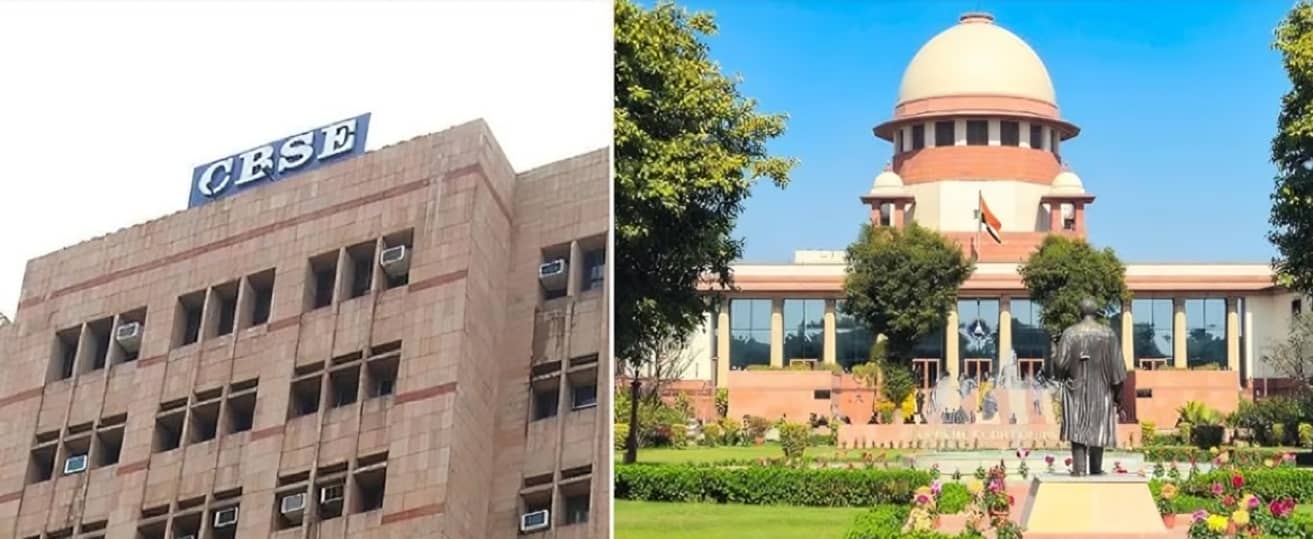
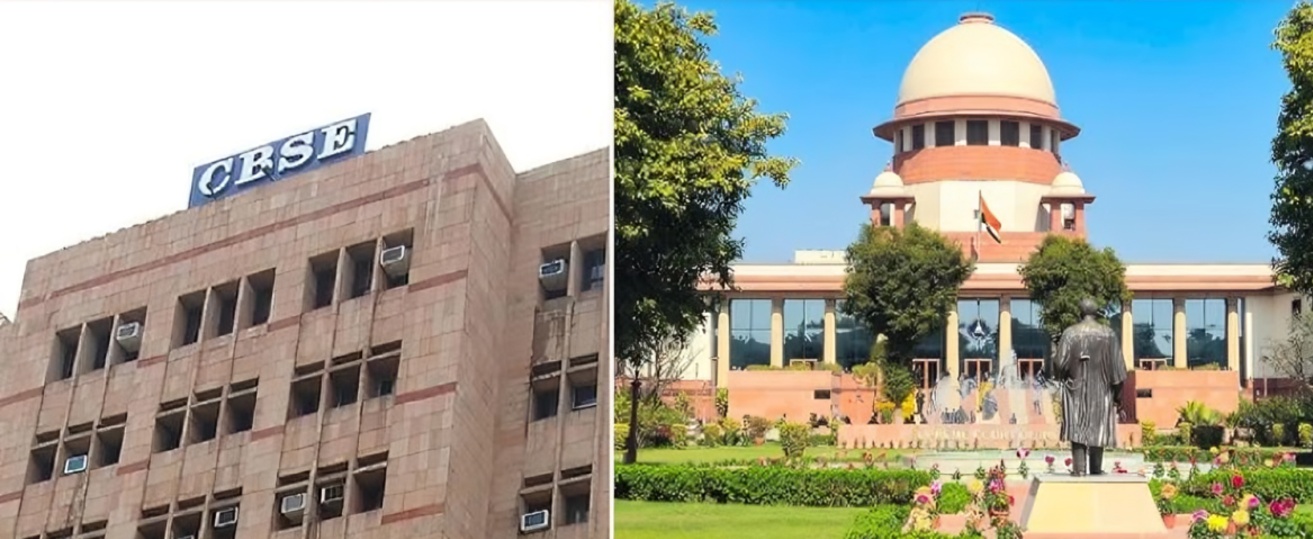
The Supreme Court has raised fresh questions about the implementation of the Central Board of Secondary Education three language policy, particularly over the classification of English and the practical difficulties schools may face.
A bench headed by Chief Justice of India Surya Kant, along with Justices Joymalya Bagchi and V Mohana, considered issues surrounding the policy on Thursday. The court asked the CBSE to consider providing a one time reprieve to students currently studying in Class 6 so that they are not placed under additional difficulties when they progress through the new language framework.
The court also questioned how English could be treated as a non native or foreign language under the revised framework. The issue has become an important part of the wider debate surrounding the three language structure and its implementation across CBSE affiliated schools.
The Supreme Court's observations came amid continuing legal challenges to the CBSE's revised language policy. Earlier, the court had sought responses from the Union government, CBSE and the National Council of Educational Research and Training on petitions challenging the policy. The court had not granted an interim stay on the implementation of the policy at that stage.
The revised framework is linked to the National Education Policy 2020 and the National Curriculum Framework for School Education. CBSE's implementation guidelines provide for three languages, with at least two being Indian languages. The board has identified languages such as Hindi, Tamil, Telugu, Kannada, Malayalam, Marathi, Bengali, Punjabi, Gujarati, Odia and Assamese among the Indian languages that can be selected. English, French, German, Arabic and Spanish are listed separately as non native languages.
Under the CBSE guidelines for Class 9 students during the 2026 to 2027 academic year, students are required to study three languages, with at least two being Indian languages. The board has also provided transitional arrangements for students who were already studying combinations involving non native languages.
The Supreme Court's latest intervention focuses not only on the policy itself but also on whether schools have the necessary infrastructure and teaching resources to implement it effectively. The court has sought information about the availability of qualified teachers, suitable textbooks and other learning resources.
Teacher availability is one of the major practical concerns associated with introducing additional language requirements. Schools across different regions may offer different combinations of languages depending on local demand and available teaching staff. Ensuring that students have access to qualified teachers could therefore become an important part of the implementation process.
Textbooks and learning materials are another concern. CBSE has previously stated that appropriate learning resources would be provided through the board and NCERT. The board has also indicated that additional materials would be used during the transition period.
The court's concern over Class 6 students is also significant because introducing a language at an earlier stage can require schools to prepare students gradually rather than introducing a new subject close to board examinations. In an earlier hearing, the Supreme Court had questioned the decision to introduce the third language at Class 9 and suggested that language learning could begin earlier to reduce pressure on students.
The issue has generated particular discussion in states such as Tamil Nadu, where the language policy has long been a politically and educationally sensitive subject. The Supreme Court has previously heard arguments concerning the impact of the CBSE framework and the concerns raised by petitioners.
At the same time, the Centre, CBSE and NCERT have defended the three language framework, saying it is intended to promote multilingualism and national integration. They have argued that the policy does not require students to choose any particular Indian language and that the framework provides flexibility within the prescribed structure.
CBSE has also clarified that students already studying certain language combinations will receive transitional relief. According to its June 2026 guidelines, Class 9 students who were already studying two non native languages could continue those languages and add an Indian language as the third language under a one time relaxation. The board also said there would be no CBSE board examination for the third language when this batch reaches Class 10.
The Supreme Court's latest observations do not by themselves amount to a final cancellation or stay of the policy. The legal proceedings are continuing, and the court is examining whether the framework can be implemented in a manner that is practical and does not create unnecessary difficulties for students and schools.
The court's focus on teachers, textbooks and infrastructure indicates that implementation capacity is likely to remain an important part of the proceedings. Any changes ultimately directed or recommended by the court could have consequences for CBSE affiliated schools and students across the country.
For parents and students, the immediate development means that the three language policy remains under judicial consideration. Schools and families should therefore rely on official CBSE communications and court orders for confirmed changes rather than unofficial interpretations.
The matter is expected to receive further consideration as the Supreme Court examines the policy and the responses from the Centre, CBSE and NCERT. Until a final decision or fresh directions are issued, the existing CBSE framework and any officially announced transitional arrangements remain relevant for affected students.