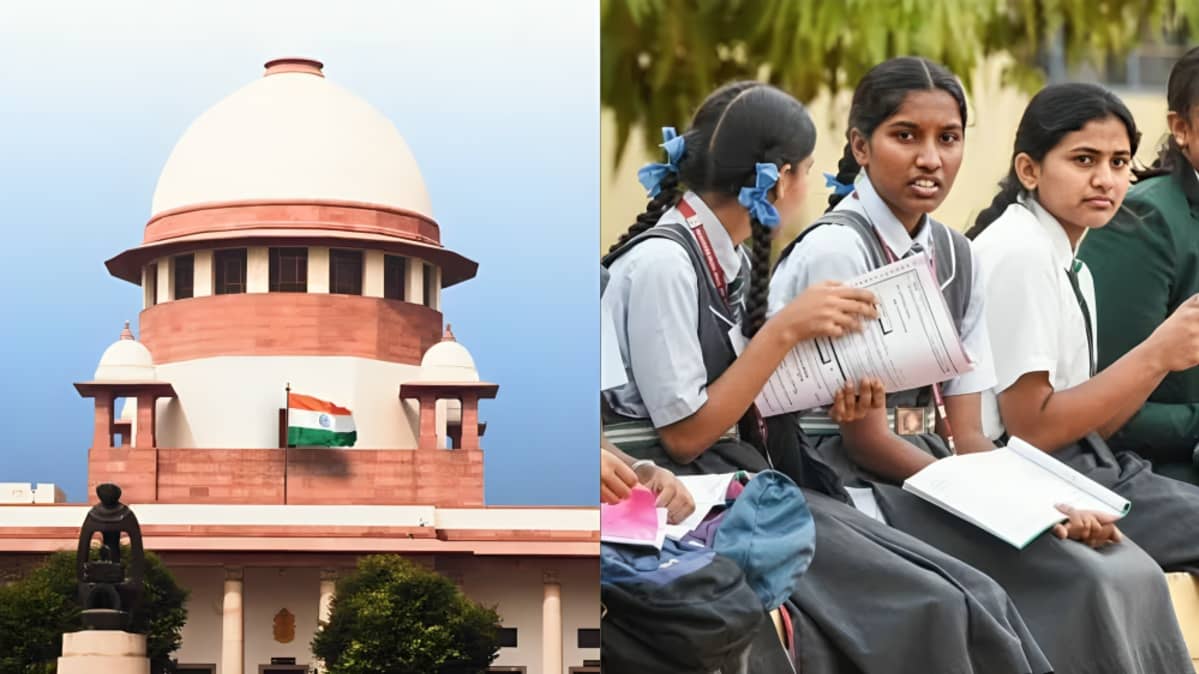
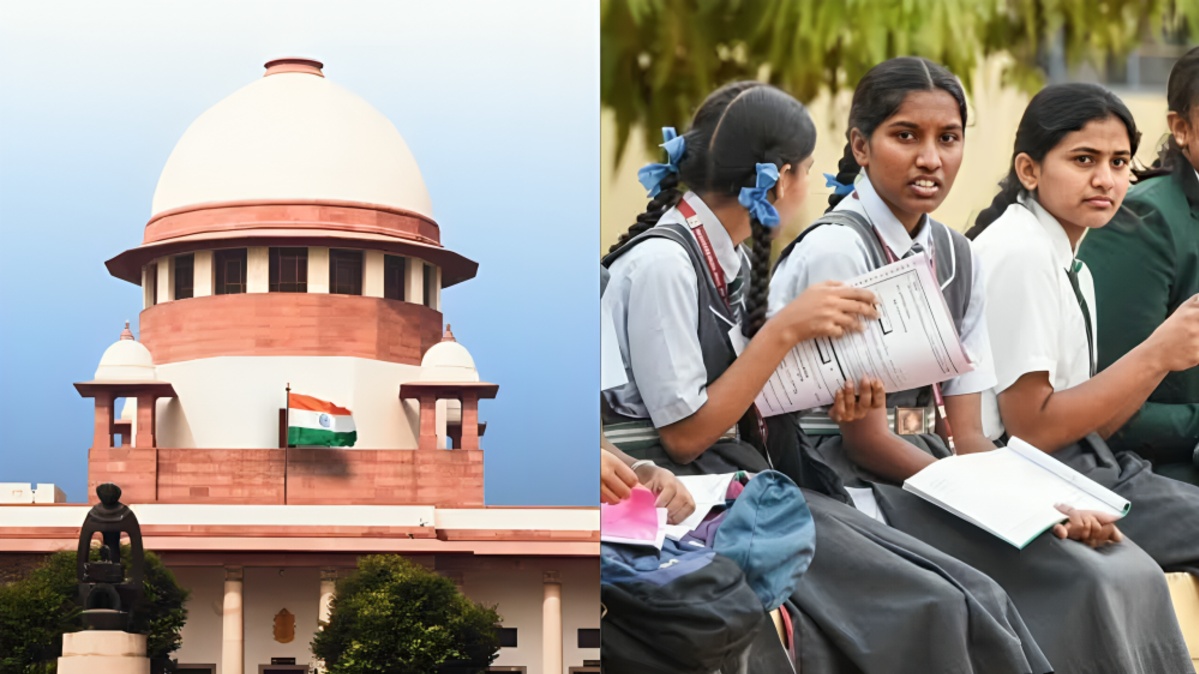
The Supreme Court has sought a detailed response from the Centre and the Central Board of Secondary Education over concerns surrounding the On Screen Marking system used for evaluating CBSE Class 12 answer sheets.
The matter has gained importance after a large number of students sought access to their evaluated answer sheets and requested verification or re evaluation following the declaration of the 2026 board examination results.
During the hearing on August 21, the court examined concerns raised by students and the petitioner regarding the digital evaluation process and the grievance mechanism provided by CBSE. The court is also considering whether additional relief should be made available to students who were unable to raise their concerns during the one week grievance period.
What is the On Screen Marking system
CBSE introduced On Screen Marking as a digital method of evaluating answer sheets. Under the system, physical answer books are scanned and made available digitally to evaluators.
The move was intended to modernise the evaluation process and improve efficiency. However, concerns emerged during the 2026 examination cycle over issues relating to scanned answer sheets, evaluation and access to post result services.
The controversy has led to demands for stronger safeguards and a more effective mechanism through which students can raise complaints.
1.68 lakh students sought review
The scale of student participation in the post result process has become a significant part of the case.
According to information presented before the Supreme Court, around 1.68 lakh students approached CBSE through the grievance and re evaluation process. Earlier information placed before Parliament also showed that more than 1.68 lakh Class 12 candidates applied for verification of issues or re evaluation.
The figures demonstrate the considerable level of scrutiny that followed the declaration of the CBSE Class 12 results.
Supreme Court examines grievance window
A major issue before the court is the one week grievance window provided by CBSE.
The petitioner has argued that the period was too short, particularly because a large number of students continued to face concerns relating to their results and evaluated answer sheets.
The petitioner has therefore requested that the grievance mechanism be reopened so that students who could not submit their complaints within the original period can also seek relief.
Centre explains the deadline
During the hearing, Solicitor General Tushar Mehta explained the government's position on the limited grievance period.
The Centre indicated that the schedule had been considered in the context of other entrance examinations and admission processes that depend on CBSE results.
According to the submissions made before the court, delaying the CBSE process could have affected other examinations and admission schedules, including examinations connected with engineering and higher education admissions.
The Centre has sought additional time to place its detailed position before the Supreme Court.
Court asks for details of affected students
The Supreme Court has asked the petitioner to provide category wise details of students who may require further intervention.
These categories include students who submitted complaints within the permitted period but did not receive a response, students who did not receive their answer sheets or re evaluation results and students who were unable to submit complaints because of internet or infrastructure related difficulties.
The information could help the court determine whether additional measures are required.
Concerns over evaluation process
The petition has raised questions about whether some of the reported problems were connected directly to the On Screen Marking system.
The court has also examined whether the complaints relate to re evaluation itself or to possible technical and administrative issues associated with digital evaluation.
Concerns have reportedly included problems involving scanned answer sheets and evaluation procedures.
The Centre has stated that a one member committee was constituted to examine complaints related to the examination process.
Impact on higher education admissions
The issue is particularly important because CBSE Class 12 results play a major role in students' higher education plans.
Students use their board examination results for eligibility and admission to several courses and institutions.
The petitioner has pointed out that some students who cleared entrance examinations could face difficulties if their CBSE marks affect eligibility requirements.
The Supreme Court has therefore considered the matter in the context of the ongoing admission season and the potential impact on students' academic careers.
Earlier data on answer sheet requests
Data provided by the Ministry of Education in Parliament showed that 4.04 lakh of the 17.69 lakh students who appeared for the CBSE Class 12 examination sought scanned copies of their evaluated answer books.
This represented about 22.8 percent of the candidates who appeared for the examination.
More than 1.68 lakh candidates subsequently applied for verification of issues or re evaluation.
These figures highlight the significant demand for transparency and post result scrutiny following the implementation of digital evaluation.
Need for a permanent mechanism
The Supreme Court's intervention also raises a broader question about how digital evaluation should be managed in future examinations.
A permanent mechanism could provide students with a clearly defined process for reporting technical problems, obtaining evaluated answer sheets and seeking correction where genuine errors are identified.
Such a system could also reduce uncertainty for students and ensure that complaints are handled within clearly defined timelines.
The court has sought the government's response on the broader issue of addressing problems associated with the OSM system.
CBSE's digital evaluation transition
The 2026 examination cycle marked a major expansion of digital evaluation for CBSE Class 12 answer sheets.
According to reports, around 98 lakh answer sheets were scanned for the evaluation process. Some answer sheets were identified as having scanning quality problems and were rescanned.
Reports also indicated that technical issues and difficulties in accessing post result services had contributed to concerns among students and parents.
What happens next
The Centre is expected to submit its detailed affidavit to the Supreme Court.
The petitioner will also provide additional information about students who may require intervention.
The Supreme Court will then consider the government's response and examine whether the existing grievance mechanism is sufficient or whether additional measures should be introduced.
The outcome could have implications not only for students affected by the 2026 results but also for the way digital evaluation systems are managed in future CBSE examinations.
Important information for students
Students who have concerns regarding their CBSE results should follow official CBSE communications regarding verification and re evaluation.
They should also keep records of applications, payment details and communications submitted through official channels.
Students should avoid relying on unofficial claims circulating on social media and should wait for formal directions from CBSE or the Supreme Court regarding any reopening of the grievance process.
Conclusion
The Supreme Court has sought responses from the Centre and CBSE over concerns surrounding the On Screen Marking system used in the 2026 CBSE Class 12 evaluation process.
Around 1.68 lakh students approached CBSE for verification or re evaluation, while the petitioner has argued that the one week grievance window did not provide sufficient time for all affected students to seek assistance.
The court is now examining whether additional relief should be provided, including possible consideration of students who could not use the original grievance mechanism.
The Centre is expected to place its detailed response before the court. The proceedings could determine whether CBSE needs to introduce additional safeguards or a more comprehensive grievance mechanism for digital evaluation in the future