
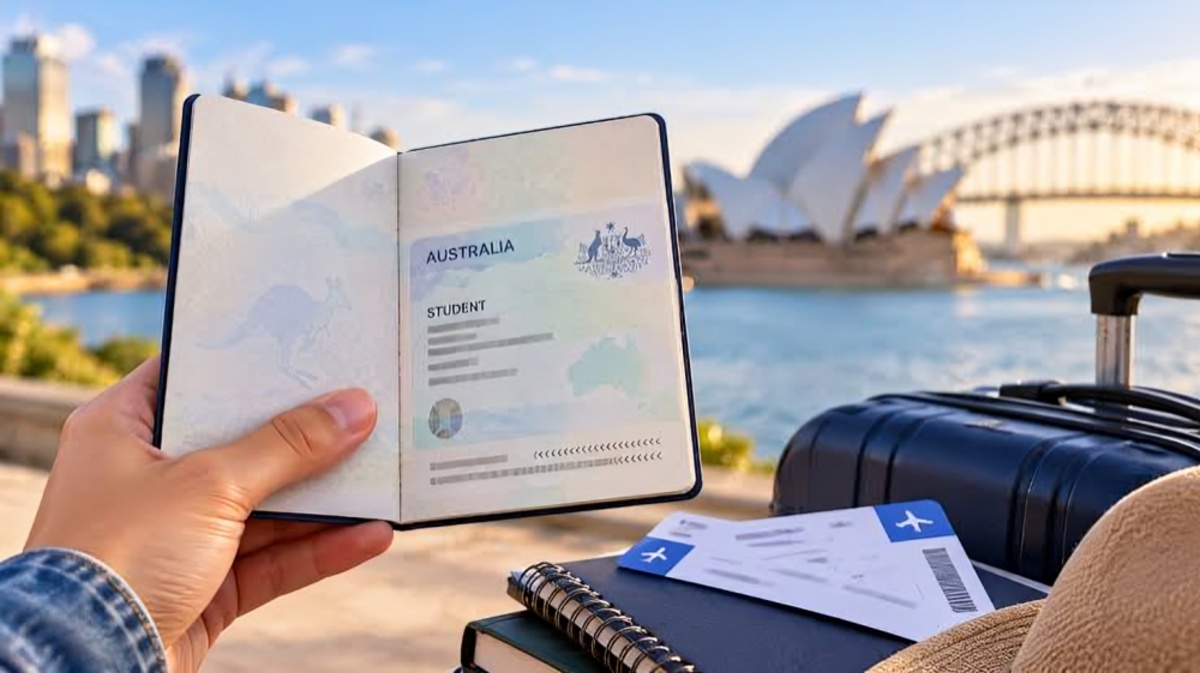
Australia has announced major changes to its temporary migration and student visa system, with most international students set to lose the ability to bring their spouses, partners and dependent children with them while studying in the country.
The changes were announced by Australian Home Affairs Minister Tony Burke on September 17, 2026, as part of a broader migration reform package. The government says the reforms are intended to bring net overseas migration down to about 225,000 a year by 2028, compared with current levels of around 300,000.
Under the new approach, most international students will no longer be able to include family members as secondary applicants on their student visas. This represents a significant change from Australia's existing system, under which eligible student visa applicants can include a spouse or de facto partner and dependent children subject to visa requirements.
The Australian government's current Student visa information states that eligible family members can be included in a student visa application. These include a partner and dependent children under 18. Family members must meet relevant health and character requirements, while applicants are also required to provide evidence of their relationship and demonstrate that they can financially support their family in Australia.
The new reforms will change the position for most future international students. According to Reuters, limited exceptions will apply, including certain students from Pacific and Southeast Asian countries. This means the measure is not an absolute prohibition covering every international student or every nationality. The exact application of the exemptions will be important for students planning to study in Australia.
The announcement is particularly relevant for students who consider family relocation an important part of their overseas education plans. Until now, eligible international students could bring their spouses or partners and dependent children either with their initial application or, in some circumstances, later as subsequent entrants.
Australia's official Study Australia guidance currently explains that students can include eligible family members when lodging a Student visa application. It also states that family members can apply later as subsequent entrants if they were declared in the original student visa application.
The new policy will therefore require prospective international students to pay closer attention to the rules applicable to their nationality, course and visa circumstances before making education and relocation plans.
The government has linked the student visa changes to its wider effort to manage temporary migration. Reuters reported that Australia wants to reduce annual net overseas migration from around 300,000 to approximately 225,000 by 2028. The student visa changes are one part of a broader package that also includes measures affecting working holiday visas and other temporary migration pathways.
Another major element of the reform concerns students seeking to remain in Australia by undertaking further studies. The government plans to tighten the conditions under which international students can obtain another student visa, with students generally expected to demonstrate progression towards a higher qualification rather than repeatedly changing courses to extend their stay.
The changes come amid a broader Australian debate over migration, housing and population growth. The government has said that the reforms are aimed at bringing migration levels closer to what it considers a more sustainable level. Home Affairs Minister Tony Burke announced the measures as part of the government's temporary migration reform program.
The international education sector is an important part of Australia's economy. Reuters reported that international education was worth approximately A$53.6 billion and ranked as Australia's fourth-largest export. The sector has also attracted significant numbers of students from countries including India, China and other parts of Asia.
The new dependant restrictions could therefore have implications beyond visa applications. Students who previously considered Australia partly because they could relocate with their families may now need to reconsider their financial, accommodation and family arrangements. The impact will depend on the final implementation details and the exemptions available to different categories of students.
For Indian students, the announcement is particularly relevant because Australia remains an important destination for overseas education. However, students should not assume that every Indian applicant will automatically be treated in the same way without checking the final rules. The applicable visa conditions, exemptions and implementation arrangements will determine whether family members can accompany an individual student.
It is also important to distinguish between students who are already in Australia and future applicants. Reports on the new measures indicate that the restrictions are aimed primarily at future student and temporary graduate visa arrangements. Students and families already holding visas should check the specific transitional provisions and official Department of Home Affairs guidance rather than assuming that the new policy automatically changes their existing visa conditions.
The policy also differs from Australia's existing official student visa framework. Current government information continues to describe provisions allowing eligible family members to accompany students or join them later as subsequent entrants. The announced reforms indicate that these arrangements are set to become more restricted for most future students.
Students planning to apply for an Australian university or vocational course should therefore monitor the Department of Home Affairs and Study Australia websites for the final implementation details. They should check whether their course, nationality and visa category fall under any exemption before making arrangements for a spouse or children.
The Australian government has not indicated that international students themselves will be prevented from studying in the country. Instead, the announced changes focus on accompanying family members, further student visa applications and other temporary migration pathways. Australia will continue to accept international students, but the conditions attached to studying and remaining in the country are becoming more restrictive.
The reforms mark an important change in Australia's international student visa framework. For prospective students, the ability to bring a spouse or dependent children can be a major factor when comparing overseas education destinations. The new rules mean that family arrangements will need to be considered separately from the decision to obtain an Australian student visa.
Until the new arrangements are fully implemented and detailed official guidance is published, students should avoid relying on unofficial social media posts or older visa information. Australia's existing online guidance may continue to show the current rules during the transition period. Applicants should rely on the latest official Department of Home Affairs information when determining whether their family members are eligible.
The announced reforms are expected to receive continued attention from students, universities, migration advisers and the international education sector. The final impact will depend on the implementation date, exemptions and detailed visa requirements that accompany the policy.