
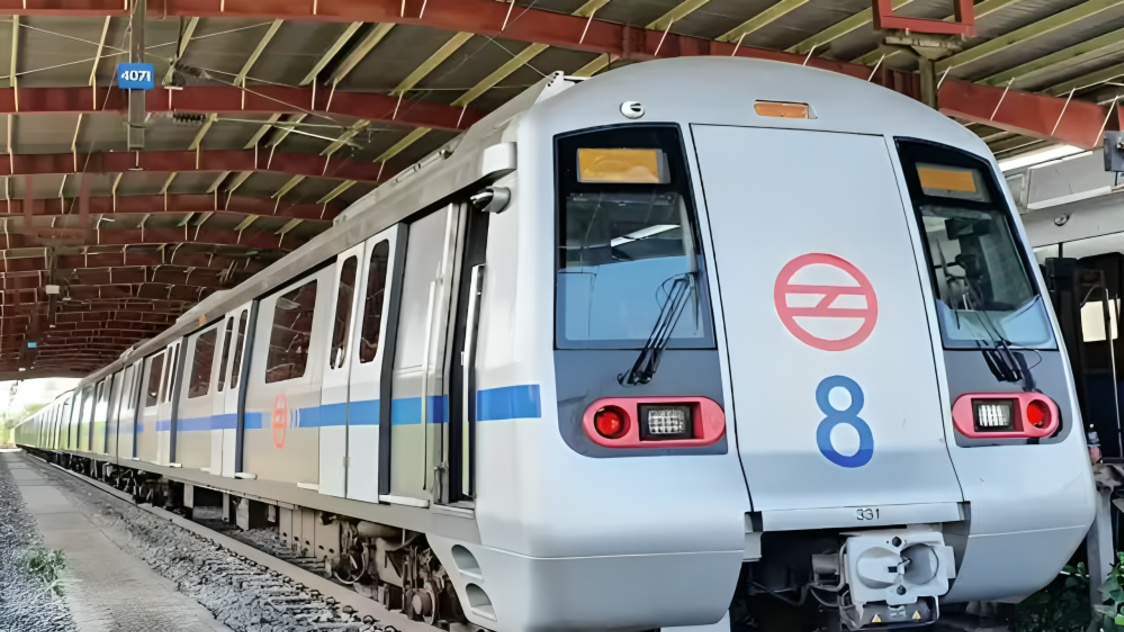
The Delhi Metro Rail Corporation will begin services at 6 am across all metro corridors on Sunday, September 13, 2026, one hour earlier than the usual Sunday start time. The special arrangement has been made to facilitate the movement of candidates appearing for the National Defence Academy and Combined Defence Services examinations and to support commuters travelling across the capital during the BRICS Summit.
Delhi Metro services normally begin at 7 am on Sundays. However, the early start on September 13 is intended to provide candidates with additional time to reach their respective examination centres. The National Defence Academy and Combined Defence Services examinations are conducted by the Union Public Service Commission and attract candidates from different parts of Delhi and the wider National Capital Region.
According to reports, the early metro service will operate across all Delhi Metro lines. Candidates have been advised to plan their journeys carefully and reach their examination centres well before the reporting time. The availability of metro services from 6 am is expected to provide an additional public transport option for candidates travelling to examination centres located away from their homes.
The decision also comes as New Delhi is hosting the BRICS Summit on September 12 and 13. India is chairing BRICS in 2026, and the summit is being held at Bharat Mandapam in New Delhi. The international event has resulted in heightened security arrangements and traffic management measures across the capital.
Delhi authorities have issued traffic advisories in connection with the movement of visiting dignitaries. Restrictions and diversions are expected on several important routes during the summit period. Traffic movement is being regulated to facilitate the movement of delegates and maintain security around key locations.
The Delhi Traffic Police has advised commuters to plan their journeys according to the traffic restrictions. People travelling to important transport hubs such as railway stations and airports have also been advised to allow additional travel time. Using public transportation, including the metro, is expected to help commuters avoid some of the road congestion caused by traffic restrictions and security arrangements.
For NDA and CDS candidates, the early opening of the metro is particularly important because examination centres can be located at considerable distances from candidates' residences. An earlier start gives candidates an additional travel option and may help reduce the risk of reaching examination centres late.
Candidates should nevertheless check the details mentioned on their individual admit cards before travelling. They should identify the nearest metro station to their examination centre and estimate the journey time in advance. Candidates are also advised to account for interchange time between metro lines and the final journey from the metro station to the examination centre.
The early metro service is not limited only to examination candidates. Other residents and commuters can also use the metro from 6 am on September 13. The arrangement is expected to be useful for people who need to travel during the BRICS Summit and the associated traffic restrictions.
The BRICS Summit has brought several international leaders and senior officials to New Delhi, resulting in extensive security preparations. The summit includes leaders from BRICS member countries and is focused on issues including economic cooperation, trade, technology, energy and other global developments.
The heightened security arrangements have also affected road and rail transportation in the Delhi region. Indian Railways has announced changes affecting several trains operating through the Delhi Division during the summit period. The changes include cancellations, diversions, short terminations and modifications to train timings.
Against this backdrop, the Delhi Metro is expected to play an important role in maintaining public mobility. Metro services are less affected by many of the road-level restrictions that can slow private vehicles and buses. The early opening therefore provides commuters with another option for travelling during the busy summit period.
For examination candidates, however, reaching the examination centre on time remains their responsibility. The early metro opening should be considered a travel facility rather than a guarantee that candidates will reach their centres without delays. Candidates should leave early and keep sufficient time for security checks and the journey from the metro station to the examination venue.
The special Sunday schedule applies specifically to September 13. Commuters should check official Delhi Metro updates for any additional operational changes or station-related advisories before beginning their journey.
The combination of the NDA and CDS examinations and the BRICS Summit is expected to increase travel demand across parts of Delhi on Sunday. The decision to start metro services at 6 am is therefore aimed at supporting both examination candidates and the wider travelling public.
With traffic restrictions in place during the international summit, commuters are advised to monitor official traffic advisories and use public transportation wherever practical. Planning journeys in advance can help reduce uncertainty and avoid unnecessary delays.
The early metro service will provide candidates, office workers, visitors and other commuters with an additional hour of public transport availability. For NDA and CDS candidates in particular, the facility could make it easier to reach examination centres on time during a weekend when Delhi is operating under enhanced security and traffic arrangements.