
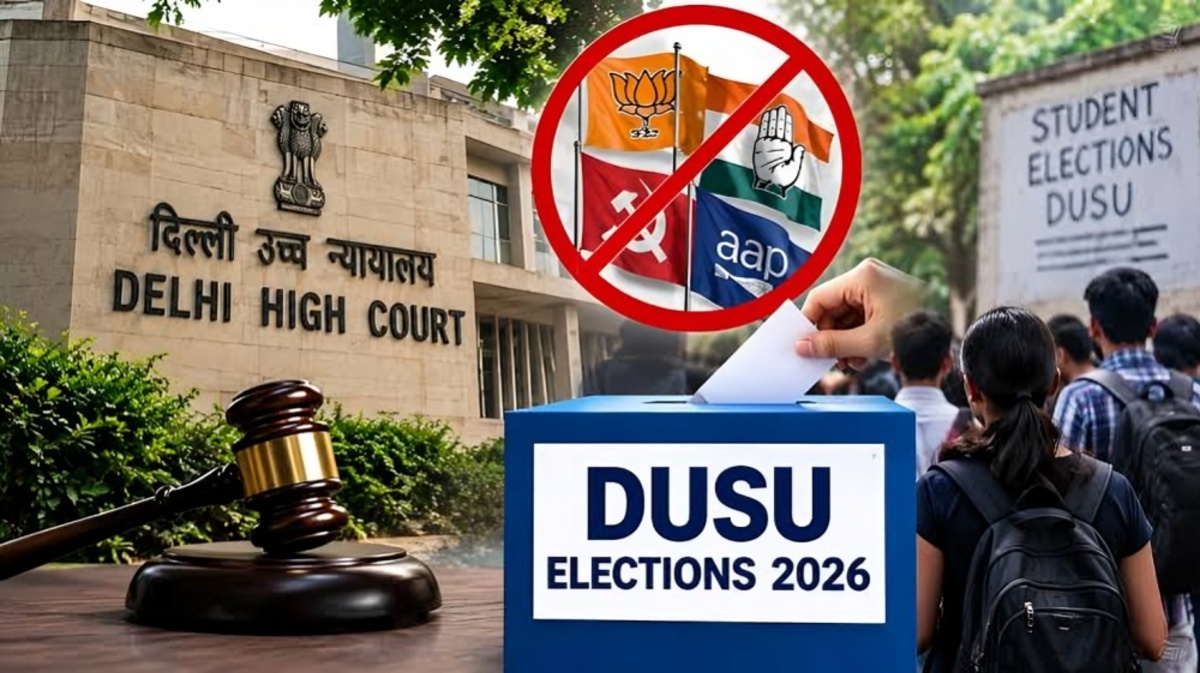
The Delhi High Court has prohibited victory processions following the declaration of results in the 2026 Delhi University Students’ Union elections. The direction was issued on September 18, 2026, as the court considered concerns relating to alleged violence, vandalism, election-rule violations and the conduct of candidates and supporters during the campaign.
The court directed that no candidate, student, supporter or any other person should take out a victory procession after the DUSU election results are declared. The restriction applies not only to public roads in Delhi but also to Delhi University campuses and hostel premises. The Delhi Police has been made responsible for ensuring that the direction is followed.
The DUSU election results are scheduled to be declared after counting on September 19. The court's direction therefore comes immediately before the expected result announcement and is intended to regulate celebrations following the election.
The High Court also warned that violation of its direction could result in criminal and administrative action. It further stated that a violation of the order would amount to contempt of court. This means that individuals involved in prohibited victory processions could face consequences under both the applicable law and the court's contempt jurisdiction.
The order was passed by a division bench comprising Chief Justice Devendra Kumar Upadhyaya and Justice Tejas Karia. The proceedings were related to concerns over the conduct of the ongoing DUSU election and alleged violations of the Lyngdoh Committee recommendations, the election code of conduct and previous judicial directions.
The court also issued notices to all 140 candidates contesting the DUSU elections. Student organisations were also asked to explain why exemplary or collective electoral damages should not be imposed for alleged violations of election norms and court directions. The notices do not themselves establish liability; the concerned candidates and organisations have been given an opportunity to respond.
During the hearing, the court questioned Delhi Police about the use of vehicles during the election campaign. The bench raised concerns about vehicles allegedly being used without registration plates and about large groups of vehicles forming candidate cavalcades around the university area.
The court also sought details about enforcement action taken during the election period. According to submissions made by the authorities, hundreds of challans had been issued and several vehicles had been impounded. Police also reported the registration of FIRs and arrests in connection with alleged violations during the campaign. The figures reported by different outlets varied depending on the stage of the proceedings and the category of violations being discussed.
The court directed the Delhi Police to take criminal proceedings that have already been initiated to their logical conclusion. This direction came amid the court's concerns over alleged violence and other incidents connected with the election campaign.
The High Court has been monitoring the DUSU election process because of concerns over compliance with rules governing student elections. The Lyngdoh Committee recommendations provide a framework intended to regulate university and college student elections, including provisions concerning election expenditure, campaign practices and the involvement of outside political influence.
The court had previously raised concerns about alleged violence and vandalism during the 2026 DUSU campaign. On September 17, the bench had warned that it could consider stronger measures, including stopping the counting or declaration of results, if it was not satisfied with the action taken by Delhi University and the police. However, the court did not stop the election at that stage.
The September 18 order instead focuses specifically on the period after the results are declared. By prohibiting victory processions, the court has sought to prevent large gatherings and celebratory activities from creating additional law-and-order concerns around the university.
The restriction covers roads as well as university premises. This is significant because DUSU victory celebrations have traditionally involved groups of students and supporters gathering around campuses. Under the latest court direction, such gatherings cannot take the form of prohibited victory processions after the results.
The court also directed authorities to remain vigilant and proactive in dealing with violations. Delhi Police is expected to enforce the order, while Delhi University and other authorities are required to cooperate in maintaining compliance with the directions.
The court's concerns also extend to the wider conduct of the election. During the hearing, the bench questioned reports and material concerning large vehicle cavalcades, alleged display of weapons and incidents involving students and teachers. These matters were raised in the context of the court's examination of whether election rules and earlier orders were being followed.
The court's notices to the 140 candidates and student organisations are part of this broader scrutiny. The respondents will have an opportunity to place their explanations before the court. Any decision regarding electoral damages or other consequences will therefore depend on further proceedings and the court's consideration of the responses.
The latest order does not cancel the DUSU elections. Polling has continued, and vote counting is scheduled for September 19. The immediate legal requirement for candidates and supporters is to comply with the prohibition on victory processions once the results are declared.
The court has also made it clear that being a student does not prevent law-enforcement authorities from taking action when an alleged violation falls within criminal or other applicable legal provisions. The direction regarding criminal proceedings applies to cases where such proceedings have already been initiated.
The developments come against the background of continuing judicial scrutiny of student elections at Delhi University. The High Court has repeatedly emphasised the need for elections to be conducted in accordance with the applicable rules and previous court orders.
For students and candidates, the September 18 direction creates a specific restriction on post-result celebrations. Regardless of which candidates or organisations emerge successful, victory processions on roads, inside university campuses or in hostels will not be permitted under the court's order.
The order also highlights the distinction between peaceful celebrations and prohibited processions. The court's direction specifically addresses victory processions and places responsibility on Delhi Police to ensure that such activities do not take place in the locations covered by the order.
The final outcome of the DUSU election is expected on September 19 following the counting of votes. The court's latest directions will remain relevant during the immediate post-result period, when candidates and supporters would otherwise be expected to gather to mark the outcome.
The Delhi High Court's intervention therefore places additional legal restrictions on the conduct of DUSU candidates and supporters after the results. Any person participating in a prohibited victory procession could face consequences if authorities determine that the court's order has been violated.
The matter will continue to be monitored by the High Court, particularly in relation to the responses of the candidates and student organisations that have received notices. The court is expected to consider those responses before deciding on any further action, including the issue of electoral damages.
For now, the key direction is that no victory procession should be organised after the DUSU results are announced on September 19. Delhi Police has been tasked with enforcing the order, while violations can result in criminal and administrative action and may also amount to contempt of court.