The Gujarat government has expanded the eligibility criteria for students seeking financial assistance to pursue higher education abroad under its Foreign Study Loan Scheme.
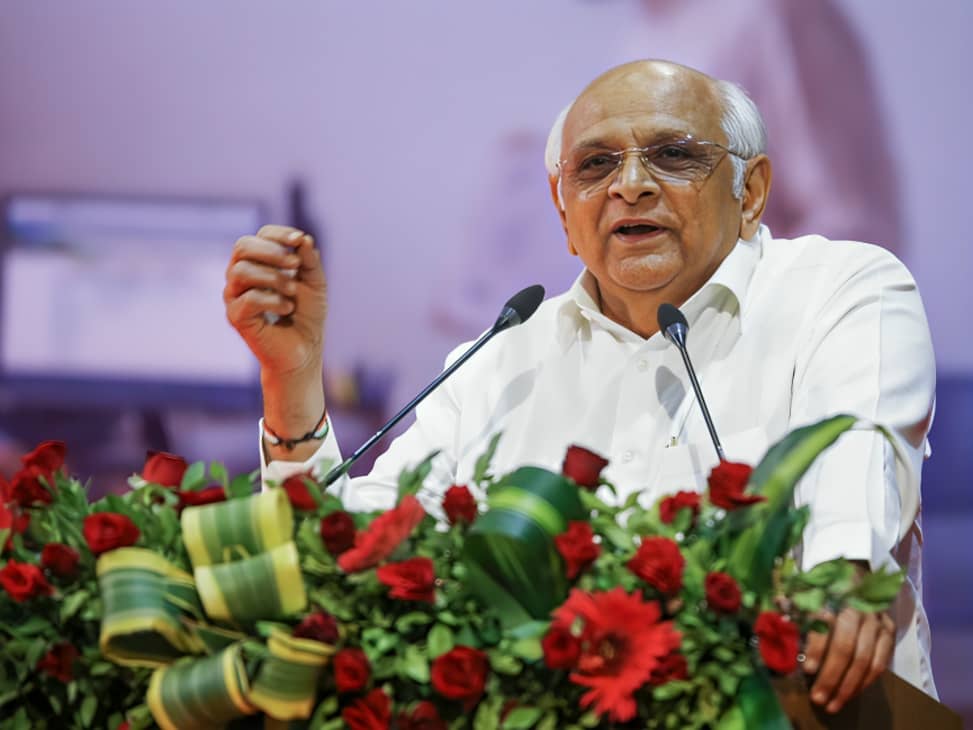
Chief Minister Bhupendra Patel announced on August 19 that the maximum annual family income limit for students belonging to the unreserved category has been increased from Rs 6 lakh to Rs 10 lakh. The change is expected to bring more middle income families within the scope of the government backed education loan assistance programme.
The Foreign Study Loan Scheme is implemented through the Gujarat Unreserved Educational and Economic Development Corporation. The corporation works to provide educational and economic support to eligible students from the unreserved category.
The increase in the income ceiling is significant because the cost of overseas higher education has increased considerably in recent years. Tuition fees, accommodation, travel, insurance and other living expenses can place a substantial financial burden on families. By increasing the eligibility threshold, the state government intends to make the loan assistance available to a wider group of students.
Previously, students whose annual family income exceeded Rs 6 lakh could not qualify under the income criterion applicable to the scheme. With the revised ceiling of Rs 10 lakh, families with annual incomes between Rs 6 lakh and Rs 10 lakh can now potentially become eligible, subject to the other conditions prescribed under the scheme.
The decision is particularly relevant for students planning to pursue postgraduate and other higher education programmes outside India. Overseas education has become an important option for Indian students, particularly in fields such as engineering, management, medicine, technology, finance and other specialised disciplines.
However, students should understand that meeting the revised family income criterion does not automatically guarantee approval of a loan. Applicants must satisfy all other eligibility requirements prescribed by the Gujarat Unreserved Educational and Economic Development Corporation and the relevant financial institutions.
The government scheme is intended to provide financial assistance through an education loan mechanism rather than functioning as a direct scholarship for every applicant. Students should therefore carefully examine the loan amount, interest rate, repayment period, collateral requirements and other applicable conditions before accepting financial assistance.
The income limit revision could also help students who previously fell just outside the eligibility range. Families earning between Rs 6 lakh and Rs 10 lakh annually may face difficulties financing expensive international education entirely through their own resources, while simultaneously being above the earlier income threshold for government assistance.
The policy change could therefore create an additional financing option for eligible students from such households.
The Gujarat government's decision comes amid continuing demand for financial support for students pursuing education overseas. The cost of studying abroad can vary substantially depending on the destination country, university, course and duration of study. Students may also need to account for fluctuations in foreign exchange rates while preparing their financial plans.
Increasing the income ceiling could allow a greater number of students to explore overseas education opportunities without depending entirely on private sources of funding. At the same time, applicants will need to assess their expected education costs and future repayment obligations before choosing an education loan.
The revised policy may also encourage students from middle income families to consider international universities that were previously difficult to finance. However, students should verify whether their selected institution and course meet the scheme's requirements before submitting an application.
The Gujarat government has not indicated that the income limit is the only eligibility condition. Therefore, students should check the latest official guidelines issued by the Gujarat Unreserved Educational and Economic Development Corporation for information on qualifying examinations, admission requirements, approved courses and institutions, loan limits, documentation and repayment provisions.
The announcement is expected to provide greater financial flexibility to eligible students across Gujarat. It also reflects the government's effort to widen access to educational opportunities beyond the state and the country.
For families planning overseas education, the revised Rs 10 lakh income ceiling could be an important development. Students should begin the application process only after confirming their eligibility and obtaining the required admission and financial documents.
The scheme's expansion could ultimately help more students from the unreserved category pursue higher education abroad while reducing some of the immediate financial pressure on their families. However, since the assistance is linked to a loan arrangement, applicants should consider the long term financial implications before proceeding.
The latest change therefore represents an expansion of the Gujarat government's foreign education support framework. By raising the annual family income limit from Rs 6 lakh to Rs 10 lakh, the government has widened the potential pool of beneficiaries and opened the scheme to a larger section of middle income families.
Students interested in taking advantage of the revised eligibility should rely on official government information for the latest application procedure and conditions rather than assuming that the higher income ceiling alone makes them eligible.