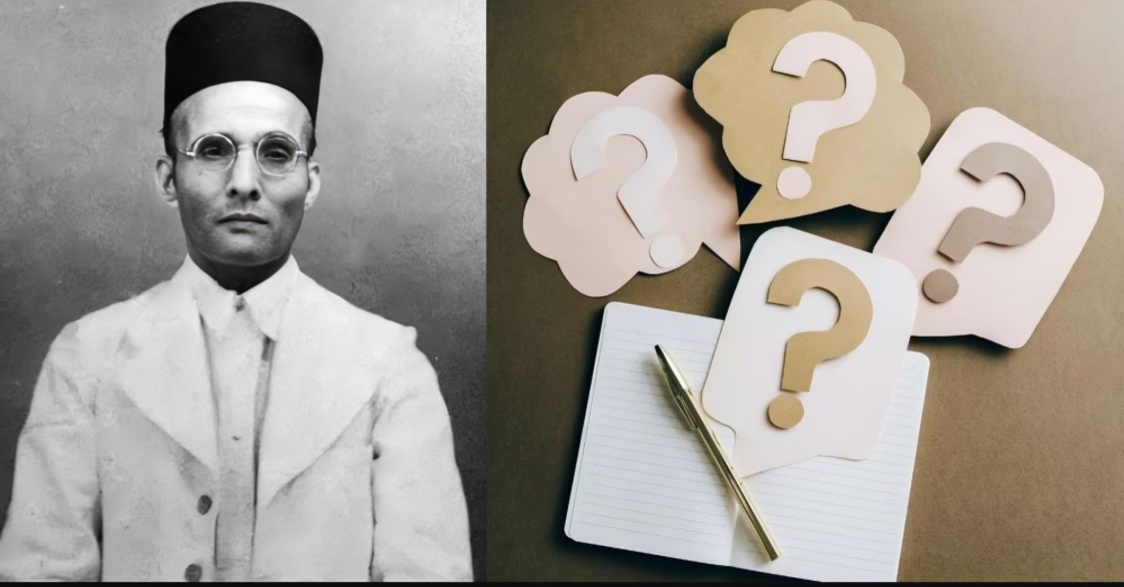
A controversy surrounding a quiz on V D Savarkar at an educational institution in Kerala has led to a political and administrative debate, with Education Minister V Sivankutty indicating that more faculty members could face disciplinary action.
The controversy began after a quiz reportedly described Vinayak Damodar Savarkar as a prominent freedom fighter. The wording of the question attracted criticism and became a subject of political discussion in the state.
The incident has raised questions about how historical personalities are presented in educational institutions and the responsibility of faculty members when organising academic programmes. The Education Department is examining the circumstances surrounding the quiz and the role of those involved.
The Education Minister has indicated that disciplinary measures could be extended to additional faculty members if the inquiry establishes their involvement or responsibility. Any further action is expected to depend on the findings of the relevant authorities.
The issue has become politically sensitive because Savarkar remains a contested historical figure in Indian public discourse. Different political groups and historians have differing assessments of his role in India's freedom movement and his political ideology.
The description used in the quiz therefore generated a reaction beyond the academic setting. Critics questioned the characterisation of Savarkar, while the controversy also highlighted the importance of accuracy and context when historical subjects are discussed in educational institutions.
Educational institutions regularly conduct quizzes, seminars, debates and other programmes designed to encourage students to learn about history and public affairs. Such activities can involve complex historical subjects, making the accuracy of questions and answers particularly important.
The controversy has also brought attention to the responsibilities of teachers and faculty members who prepare or supervise academic activities. Questions involving historical personalities can carry different interpretations, and educational content is expected to be prepared carefully and with appropriate context.
According to the Education Minister's statement, the government is considering whether additional faculty members should face action. The possibility of further disciplinary measures means that the matter could continue to develop in the coming days.
However, disciplinary action should be based on the findings of the official inquiry and the applicable service or institutional rules. The initial controversy alone does not establish individual responsibility for every person associated with the event.
The incident has also triggered a wider debate over academic freedom and institutional accountability. Educational institutions need to provide students with opportunities to examine different historical perspectives while maintaining factual accuracy in academic activities.
The Savarkar controversy illustrates how seemingly simple quiz questions can become politically sensitive when they involve figures whose historical legacy remains disputed.
Savarkar was a prominent political thinker and activist whose life and writings have been the subject of extensive historical and political debate. His role during the Indian independence period and his later political ideas continue to generate differing interpretations.
Because of this contested history, descriptions such as freedom fighter, revolutionary, political ideologue or other characterisations can be interpreted differently depending on the historical context and source being used.
The Kerala controversy has therefore extended beyond the quiz itself and has become part of a broader political discussion about history education in the state.
The Education Department's response is expected to focus on the circumstances in which the quiz was organised, the content used and the responsibilities of the faculty members involved.
If additional disciplinary action is announced, the concerned authorities are likely to communicate the basis for such measures and the applicable rules.
For students, the controversy also highlights the importance of examining historical claims through multiple credible sources. Academic discussions about disputed historical personalities can benefit from presenting evidence and explaining different interpretations rather than relying on simplified descriptions.
The incident has attracted attention from political parties because history and the interpretation of India's freedom movement remain sensitive issues in public debate.
The Education Minister's comments indicate that the government is not ruling out further action against faculty members connected to the episode. The final outcome, however, will depend on the administrative process.
Until the inquiry or official review is completed, specific claims about individual responsibility should be treated cautiously. The disciplinary process should establish who prepared the question, who approved it and who was responsible for conducting the quiz.
The controversy also provides an opportunity for educational institutions to review procedures for academic programmes. Clear guidelines, source verification and appropriate faculty oversight can help prevent disputes involving historical or politically sensitive subjects.
For now, the central issue remains the quiz question that described Savarkar as a prominent freedom fighter and the subsequent decision by the Kerala Education Department to examine the matter.
With the Education Minister indicating that more faculty members may face disciplinary action, further developments are expected once the authorities complete their assessment.
The case demonstrates the continuing sensitivity surrounding historical figures in India and the importance of maintaining accuracy, context and academic responsibility when such subjects are discussed in educational institutions.