
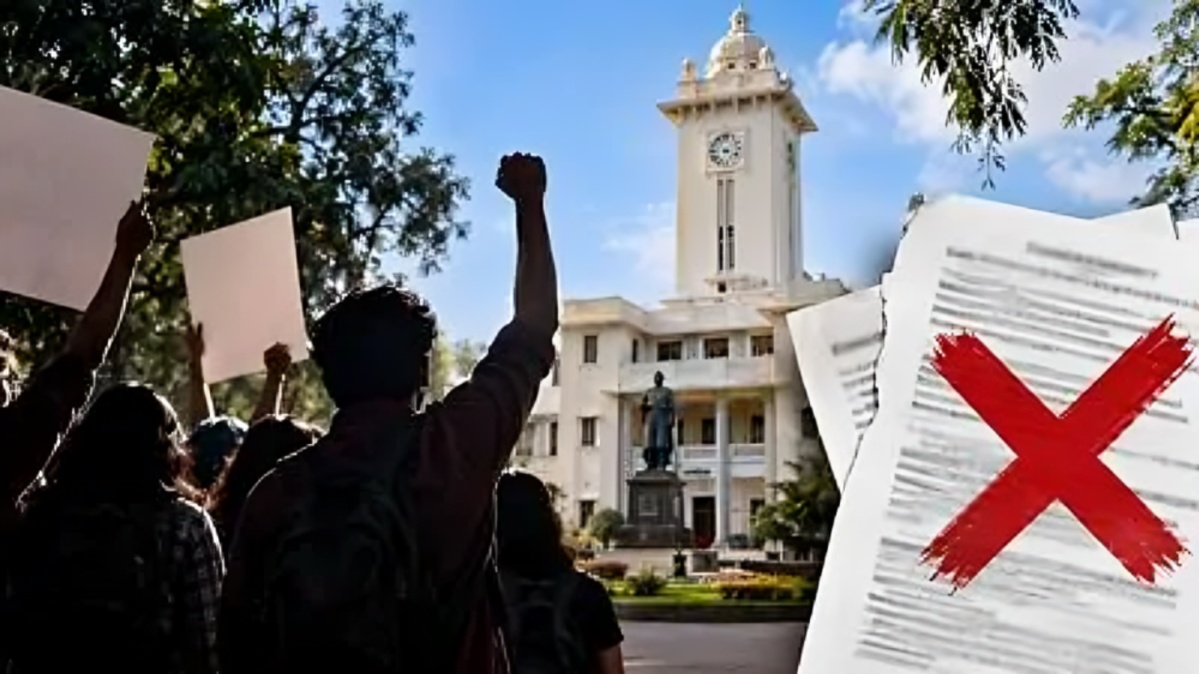
Kerala University has clarified that a document circulating on social media as a proposed set of rules to restrict political activities on campuses was not prepared or finalised by the university.
Vice Chancellor Mohanan Kunnummal said the university had not prepared the document being circulated as a draft proposal. His clarification came after the document triggered criticism from student organisations and political leaders over provisions that reportedly sought to regulate protests, political slogans, campaigns and other forms of political activity in the university and affiliated institutions.
The controversy began after a document titled Kerala University Students Code of Conduct Regulations 2026 reportedly circulated among various groups. Reports said the document contained several proposed restrictions on political activities within the university campus and institutions affiliated with Kerala University.
According to reports about the circulated document, students could face restrictions on participating in protests, dharnas and blockades on campus. It also reportedly proposed restrictions on raising political slogans, putting up posters and conducting certain political activities through social media platforms.
The reported draft also contained provisions relating to political campaigns and activities involving political organisations. Some reports said it proposed action against students who participated in political activities that were considered to affect the functioning of educational institutions.
The document reportedly included provisions for disciplinary action in cases involving violence. It also mentioned possible financial penalties, including a proposed fine of Rs 5,000 for students and Rs 10,000 for political organisations, while repeated violations were reportedly associated with a proposed penalty of Rs 1 lakh.
Other provisions reported in the circulated document included possible suspension, withholding examination results and legal action in certain circumstances. These details, however, relate to the document that circulated online and should not be treated as final Kerala University rules.
Kerala University Vice Chancellor Mohanan Kunnummal has specifically denied that the document was prepared or finalised by the university. He said that if an official university document is prepared for consideration by the Syndicate, it must go through the established administrative process. According to his explanation, the circulated document had not gone through that process.
The Vice Chancellor also said the university had earlier been asked by the Kerala High Court to clarify its position concerning student politics. The university was examining the issue in that context, but he maintained that the viral document was not an official proposal prepared by the university.
Kerala Higher Education Minister Roji M John has also clarified that no decision has been taken to ban student politics at Kerala University.
The minister said that discussions concerning a draft student conduct code were still underway and that the government did not intend to prevent student political activity on campuses. He also said student politics should be encouraged in educational institutions.
The minister's clarification came amid criticism of the reported draft. He said that the document being discussed was a draft that had been forwarded for consideration and that it did not represent a final decision by the government or the university.
The controversy has attracted attention because student politics has traditionally been an important part of campus life in Kerala. Student organisations across different political affiliations operate in universities and colleges in the state, and political campaigns, debates and student elections are common features of campus activity.
The reported provisions in the circulated document therefore generated concerns among student organisations. They argued that restrictions on political activity, protests and slogans could affect the ability of students to participate in campus affairs and express their views.
The controversy also led to political reactions. Leader of the Opposition Pinarayi Vijayan criticised the reported restrictions before the university's clarification. He argued that students should be able to engage in political discussion and democratic activities while studying.
Vijayan referred to the historical role of student movements in India's social and political developments. His comments were made in response to the reported contents of the draft and before the university clarified that it had not prepared or finalised the circulated document.
The university's clarification has changed the context of the controversy. Rather than an implemented regulation, the document circulating online is now being described by the Vice Chancellor as a document that was not prepared or finalised by Kerala University.
At the same time, reports indicate that the university has been examining issues concerning student conduct and campus political activities following directions from the Kerala High Court. A draft code may therefore be part of discussions surrounding student conduct, but there is currently no final university order implementing the restrictions described in the viral document.
The distinction between a draft, a proposal and an implemented regulation is important for students and parents following the issue. A document under discussion does not automatically become a university rule. Any final regulation would have to follow the university's prescribed administrative procedures and receive the necessary approval.
The university has also indicated that stakeholder discussions are relevant to the process. Reports on the matter said that any final student code would require further consideration before implementation.
The issue has also raised broader questions about how universities can maintain discipline while allowing students to participate in democratic and political activities. Universities generally have rules governing protests, violence, damage to property and disruption of academic activities. At the same time, student organisations and political groups often seek opportunities to conduct campaigns, discussions and demonstrations within campuses.
The present controversy is therefore focused on the status and origin of the circulated document rather than on the implementation of a new university-wide ban.
For now, Kerala University has not announced a final regulation banning student politics, and the Vice Chancellor has denied that the viral document was prepared by university officials. The Higher Education Minister has similarly said that no decision has been taken to prohibit student political activity.
Students should therefore rely on official communications from Kerala University rather than social media posts or unverified copies of documents when checking whether any new campus rules have been introduced.
The university's clarification is expected to reduce confusion over the document circulating online. Any future decision concerning student conduct, political activity or campus protests would have to be communicated through the university's official administrative process.
The controversy highlights the importance of verifying documents before treating them as official government or university orders. In this case, the university has clearly stated that the circulated draft was not prepared or finalised by it, while the state Higher Education Minister has said that no decision has been taken to ban student politics.
As of September 21, 2026, there is therefore no confirmed Kerala University rule based on the viral document restricting protests, political slogans or political campaigns on the university's campuses. Further developments will depend on the university's ongoing consideration of student conduct issues and any subsequent official decisions.