
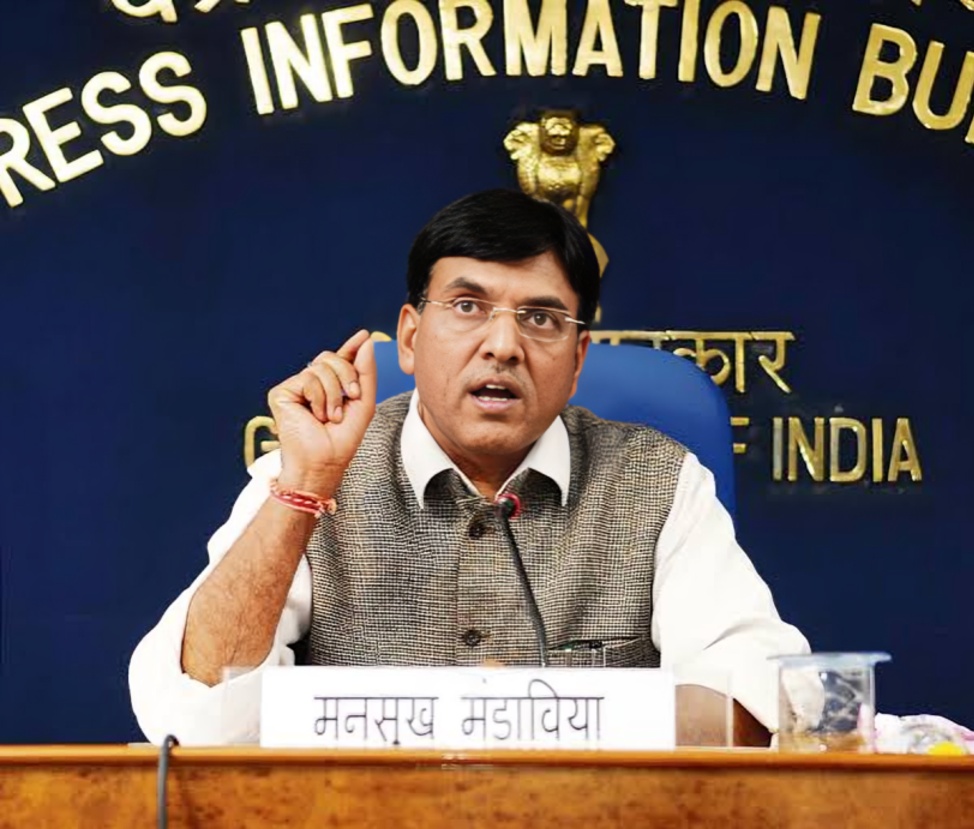
Union Minister Mansukh Mandaviya has emphasised the broader role of education, saying that learning should not be limited to academic marks, career opportunities or infrastructure. Speaking at the Times Now Education Summit 2026, Mandaviya highlighted the need for an education system that also contributes to the development of responsible citizens and addresses wider challenges faced by society.
The minister's remarks focused on the purpose of education beyond conventional academic measurements. Marks and examination results remain important indicators of academic performance, while professional qualifications can help students prepare for employment. However, Mandaviya's message at the summit placed additional emphasis on values, social responsibility and the ability of students to contribute meaningfully to society.
According to the remarks described from the summit, education should help young people understand their responsibilities as citizens. This approach places personal development alongside academic achievement and career preparation. It also reflects a broader discussion in India's education sector about how institutions can prepare students for social, economic and technological changes.
Educational infrastructure is another important part of the system. Schools, colleges and universities require classrooms, laboratories, libraries, digital resources and other facilities to support effective learning. However, infrastructure alone cannot determine the quality of education. Mandaviya's comments highlighted the importance of combining physical and technological resources with learning that develops students' wider capabilities.
The role of teachers and educational institutions is also relevant to this approach. Beyond delivering academic content, educators can help students develop communication skills, critical thinking, discipline, teamwork and awareness of social issues. These abilities can influence how young people respond to challenges in their communities and workplaces.
Mandaviya's message also comes at a time when India's education system is adapting to changes in technology and employment. Artificial intelligence, automation and digital platforms are changing the skills required in many industries. Students are therefore increasingly expected to combine subject knowledge with adaptability, communication and problem solving.
The discussion around education and careers has traditionally focused heavily on employability. Students and families often consider examination results, professional qualifications, placement opportunities and salary prospects when making education choices. These factors remain significant, but the minister's remarks suggest that education should also consider the broader development of individuals.
The idea of responsible citizenship can include awareness of constitutional values, civic responsibilities, community issues and the consequences of individual actions. Educational institutions can provide students with opportunities to understand these areas through classroom learning, community activities, discussions and practical experiences.
The summit discussion also highlights the relationship between education and wider social challenges. Issues such as inequality, environmental concerns, public health, digital literacy and technological change require informed participation from citizens. An education system that develops awareness of such issues can help students understand the relationship between their individual choices and society.
For students, this broader approach does not mean that academic performance or career preparation becomes unimportant. Instead, it places these objectives within a wider framework of personal and social development. Academic knowledge can provide a foundation, while practical skills, values and civic awareness can help students apply that knowledge in different circumstances.
For educational institutions, the approach can involve evaluating student development through more than examination scores. Participation in projects, teamwork, communication, problem solving and community-oriented activities can provide additional opportunities for students to develop skills that are relevant beyond the classroom.
The message is also relevant to the changing expectations of employers. Many organisations increasingly look for candidates who can communicate effectively, work with teams, learn new technologies and adapt to changing circumstances. Academic qualifications can establish a foundation, while these additional skills can influence how graduates perform in professional environments.
At the same time, the development of responsible citizens remains a wider social objective. Education affects not only individual career prospects but also how people understand their communities and participate in public life. This makes educational policy relevant to areas beyond schools and universities.
India has also been undertaking wider changes in education policy, including efforts to strengthen multidisciplinary learning, vocational education, technology use and skill development. These changes have increased discussion about whether educational institutions should focus on examination outcomes alone or provide a broader learning experience.
Mandaviya's comments at the Times Now Education Summit 2026 add to this ongoing discussion by highlighting the social dimension of education. His message was that the purpose of learning should extend beyond securing marks, obtaining qualifications or building careers.
The emphasis on responsible citizenship also places an expectation on students themselves. Education can provide knowledge and opportunities, but students ultimately apply what they learn through their personal, professional and social choices. Developing awareness of responsibility can therefore be viewed as part of the wider educational process.
The discussion is particularly relevant for India's young population as students prepare for an economy undergoing rapid technological and structural changes. Future graduates may work in sectors and roles that are significantly different from those available today. Adaptability and continuous learning can therefore become important parts of long-term education and career development.
The Times Now Education Summit 2026 provided a platform for discussing these wider questions about the future of education. Mandaviya's remarks focused attention on the need to consider what students become through education, rather than measuring the education system only through marks, infrastructure or employment outcomes.
The broader message is that education can serve multiple purposes. It can provide academic knowledge, develop professional skills, support personal growth and encourage awareness of social responsibilities. Balancing these objectives remains an important consideration for schools, universities, educators, policymakers, parents and students.